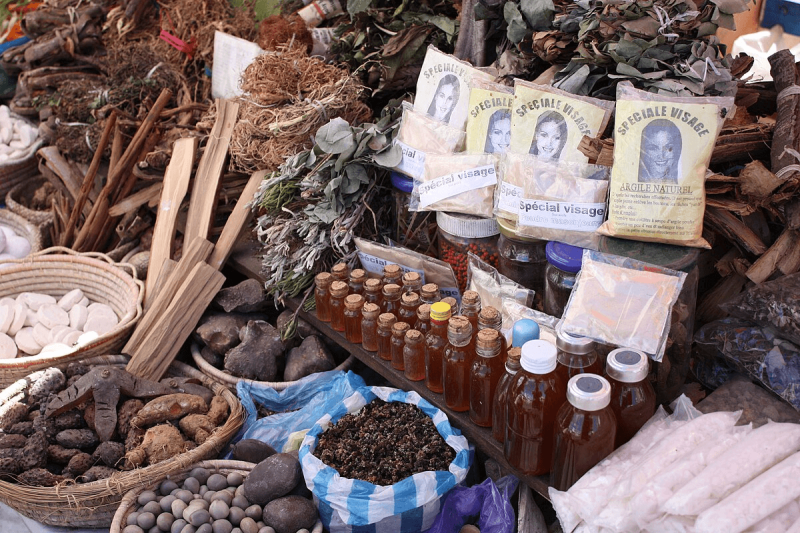
At one point or another, we all knew something about how to heal ourselves using the plants and animals that surround us, at least somewhat. We treated pain with willow bark and terminated pregnancies with abortifacient herbs. We treated insomnia with lettuce and halitosis with parsley – according to a 10th-century cookbook from Baghdad, which devotes an entire chapter to the humoral properties of different vegetables. Many of us still know something about these treatments: studies estimate that as much as 80 per cent of the world’s population, roughly 6 billion people, still use traditional plant- and animal-based medicines. Such bonds that once existed between all humans and the rest of the natural world were born of scarcity, which dictates need.
Lately, we often relegate this kind of intelligence to laboratories: who needs myrrh when there is aspirin? My childhood herbalist memory, for instance, is fading. I remember picking fireweed and goatweed, but I have forgotten what they are for. It seems portentous that we should lose the memories of how to maintain our bodies: it is as if we are unremembering how to stay alive, and our forgetting what sustains us allows us to neglect and abuse the resources we no longer know how to use.
…

Sometimes hope itself feels like magical thinking. And maybe it is. And maybe magical thinking is precisely what has sustained us through hundreds of thousands of years of drought, epidemics, climate shifts, migration, floods, enslavement, war.