There, researchers are testing a vaccine designed to hunt down and kill cancer cells. The participants are patients with different stages of lung cancer.
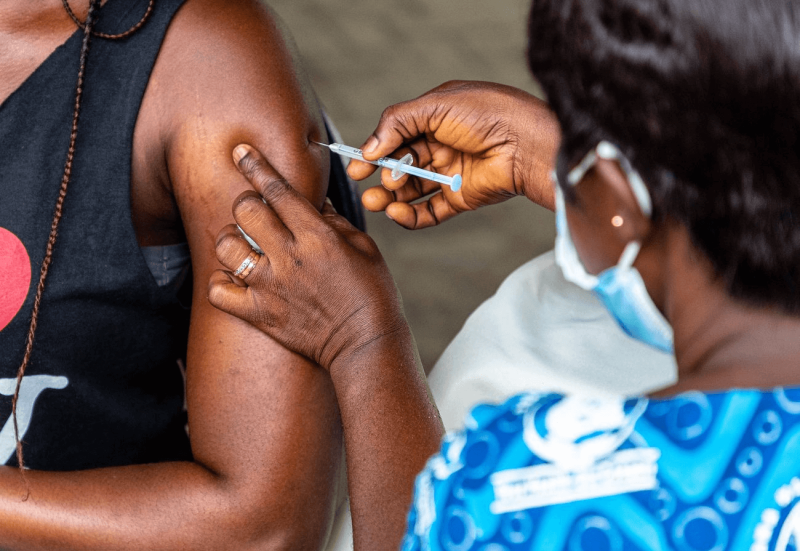
The vaccine is based on the use of mRNA, which was used in the Covid-19 vaccine.
“This type of vaccine has shown promise during the pandemic. It has also shown very promising results in other types of cancer,” says Åslaug Helland, who studies lung cancer at Oslo University Hospital.
Could mean a lot
The aim of the vaccine is to increase the immune system’s ability to kill cancer cells.
If this vaccine works as hoped, it could mean a lot for the survival of lung cancer patients, Helland believes.
“But you have to run these kinds of clinical studies to prove how useful the treatment is and to investigate whether there are any serious side effects,” she says.
Lung cancer patients from the USA, Germany, Hungary, Poland, Spain, and Turkey will also take part in the study.
A total of 130 patients with non-small cell lung cancer, which is the most common form of lung cancer, will take part in the study.
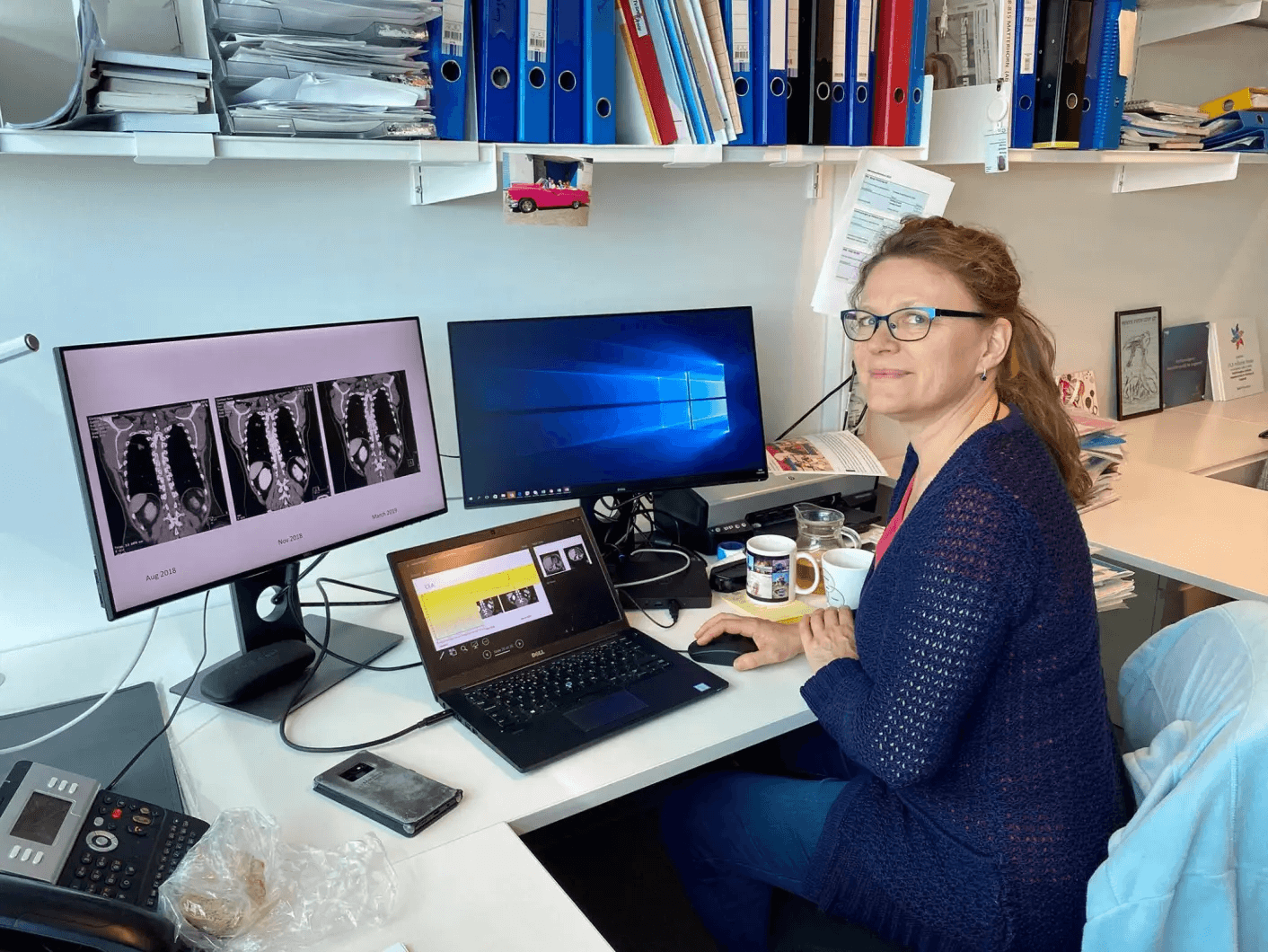
(Photo: Kim Daniel Lindegaard / Norwegian Cancer Society)
Much better survival
When cancer researcher Åslaug Helland was a new doctor just over 20 years ago, the goal was to detect lung cancer as late as possible.
“The longer the patient could live in blissful ignorance, the better it was. Everyone was going to die anyway,” she said in a 2023 interview with forskning.no (link in Norwegian).
Now, 20 years later, the survival rate among these patients has nearly doubled.
This is partly due to immunotherapy, but also the use of targeted treatments or so-called precision cancer medicine.
“Targeted treatment has significantly improved the prognosis for patients with specific genetic changes. Immunotherapy has mainly improved the prognosis for some patients without such mutations,” Helland explains.
The next big phase
Siow Ming Lee, professor of oncology at University College London, is leading the British part of the study. He told The Guardian that this technology is the next big phase in cancer treatment.
“If the results continue to be good, this could definitely become standard treatment. The results must of course be good, and it must be proven that this is an effective treatment,” Helland says.

She believes the vaccine is easy to administer. The ongoing study will provide information about any side effects and responses – and whether it can help people live longer.
“There’s a great need for improvements like this,” she says.
More promising results
Several studies across the globe are testing mRNA vaccines on cancer, including skin cancer. Forskning.no recently wrote an article about this (link in Norwegian).
Norwegian research groups have also been active in this field for a long time and have made significant research efforts, according to Helland.
“In the past, successes were rare. Now there are several treatments that show promising results,” she says.
The ‘silent’ cancer
Just over 3,300 people were diagnosed with lung cancer in Norway last year. More than 2,200 died.
It is only now, long after society started getting people to stop smoking, that we see the number of cases of this cancer decreasing.
But Åslaug Helland still believes that there will continue to be many cases in the coming years. She said this at a lecture during Arendalsuka, an annual political gathering in Norway, this year.
Lung cancer will continue to be detected even with fewer smokers, because this is a disease that develops very slowly. Researchers call it the ‘silent’ cancer.
Easiest to prevent
Lung cancer is among the most widespread forms of cancer in Norway, but it is also the cancer that is easiest to prevent.
Lung cancer is inextricably linked to smoking.
Cigarette smoking accounts for around 80-90 percent of the risk. Air pollution, radon, and asbestos are also known risk factors.
Siw Ellen Jakobsen is an accomplished journalist. You can find her many articles on forskning.no and sciencenorway.no, respectively.
A version of this article was originally posted at ScienceNorway and is reposted here with permission. Any reposting should credit both the GLP and the original article. Find Siw Ellen Jakobsen on X @siwellen