
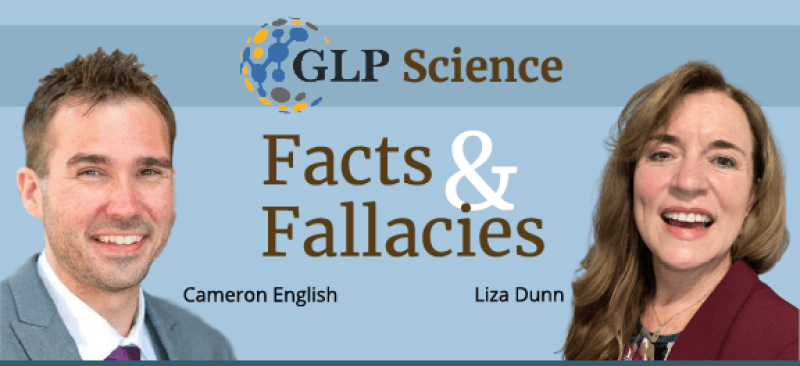
GLP podcast: Organic farming—solution to climate change or path to world hunger?

Listen to GLP Science Facts & Fallacies on iTunes, Spotify, Podbean and YouTube Podcasts. Or add the RSS feed to your favorite podcast app. Join our GLP Daily Digest to get these stories and more delivered to your inbox.

updated v podcast home cameron and liza featured outlined
Here’s some good news to break up the cacophony of alarmist environmental headlines you read weekly: global agricultural output has increased roughly four-fold since 1974, a massive acceleration in food production that has left more than three billion hectares of land untouched by farmers. These developments have occurred despite the detrimental impacts of climate change, and they confirm that human ingenuity and technological progress are helping us sustainably feed ourselves while preserving the planet’s natural resources.

If the world sees significant increases in hunger in the coming years, it won’t be driven by global warming but “bad science communication and fear mongering.” That’s the thesis of a provocative but science-based analysis by Breakthrough Institute scholar Alex Smith. We know how to continue enhancing sustainable food production, Smith argues, but that fact might prove irrelevant if a cohort of “activist researchers,” “long-standing critics of industrial food production” and journalists get their way.

These voices advocate for a mass transition to regenerative agriculture–the latest marketing term for organic farming–in the name of slowing climate change. But with a yield penalty somewhere around 20 percent, so-called regenerative farming simply can’t produce all the calories we need to feed 10 billion people.  That task must be left to high-efficiency conventional agriculture.

Follow the latest news and policy debates on sustainable agriculture, biomedicine, and other ‘disruptive’ innovations. Subscribe to our newsletter.

Why does widespread support for organic farming persist despite its well-documented limitations? Join hosts Dr. Liza Dunn and GLP contributor Cameron English on episode 284 of Science Facts and Fallacies as they break down this critically important story:

Podcast:

Dr. Liza Dunn is a medical toxicologist and the medical affairs lead at Bayer Crop Science. Follow her on X @DrLizaMD

Cameron J. English is the director of bio-sciences at the American Council on Science and Health. Visit his website and follow him on X @camjenglish
{{ reviewsTotal }}{{ options.labels.singularReviewCountLabel }}
{{ reviewsTotal }}{{ options.labels.pluralReviewCountLabel }}
{{ options.labels.newReviewButton }}
{{ userData.canReview.message }}
Infographic: Global regulatory and health research agencies on whether glyphosate causes cancer

Infographic: Global regulatory and health research agencies on whether glyphosate causes cancer

Does glyphosate—the world's most heavily-used herbicide—pose serious harm to humans? Is it carcinogenic? Those issues are of both legal and ...
glp menu logo outlined

Get news on human & agricultural genetics and biotechnology delivered to your inbox.








