Jimi Olaghere was born with sickle cell anemia. He endured years of painful crises, fatigue, and breathing problems. This month, he climbed Mt. Kilimanjaro, the tallest peak in Africa at 19,341 feet. Doctors warn sickle cell patients not to go above 10,000 feet due to the danger posed by high altitudes.
Thanks to new gene-editing technology, Olaghere reached a height more than double the limit set by his physician. His journey from a patient with sickle cell anemia to an elite amateur mountaineer represents a once-unimaginable transformation. Today, he is one of the first few people in the world to be functionally cured of sickle cell anemia through an experimental medical trial.

In September 2020, Olaghere joined a clinical trial for a CRISPR-based gene therapy called Casgevy, developed by CRISPR Therapeutics and Vertex Pharmaceuticals. The trials began in early 2019, and in December 2023, the treatment was approved for widespread use.
What is sickle cell anemia?
Sickle cell anemia is a genetic blood disorder that affects millions of people worldwide and is the most common blood disorder in the United States. It was first identified about 100 years ago and was the first disease proven to have a molecular cause, making it a focus of extensive research.
Sickle cell anemia is the most severe form of sickle cell disease. Sickle cell anemia occurs when hemoglobin, the protein in red blood cells responsible for carrying oxygen, develops an abnormality. This abnormality causes red blood cells to take on a rigid, sickle shape under certain conditions. Symptoms usually begin between five and six months of age and include acute pain, anemia, swelling in the hands and feet, infections, dizziness, and stroke. As patients get older, they experience chronic pain. Those with sickle cell anemia in developed countries live to be between 40 and 60 years old, on average, but their symptoms tend to worsen with age.
Sickle cell anemia affects every major organ. The liver, heart, kidneys, gallbladder, eyes, bones, and joints are all vulnerable to damage from the behavior of sickle-shaped cells. These cells struggle to pass through small blood vessels, causing clots that can block circulation, leading to pain and other complications.

What causes sickle cell anemia?
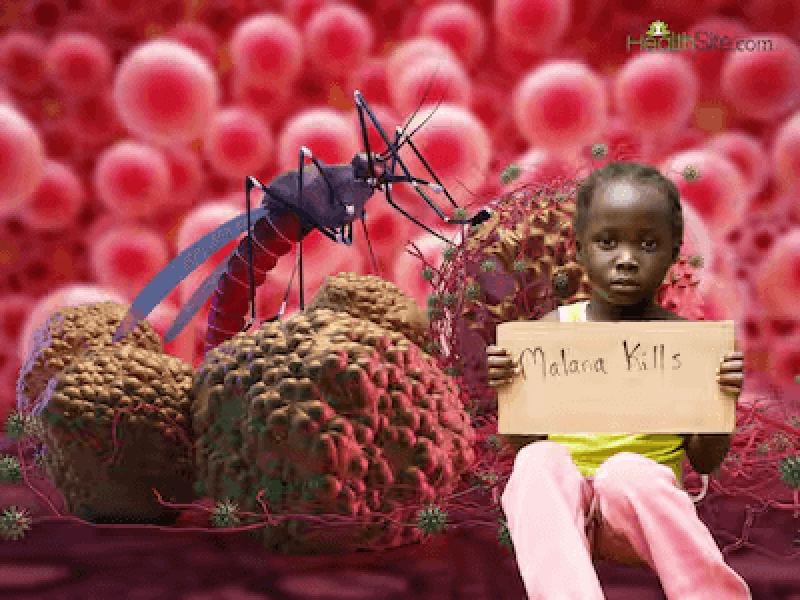
About 50,000 years ago, mosquitoes that initially infected primates began to infect humans. From time to time, humans have spontaneous mutations in our genes. And some 20,000 years ago, one of those mutations—the mutation for sickle cell disease—happened to be protective against malaria. Normally deleterious mutations over evolutionary time. This mutation, however, provided a benefit (malaria protection) that was more important for survival in certain climates than the risk of getting the disease. That’s why it is still so prevalent today.
The mutation is found in the DNA sequence of the ß-globin gene (HBB). In healthy people, the sixth position in the resulting protein sequence holds a glutamic acid, but in those with sickle cell anemia, it is replaced by a valine. This small change causes hemoglobin to take on an abnormal form known as hemoglobin S, which is associated with the disease.
Sickle cell anemia follows an autosomal recessive pattern of inheritance. If both parents carry the sickle cell trait, there is a 25% chance that their child will inherit the disease and a 50% chance they will inherit the trait but have no symptoms. An a symptomatic carrier can pass down the trait.

As of 2015, around 4.4 million people had sickle cell anemia, and 43 million were carriers of the sickle cell trait. About 80% of cases occur in Sub-Saharan Africa, though the disease also affects people in India, Southern Europe, West Asia, and North Africa. In the United States, approximately 100,000 people live with sickle cell anemia, most of whom are of African descent. Sickle cell anemia affects about one in every 365 African-American children and one in 16,300 Hispanic-American children. Men with the disease live, on average, to 42 years, while women live about six years longer. Another two million people in the U.S. are carriers of the sickle cell trait. Thanks to newborn screening, most infants born with sickle cell anemia in the U.S. are identified soon after birth.



CRISPR gene-editing: A game-changer
The approval of Casgevy marked a major milestone for CRISPR gene-editing technology. In December 2023, the U.S. Food and Drug Administration (FDA) approved the first two CRISPR-based treatment for sickle cell anemia, Casgevy and Lyfgenia. According to the FDA, Casgevy is the first FDA-approved treatment to utilize a type of novel genome editing technology, signaling an innovative advancement in the field of gene therapy. The drug has shown promise in treating about 100 people with sickle cell anemia or beta-thalassemia, another form of sickle cell disease. Early trial participants have experienced what appears to be a permanent cure, with only mild side effects.
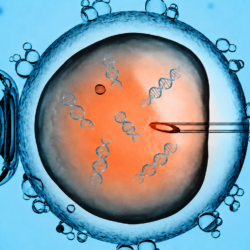
Casgevy uses the CRISPR gene-editing tool to target a gene called BCL11A, which prevents the body from making fetal hemoglobin. Normally, this form of hemoglobin is only produced before birth, but in people with sickle cell anemia, turning on fetal hemoglobin production can be therapeutic. Casgevy works by using CRISPR to disable BCL11A in bone marrow stem cells. This allows the cells to start making fetal hemoglobin again, producing healthy red blood cells instead of sickle-shaped ones.

In the treatment, doctors first remove a patient’s bone marrow stem cells and edit them using CRISPR technology. Then, they destroy the patient’s remaining, untreated bone marrow and reinfuse the edited cells, which begin producing healthy red blood cells.
The first sickle cell gene-therapy patient
Victoria Gray, who had battled sickle cell anemia for 34 years, was the first patient to receive CRISPR-based gene therapy for the condition. After a single treatment, her blood showed high levels of fetal hemoglobin, and she no longer experienced pain crises or needed blood transfusions. Her doctor, Dr. Haydar Frangoul, described the therapy as transformative, stating that she now functions as someone without sickle cell anemia.
According to NPR, in 2023, Victoria Gray was able to share her story at the Third International Summit on Human Genome Editing in London. This event brought together scientists, doctors, patients, and bioethicists to discuss the promise of gene-editing technologies and the ethical questions they raise. Among the benefits of the therapy, she was able to go back to a full job as a Walmart cashier and was making plans to go back to school.

The price of Casgevy is high, at approximately $2.2 million per patient. In comparison, the lifetime cost of treating sickle cell anemia can reach $1.7 million; treating beta-thalassemia costs between $5 million and $5.7 million. The cost is a barrier for many patients as insurance companies balk at the high up-front price. Other gene therapies, such as Hemgenix for hemophilia B, cost even more, with a price tag of $3.5 million. Insurance coverage is crucial for patients to access these life-changing treatments, but current payment models need to be updated to make these therapies accessible to more people.
Jimi Olaghere’s journey
Jimi Olaghere is a 38-year-old technology entrepreneur, husband, and father of three. He lives in Atlanta with his family. Thanks to Casgevy, he feels physically stronger than ever. He can play soccer, keep up with his kids, and work with more energy, all without the constant fear of a pain crisis sending him to the emergency room. His old medications, crucial for survival, are now a fading memory.
Olaghere is committed to helping other sufferers. He joined a team of biotech executives and investors to climb Mt. Kilimajaro in an effort to raise money for sickle cell gene therapy in Africa, where the disease is most common. In September 2024, they made the summit of Kilimanjaro together to raise funds. So far, Jimi has raised more than $1.2 million (donate here).
His story represents the beginning of a new era for sickle cell anemia. What was once a life sentence of pain and limitations is now a disease that can be cured, offering hope to millions of people worldwide—if the price barriers can be overcome.
Marc Brazeau is the GLP’s senior contributing writer focusing on agricultural biotechnology. He also is the editor of Food and Farm Discussion Lab.