It’s the year 2050, and the world’s population has just passed 9 billion people. Economic growth has lifted hundreds of millions of people out of starvation-level poverty. But the encouraging trend comes with a catch: the global population has soared by 70%, spurring a doubling of demand for more calorie-dense, nutritious food yet there are no more large plots of farmable land. Exacerbating the crisis, climate instability is intensifying, disrupting our fragile ecosystem. We are speeding towards a reckoning.
This bleak scenario is by no means baked in, but it is more than just crisis-mongering. There are no easy solutions to a looming food and sustainability crisis. Already, today, food-exporting, agriculturally rich regions have little unused land to sow, and China, India, and Russia are in no position to significantly increase exports.
Sub-Saharan Africa and South Asia are among the few regions with large plots of exploitable land, but they are food-producing deserts on a continental scale. Without a dramatic increase in production and yield, we’ll face a tipping point in years rather than decades. The poorest regions in the world desperately need an environmentally sustainable agricultural model.
With the help of genetic innovation and precision agriculture on its extensive and fertile farmland, the United States has become the world’s most efficient producer of food. But its farming practices are not easily replicated in parts of the world where water is scarce, desertification is escalating, insect swarms are common, and monsoons are on the increase.
Only one region offers a template that could be exportable to underdeveloped countries. In the 1950s and 60s, forced to import food, and with 350 million hectares (3.5 million square kilometers) of unfarmable, rock-strewn land across the Cerrado and Gran Chico tropical savannahs—94% of the region—South America seemed as agriculturally hopeless then as most of Africa and Asia appears today. Sixty years later, Paraguay, Bolivia, Argentina, and Colombia are major food exporters, and Brazil has evolved into an agricultural superpower, feeding around 1.2 billion people globally.
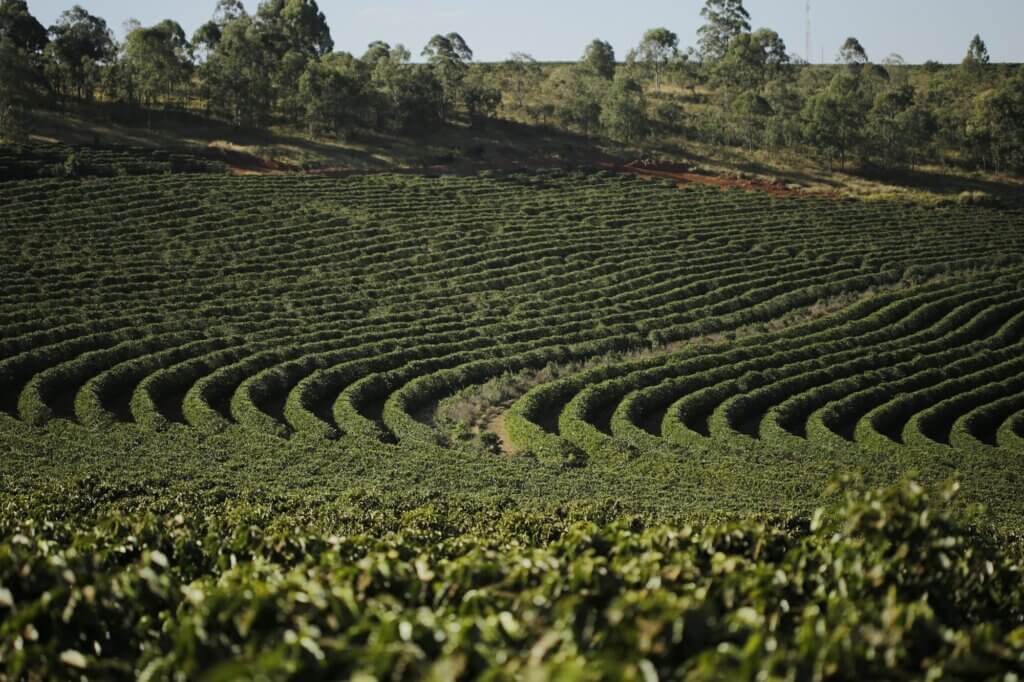
What some call an agricultural renaissance is based on what’s called “intensive agriculture”—leveraging genetically modified (GM) crops and synthetic chemicals to grow more food on less land. “I think we have new genetic and technological tools, precision agriculture, AI, to address threats from pests, soil degradation, and weather and still produce food in high volume without undermining the environment,” said Lloyd Day, Deputy Director of the Inter-American Institute for Cooperation on Agriculture, based in Costa Rica.
The food justice movement is not so sanguine. “The corporate-driven agricultural model in South America is broken,” says La Via Campesina, a global social movement representing small farmers. “It prioritizes profits over people and the planet, leading to soil degradation, water scarcity, and loss of biodiversity.” It campaigns for a global transition to an organic-focused strategy.
“The narrative that our food system is “broken”, that’s nonsense, Day said. “We got religion,” added Manuel Otero, IICA’s director, who I talked with at a conference in Buenos Aires on sustainable agriculture. “Our farmers have changed the way we farm, but there is a perception disconnect between how we are being portrayed and our new reality.”
A resource for its 34 member countries from Canada to Argentina, IICA is often credited with guiding the agricultural renaissance, but many environmentalists claim it is too chummy with agri-business and too focused on corporate farming. Otero and Day acknowledge that the criticism has stung, but believe their practices are evolving.
“Pesticides and fertilizers, when used appropriately—and we are using less per acre every year—shouldn’t be dirty words,” Lloyd said. “But that doesn’t mean we are not listening to critics. Over the past decade, there has been a sea change. We’ve awakened to our impact on the environment by improving soil health for instance.”
Debating Trade-offs: Organic vs. Conventional
Brazil is now ground zero for the intensifying global debate over the future of food and agriculture. The challenge: how do we open marginal land to more productive farming and increase yields on existing land in ways that don’t overwhelm our ecosystem?
Two farming models that could complement each other and provide answers – but are widely seen as competitors – dominate the debate: agroecological (which is organic rebranded) versus conventional, which aggressively embraces genetic engineering. Both have advantages, limitations, and environmental trade-offs. Are these visions diametrically opposed, foreclosing any chance of cooperation?
It’s estimated that 1.5-2% of the world’s total agricultural land is farmed using organic principles. Its environmental profile is mixed. Organic usually produces fewer emissions compared to conventional as it avoids synthetic pesticides and fertilizers and practices crop rotation and composting. But its reliance on tilling, which results in the release of greenhouse gases (GHG), offsets some or all of its climate benefits. Many experts believe it’s not scalable and could end up threatening global biodiversity.
Conventional farming can produce far more food per acre—it’s land-sparing. But organic advocates say it’s ecologically more disruptive because of the very practices its proponents say are its virtue: relying on GM crops. Activists derisively call it “Big Ag”.
Jayson Lusk, the dean of Oklahoma State’s agriculture department, contends that reliance on GM crops is a net positive as it often allows farmers to forgo tilling, which dramatically reduces the release of greenhouse gases. Mega-farms are “among the most progressive, technologically savvy growers on the planet,” he says. “Their technology has helped make them far gentler on the environment than at any time in history. And a new wave of innovation makes them more sustainable still.”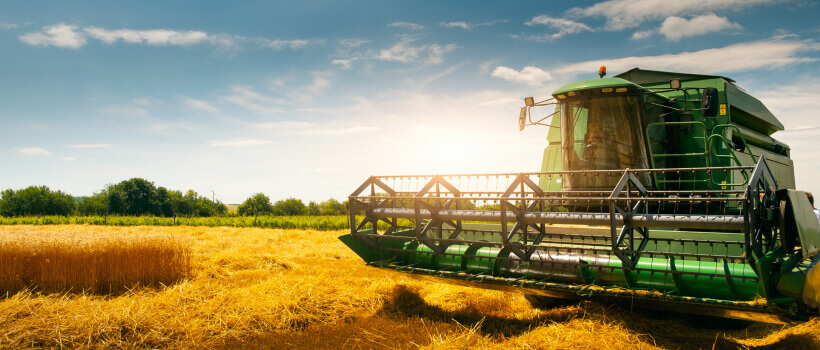
Major commodity crop producers—the United States, Canada, and Australia, for example, and increasingly China—have embraced the large farm, biotechnology model. Europe has so far rejected that pathway and plans to increase organic production.
Brazil and other countries in South America are forging their own path which could serve as a model for Africa and Asia, continents with similar terrains. They are publicly committed to balancing the need to sustainably manage the environment while increasing production on their limited farmable land.
The region’s diverse climatic zones support a wide range of production year-round. Columbia, Paraguay, and Uruguay farm soybeans, maize (corn), cotton, and beef. The pampas of Uruguay and Argentina are global centers for growing soybeans and wheat. The most productive region in the continent is the vast Cerrado, legendary home of gauchos, the savannah adjoining the Amazon rainforest that was largely unfarmable until Brazil’s Green Revolution took flight in the 1970s.
Dependent on food imports fifty years ago, Brazil has morphed into the largest exporter of soybeans, sugar, and coffee, and produces cocoa, fruits, vegetables, and beef. Beef exports have increased tenfold in a decade. It has accomplished this on 6% of the Cerrado. And it gets minimal government subsidies—about 4% of farm income. (Half as much as the U.S. provides; the European Union subsidizes about 30% of farm income, one-third of its green initiatives.)
Organic’s Unfulfilled Promise
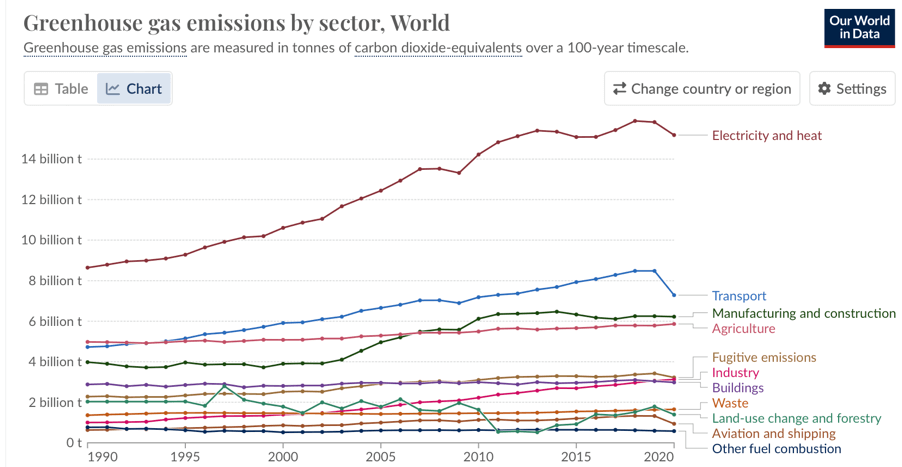
Brazil’s boom comes with reputational costs; agriculture can be ecologically problematic. Livestock farming, fertilizer use, and deforestation have resulted in 19% GHG emissions. They also contribute to deforestation, biodiversity loss, and water pollution, and are blamed by activists for exacerbating inequality and climate change. Environmental non-government organizations (NGOs), from Greenpeace to Friends of the Earth, claim that the global food system based on large-scale conventional farming is irreparably “broken”, despoiled by multinational corporations. They lobby for an all-organic model.
Currently, only 2% of the world’s agricultural land is farmed organically. There is widespread skepticism about whether it can ever be scalable and land-sparing. Activists, with funding coordinated by the Agroecology Fund, which subsidizes Regeneration International, Indian philosopher-environmentalist Vandana Shiva’s Navdanya, and other activist organizations, insist ‘yes’. The rest of the world, including major UN agricultural organizations, says ‘no’.
Even the Research Institute of Organic Agriculture agrees it’s impossible—unless everyone converts to vegetarianism and we shut down 100% of land used for animal production. It estimates conversion would lead to a 16-33% increase in land use with a corresponding 8-15% increase in worldwide deforestation. There are no free lunches.
Organic-supporting NGOs have a receptive audience in Europe, which widely rejects GM crops and bans agricultural gene editing. The yet-to-be-passed European Union’s Farm to Fork strategy, the heart of Europe’s Green Deal initiative, lays out a plan to increase organic’s share of the market from 9% now to 25% by the end of the decade. Even its most ardent supporters say that’s impossible.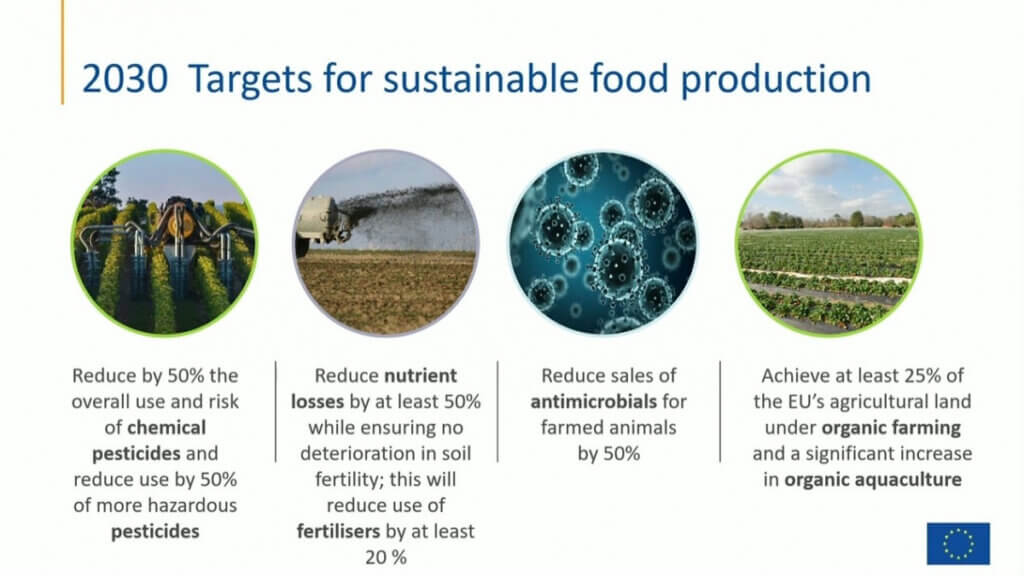
The more important question, however, is whether its anti-biotechnology model is even desirable. Europe produces specialty greens, wheat, and boutique, and high-value goods like wine and cheese, yet runs a trade deficit in commodity foods. It imports massive amounts of grains and vegetables—oilseeds, rapeseed, and soybeans fed to animals to produce meat and dairy products.
And despite its green intentions, Europe is awash in crop chemicals. Defying popular belief, every European country uses more pesticides per acre of cropland than the U.S.; the Netherlands and Belgium use about three times the amount.
According to Nature magazine and other analyses, if Farm to Fork is implemented, Europe would need to import even more agricultural products, particularly from South America, endangering that continent’s ecosystems. The proposed Green Deal “offshores environmental damage to other nations,” it wrote. And while organic farming may help reduce global greenhouse gas emissions—life cycle analyses are mixed on this—marginal environmental benefits are offset by sharply lower yields on average: a deficit from 19% to 40%.
Advocates of conventional agriculture have understandably been on the defensive, and are hoping to forge a new narrative. Since 1960, global yields have increased by a remarkable 390% with only a 10% increase in land use. Sixty-five years ago, a typical household in developed countries spent as much as a quarter of its income on food. Today, in the U.S. and other countries, it’s 6%.
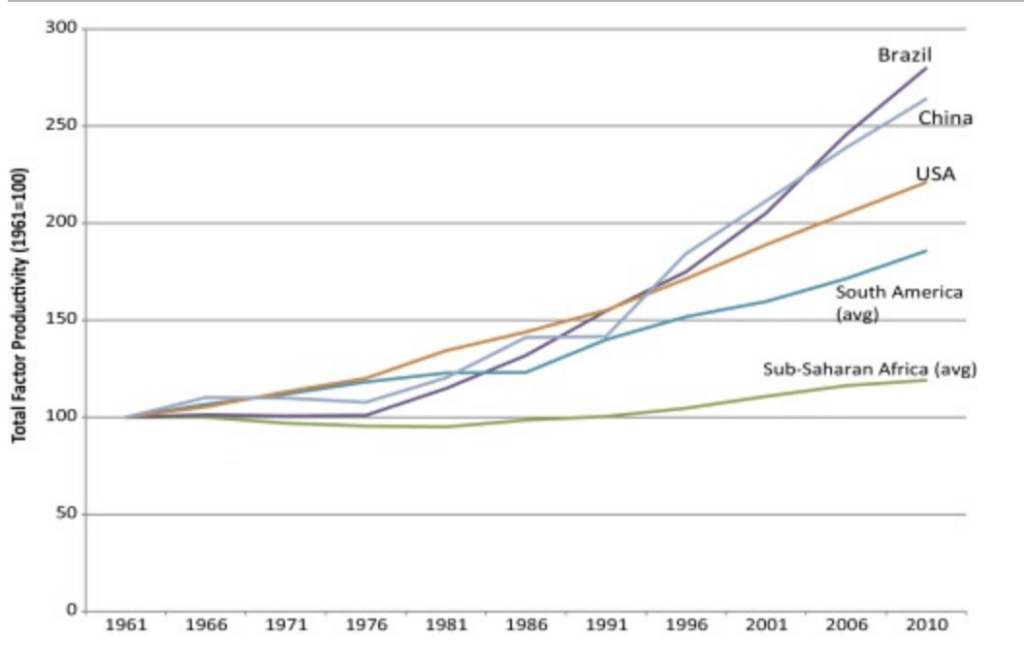
The largest yield increases have come in the U.S. and Brazil. Since the advent of GM crops in the mid-1990s, Brazil has accomplished this yield surge while yet decreasing the toxicity of fertilizers and pesticides (Brazil 40%; U.S. 35%).
What would happen if emerging food-needy countries in sub-Saharan Africa and South Asia adopt organic and agroecological techniques? We’ve had that experiment: Sri Lanka. In 2021, advised by Vandana Shiva, Sri Lanka abruptly banned the import of chemical fertilizers and reiterated its ban on GM crops. The move was widely celebrated by global NGOs, which viewed these policy changes as a blueprint for what more advanced nations needed to do.
Over two years, the use of fertilizers and weed control chemicals plummeted, but food production collapsed as well. Rice output fell by 40%. Exports of its key export crop, tea, plummeted. Foreign Policy headlined that “organic farming went catastrophically wrong … after producing only misery.” The country spiraled into economic collapse and food riots.

The lesson: while organic can be the appropriate farming choice where yield and price are secondary considerations, it cannot be scaled globally without devastating trade-offs.
Genetic Modification and No-till Fuel Brazil’s Green Revolution
Located in the Brazilian highlands, the Cerrado covers about 21% of the country, an area equivalent to Germany, France, England, Italy, and Spain combined. It is the second largest biome in South America, after the Amazon. With its gaucho history, it has long held a romantic allure for Brazilians. It was once considered an agricultural backwater. The soil was acidic and nutrient-poor; the rolling terrain was pocked with eucalyptus, pine, and other native shrubs that many thought made it suitable only for grazing cattle. The vast tropical savanna seemed an unlikely place to seed Brazil’s agricultural transformation.
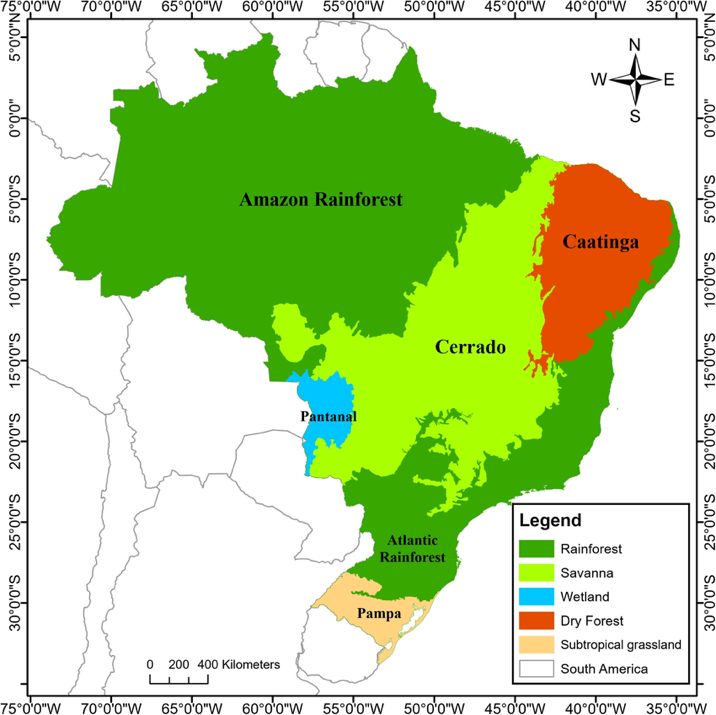
The transformation was engineered by Embrapa, short for Empresa Brasileira de Pesquisa Agropecuária, the Brazilian Agricultural Research Corporation, a laboratory for experimentation until recent years. It bred new seeds and cattle, and dedicated itself to the green taming of the cerrado’s harsh terrain. The increasing variability of the rainy season and the frequent occurrence of droughts and floods—a poster example of climate intensification—appeared to present insurmountable challenges. Only a tiny fraction of Brazil’s land, about one-eighth, was yet suitable for farming. “Nobody thought these soils were ever going to be productive,” said Norman Borlaug, known as the father of the Green Revolution, in 1985.

Embrapa revitalized the soil by dumping pulverized limestone to reduce acidity. It used cross-breeding to turn soybeans, a fickle temperate-climate crop, into one more tolerant of acidic soils and with the ability to grow two crops each year. They planted vast numbers of eucalyptus trees to put nutrients into the soil and offset the effects of methane, a greenhouse gas belched by ruminants. Degraded pastures turned into rich farmland.
Farmers in Brazil began transitioning to farming without tilling the soil, a practice pioneered in the U.S. a decade earlier. No-till farming also took root in Paraguay, Uruguay, Columbia, and Argentina, altering sustainability calculations.
Over centuries, organic and conventional farmers alike were convinced that turning the soil was their only choice to fight weeds. But tillage is the root cause of agricultural land degradation. The soil erodes, leading to chemical runoffs. While healthy soil acts as a carbon sink, tilled soil loses carbon to the atmosphere.
The use of no-till farming took off with the introduction of GM crops in the mid-1990s. Scientists engineered varieties to express Bacillus thuringiensis (BT), a natural protein found in the soil that’s toxic to some plant-eating insects that organic farmers had been spraying on crops for a century. By engineering BT into the seed, almost no spraying of sometimes harsh insecticides was necessary.
But the real game changer was the adoption of herbicide-tolerant (Ht) soybeans and maize. That was made possible with the adoption of a new generation of effective but comparably mild herbicides, including glyphosate, originally developed as a water-softening agent, in 1970. Researchers stumbled on the fact that glyphosate killed weeds but left the crop unharmed, facilitating the no-till revolution.
Glyphosate posed few of the environmental downsides of prior generations of harsher herbicides. It readily degrades in soil and water and its toxicity is among the lowest of all available pesticides It was approved by the U.S. Environmental Protection Agency in 1976 for use in no-till and conventional tillage systems. Companies began genetically modifying soybeans, corn, alfalfa, and cottonseeds to pair with a glyphosate mixture known as Roundup.
That spurred an exponential increase in no-till farming in the U.S. but even more so in South America. By 1985, South America was the global epicenter for no-till adoption. Brazil reported no-till resulted in the reduction of soil erosion losses by 97%, higher farm productivity, and income increases of 57%.
“Now, we are the ones who are coming to learn from the Brazilians,” said Shirley Phillips of the University of Kentucky.
“Agriculture is the only sector that can really capture carbon and directly fight against carbon pollution,” Jorge Wertheim, Counsel to the president of IICA told me. “How many countries in the developing world are focusing on no-till to the degree we are doing it? In South America, we are creating a new narrative about what agriculture is and can be. Yes, we need to improve, and we are much more focused on the environmental impact of farming, but we are heading in the right direction.”
The embrace of GM crops in the mid-1990s was transformative. By 2010, Brazil’s agricultural sector had experienced a “miraculous expansion” in the words of The Economist, using only 15% of its potential arable land—far less than the combination of the two countries just behind it, the U.S. and Russia.
The success spurred by pairing GM seeds with glyphosate irked activists who linked one of agriculture’s mildest herbicides to discredited claims that it causes cancer. Glyphosate became organic farming’s Darth Vader.
Their ire is misplaced. Glyphosate is milder than 94% of the herbicides on the market today. Twenty independent global agencies drawing on more than 6,000 studies have deemed it safe-as-used. The U.S. Environmental Protection Agency classifies it as “practically non-toxic”. Both the European Food Safety Authority and the European Chemicals Agency, which recently completed a 17,000-page review, conclude that glyphosate is not a carcinogen, not a mutagen, and does not disrupt reproduction, and re-authorized its use for 10 years. Health Canada states that “No pesticide regulatory authority in the world currently considers glyphosate to be a cancer risk to humans at the levels at which humans are currently exposed.”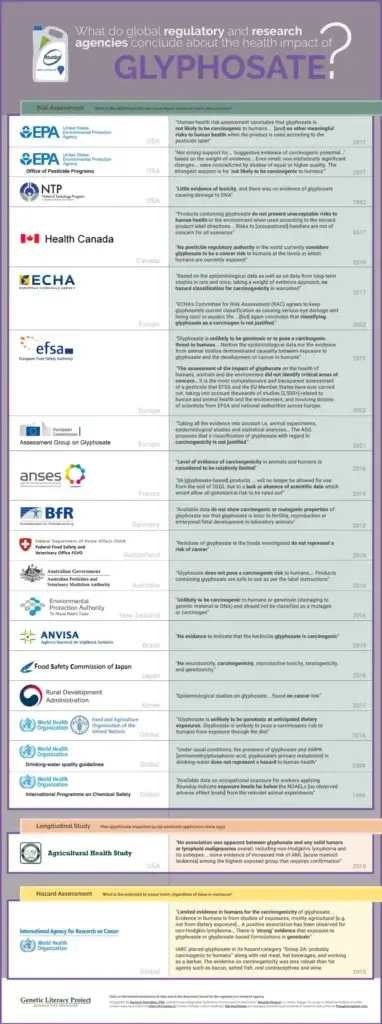
Click here for a downloadable .pdf version of this infographic with links to the studies.
Despite the carping of critics, even as the use of glyphosate boomed on farms around the world, toxicity levels globally per acre of agricultural chemicals fell sharply. While farmers used 10 pounds of highly toxic herbicide per acre in the early 1960s, those using no-till now use mere ounces, sharply reducing greenhouse gas emissions on farms around the world.
The Politics of Environmental Trade-offs
Organic and agroecological farming have major environmental and yield drawbacks when compared to farming using GM crops, no-till, and glyphosate. This output inefficiency hasn’t been an issue in rich countries like the U.S. or Europe, where almost everyone goes to sleep each night with a full belly. But in the developing world, increasing yield while reducing carbon release is the golden sustainability ticket.
Unlike in Africa, whose arable regions are widely scattered across the continent, the Amazonian savannah is a vast ecosystem. Environmentalists weighing the costs and benefits of the recent expansion of farming are split on its impacts. Deforestation and clearance of native vegetation are concerning. The expanded use of fertilizers, pesticides, and other agricultural chemicals has jumped yields, but at an environmental cost. Greenhouse gas emissions resulting from land use, agriculture, and deforestation now account for 80% of total emissions in the Amazonian region.
The rainforest has been the focus of political battles for years in Brazil. Many environmental restrictions on deforestation put in place after the election of Luiz Inácio Lula da Silva’ in 2003, were rolled back beginning in 2016 under right-wing presidents Michael Temer and Jair Bolsonaro. Lula recaptured the presidency last year and has pledged to deliver zero deforestation by 2030. But that effort has stalled because conservatives still control Congress. Deforestation hit 11,000 square kilometers of primary forest in 2023, an area the size of Belgium. That’s a fraction of the rainforest’s 6.7 billion. but activists fear the worst is ahead.
“We are not headed in the right direction,” Argentinian activist environmentalist Guillermo Schmittmer told me. “It is an agri-business revolution, it’s not for the people. It took off after OGMs (GM crops) were introduced in 1996. We began losing small farms, and that’s still going on.” But the statistics disagree, suggesting Brazil is slowly righting its environmental ship. The loss in kilometers in 2023 was down 23% from the year before. Bolivia and Columbia are also curbing deforestation.
Is South America’s Amazonian Success Story Exportable to Africa?
Late last year, at the urging of Gustavo Petro, Colombia’s leftist president, eight Amazonian nations signed a declaration to end deforestation and prevent the rainforest from reaching a “tipping point”. The World Resources Institute estimates that escalating the shift toward no-till and other sustainable practices could reduce greenhouse gas emissions by 94% and the country’s emissions by almost 80%, putting Brazil on track to meet the COP21 targets.
“The 2015 Paris Agreement put a global focus on climate change,” IICA’s Manuel Otero, added. “Agriculture is the only sector in the economy that can make a significant contribution to cutting carbon gases.”
Otero paused. “When I was a child in Argentina in the 1960s farming was a dismal picture. Erosion. Terrible soil. Poverty. Now, it’s all based on no-till. 95% of the pampas in Argentina, Brazil, and Paraguay are no-till. We’ve recovered most of the landscape. The intensity of the use of chemicals in South America is already less than in other parts of the world, but we are going down every year. Our goal is net zero.”
Brazil now has several times the share in agricultural exports than the African continent using a fraction of its land area. Considering the geographical and economic similarities, there might be lessons for sub-Saharan Africa.
Given that Africa holds much of the last remaining unused agricultural land in the world, Brazil’s experience in turning its large savannah regions from barren wastelands (from the agricultural perspective) into an area that has achieved world-class yields and total production levels, is particularly relevant.
The key to Brazil’s partnership to curb deforestation has been its partnership with private industry. As Empraba’s influence has faded in recent years, agribusinesses have taken on the role of innovators. That irks environmentalists but pleases any scientists.
Brazil now leads the world in what’s called “green total factor productivity,” which weighs both environmental impacts and production. Sub-Saharan Africa lags far behind. This modeling may come to naught if the world misinterprets the lessons of Brazil’s agricultural boom. Some development agencies in the United Nations and the powerful green lobby are convinced that a near-total adoption of the organic model is the only path forward.

The Rosa Luxemburg Foundation (RLF), a vocal supporter of agroecology, maintains that the GM-based model would be a disaster for Africa. “Agroecology is not just about farming and growing food; it means combining social justice, ecological science, and indigenous knowledge,” RLF claims. It’s a break from “monocultures and the dependency on external inputs such as fertilizers, hybrid seeds, and pesticides.”
That’s an odd claim. farmers have been planting hybrid seeds since they were developed in the 1920s because they are more resistant to pests and deliver higher yields. Belief in an alternative reality is not uncommon among opponents of conventional agriculture. Kenyan plant pathologist and virologist Florence Wambugu has said that Africans know the limits of organic farming as they’ve been using it for 10,000 years, and how’s that worked out?
Some activists even reject scaling up organic farming. “There is a fallacy that the developed world needs larger farms to feed the world, whether it’s organic or conventional,” environmentalist Guillermo Schmittmer told me. “No. We need to focus on fossil fuels, biodiversity, displacement. I don’t believe in large-scale anything,” he added, echoing the view of radical critics of conventional agriculture like Extinction Rebellion.
How can we achieve those goals? “I don’t know about solutions. I’m much better at pointing out the problems,” Schmittmer said.
“So many of the critics are not engaged directly in agricultural activities,” Kip Tom, a former ambassador to the United Nations and a candidate for agriculture secretary if Donald Trump wins the election, told me. “They are naïve to the scale we need to meet food challenges. Smaller farms alone cannot meet demand. The food justice movement has virtues but at its core, it’s hostile to technological innovation.”
The scale of production is important, but whatever farming systems we end up with need to use less land. “Farmland expansion is one of the leading drivers of biodiversity loss and greenhouse gas emissions globally,” notes the Breakthrough Institute, a sustainability-focused think tank. What’s needed writes environmentalist Linus Blomqvist, is “sustainable intensification” — close to the model Brazil and the rest of South America aspire to—which he says would increase land-sparing.
Berkely environmentalists Claire Kremen and Adina Merenlender disagree, arguing that “it is a fallacy that such [simplified and intensified production systems] will ultimately spare more land for nature conservation.”
Why do sustainability initiatives have to follow one path? Neither side wants to use pesticides and fertilizers, synthetic or natural. According to the Food and Agriculture Organization, 40% of the world’s agricultural production is lost every year due to pest attacks—that’s $300 billion worth of food. Insects, plant diseases, and weeds follow no one’s rules.
In a more rational world, organic and conventional advocates would address agriculture’s global challenges in an “all tools in the toolbox” approach, benefiting from biotechnology and with a laser focus on the central concerns of organic advocates, such as soil health and biodiversity.
It’s a polarized debate. Many prominent NGOs such as Regenerative International, Britain’s Soil Association, and Vandana Shiva’s Navdanya reject any discussion of a partnership. But just ask yourself: If food security and sustainability are the biggest concerns, which country is the better model—Sri Lanka or Brazil?
Jon Entine, founder and executive director of the Genetic Literacy Project, is an Emmy-winning investigative TV News producer and author of seven books, including three on genetics. Follow him on X at @JonEntine