Many countries have implemented policies to reduce the use of chemical inputs in agriculture. However, these policies face many obstacles that limit their effectiveness. The purpose of this paper is to review the main challenges associated with reducing chemical inputs in agriculture and to propose potential solutions. Our analysis, based on a literature review linking agronomy and economics, shows that several agronomic options have proven effective in reducing chemical inputs or mitigating their negative impacts. We argue that the organization of the agri-food system itself is a major barrier to their implementation. Involving all stakeholders, from the chemical input industry to consumers, and designing appropriate policy frameworks are key to address this issue. We recommend combining different policy instruments, such as standards, taxes and subsidies, in a simplified and coherent way to increase effectiveness and ensure better coordination in the adoption of sustainable practices.
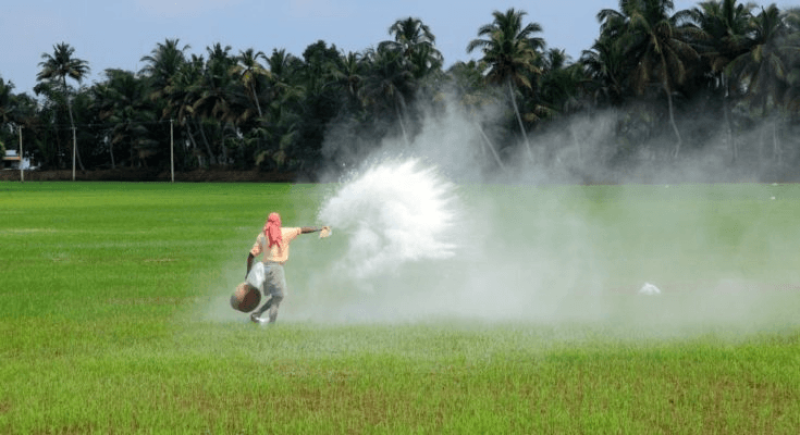
On average, global crop production has soared since the Green Revolution although, in certain regions, crop yields have either remained stagnant or declined. Meanwhile, population growth and increasing living standards have led to a significant rise in food demand. The use of pesticides and mineral fertilizers has played a crucial role in enhancing crop yields and improving food security. However, their excessive use in some parts of the world has resulted in substantial environmental and human health risks, which are becoming increasingly evident on a large scale. Indeed, the excessive use of fertilizers has contributed to the transgression of the planetary boundary for biogeochemical flows of nitrogen and phosphorus. Agricultural nitrogen amendments also contribute to destabilizing the soil nutrient cycle, leading to increased emissions of nitrous oxide, a potent greenhouse gas with a high global warming potential. Pesticides are also highly pervasive in the environment, with about 7% of net annual applied pesticides leaching to aquifers, and more than 10% residing in soil, leading to several pollution hotspots presenting risks to the environment, biodiversity and human health.
Given these environmental and human health concerns, the United Nations has called for global actions to reduce reliance on synthetic fertilizers and pesticides as part of the Sustainable Development Goals, and numerous public policies have been implemented at the national or regional level in this regard. For instance, in the European Union, regulations such as the Sustainable Use of Pesticides Directive adopted in 2009 and the Directive concerning the Protection of Waters against Pollution caused by Nitrates from Agricultural Sources adopted in 1991 aim to address these issues. However, there is limited evidence to suggest that these regulations have been successful in achieving their intended outcomes in the European Union and, more widely, in the countries exporting goods to Europe. Other initiatives, such as the Kunming Montreal global biodiversity framework, the Colombo Declaration on Sustainable Nitrogen Management, the Stockholm Convention on Persistent Organic Pollutants and Natural Farming practices in the Indian state of Andhra Pradesh have led to some achievements, but in some cases have also encountered implementation difficulties that have limited their effective impact.
The aim of this work is to shed light on the factors contributing to the limited effectiveness of policies and initiatives aimed at reducing the use of chemical inputs in agriculture. Specifically, we provide an overview, without claiming to be exhaustive, of the barriers to reducing the overuse of chemical inputs in agriculture and we suggest potential strategies to overcome these challenges. A key challenge is that barriers and solutions to this issue involve both environmental and social sciences making a mono-disciplinary approach inappropriate. Therefore, our work is based on a multi-disciplinary agronomy-economy vision, incorporating insights drawn from a workshop held in February 2022, where a panel of academic experts from different disciplines convened to delve into this crucial topic. Our analysis has a global scope since efforts to curtail chemical inputs use span numerous countries worldwide. Nonetheless, it is crucial to acknowledge that the use of chemical inputs varies significantly from one region to another. As such, the endeavor to reduce their use is contingent on the unique regional context. Notably, this concern is less relevant in countries facing food security challenges and where chemical inputs use is currently low, such as many countries in sub-Saharan Africa.

In this systemic approach, the sequencing of actions is important, as technological alternatives and price signals need to be available at the right time so that the desired outcome in one part of the system can become a driver for change in the next, and so that implementation is not too costly. To facilitate system change, comprehensive information is required at an early stage to enable stakeholders to understand their options fully. Each stakeholder needs clear insights into the barriers hindering the reduction of chemical inputs in agriculture and the potential solutions for collective transition.