Microplastics are bad for your brain

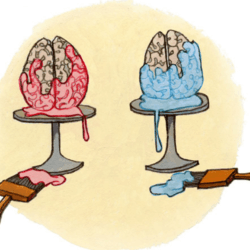
Credit: OpenAI’s DALL·E, prompted by Imogen

Tiny plastic particles pervade nearly every corner of our planet, from remote ocean trenches to pristine polar ice fields. These minute fragments, often referred to as microplastics and defined as being less than five millimeters in diameter … Now, a new line of inquiry has pushed this concern into even more troubling territory: microplastics might directly impact the function of the brain. A recent mouse study, published on 23 January 2025, documents in real time how these tiny particles obstruct blood flow in the brain’s vasculature, revealing a cascade of potential consequences that includes restricted circulation and changes in basic movement in the test animals.

Mis- and disinformation are distorting science and public policy. Subscribe to our Daily and Weekly Digests for incisive coverage of ‘disruptive’ innovations in AI, agricultural biotechnology, food, chemicals, nuclear energy, vaccines, and other disruptive innovations.

The ramifications of these obstructions go beyond the immediate, localized consequences. When neutrophils and phagocytes ingest microplastics, they are presumably responding to them as foreign particles. This immune response has its own potential set of consequences, such as inflammation, release of reactive oxygen species, and perturbations in normal immune cell trafficking. The fact that these plastic-laden cells could accumulate in the microvasculature suggests that local inflammation might be heightened in these choke points. …

This is an excerpt. Read the original post here

Related Articles

Infographic: Global regulatory and health research agencies on whether glyphosate causes cancer

Infographic: Global regulatory and health research agencies on whether glyphosate causes cancer

Does glyphosate—the world's most heavily-used herbicide—pose serious harm to humans? Is it carcinogenic? Those issues are of both legal and ...

Most Popular

Screenshot-2026-11-16-at-2.37.32-PM
30 years of GMO farming: Is the boom in glyphosate and glufosinate use harming the environment? Data show they’re the most sustainable choice
Stormlit Portrait Over Golden Mountains
Searching for life where no one thought to look: A renowned astrophysicist’s seemingly quixotic quest to explore Venus’s clouds
ChatGPT-Image-Mar-10-2026-01_39_01-PM
Viewpoint—“Miracle molecule” debunked: Why acemannan supplements don’t work
Screenshot-2026-11-19-at-7.23.23-PM
Viewpoint: After a yearlong hiatus, the U.S. Preventive Services Task Force is back in business—gutted by RFK Jr. and promoting junk science
Soybean Harvest in Cupped Hands
30 years of GMO farming: Defying cynics, we’ve had larger harvests, lower costs, and $385 billion in added global farmer income
Nurturing Care Beneath the Crunchy Moms Logo
Crunchy Moms disinformation flood: Zuckerberg's Facebook has opened floodgates on measles and vaccines
Screenshot-2026-11-19-at-7.54.57-PM
European General Court sides with scientists, dismisses activist claims that glyphosate is toxically dangerous
Screenshot-2026-11-17-at-12.18.09-PM
Challenging glyphosate fear-mongering: Statewide Nebraska study finds no link between weedkiller use and non-Hodgkin lymphoma
glp menu logo outlined

Get news on human & agricultural genetics and biotechnology delivered to your inbox.