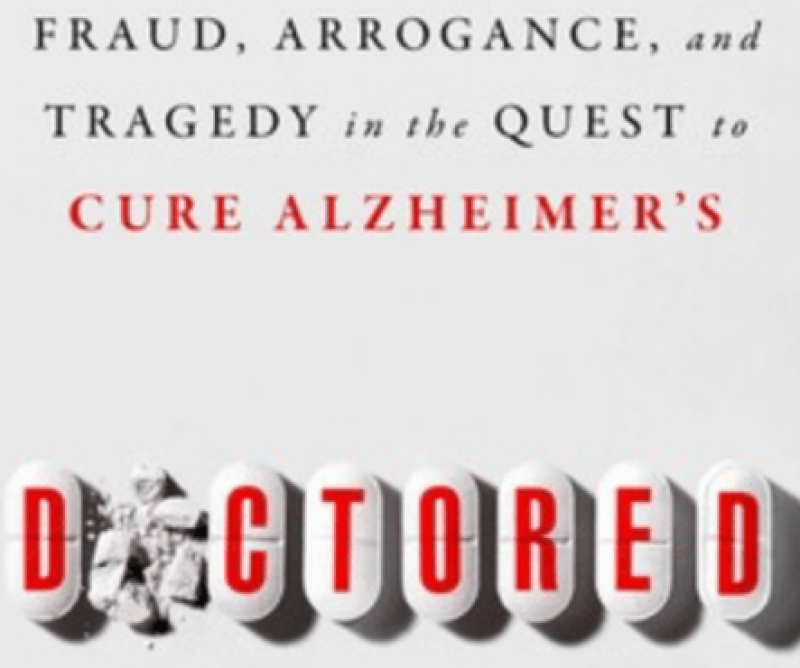
Over the past 25 years, Alzheimer’s research has suffered a litany of ostensible fraud and other misconduct by world-famous researchers and obscure scientists alike, all trying to ascend in a brutally competitive field. During years of investigative reporting, I’ve uncovered many such cases, including several detailed for the first time in my forthcoming book.
…
Take for example the revered neuroscientist Eliezer Masliah, whose groundbreaking research has shaped the development of treatments for memory loss and Parkinson’s disease, and who in 2016 was entrusted to lead the National Institute on Aging’s expanded effort to tackle Alzheimer’s. With roughly 800 papers to his name, many of them considered highly influential ….
Last September in Science magazine, I described evidence that for decades Dr. Masliah’s research had included improperly manipulated photos of brain tissue and other technical images — a clear sign of fraud. …

It’s true that some image abnormalities can be errors introduced by the publication process. … On the day my story was published, the National Institutes of Health announced that it had found that Dr. Masliah engaged in research misconduct and that he no longer held his leadership position at the National Institute on Aging.