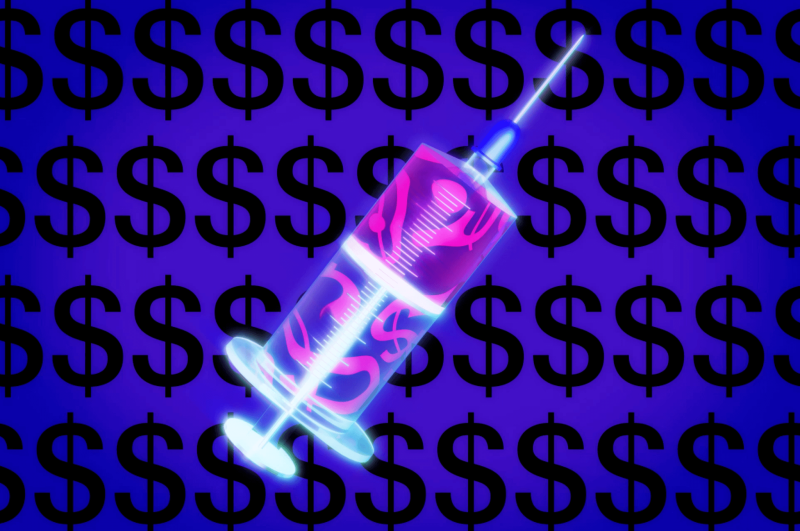
Posts like this one, which [have] circulated on social media, promote a dangerous narrative: that pediatricians recommend vaccines because they receive significant financial incentives or bonuses from pharmaceutical companies and insurance providers. The implication is clear – doctors are supposedly putting profits ahead of children’s health when they advocate for vaccination.
This claim fundamentally misunderstands how vaccine economics actually work in medical practices. Let’s examine what the research shows about vaccines, medical practices, and money.
The Big Picture: Understanding Pharmaceutical Economics
First, let’s address the broader context. In 2022, the pharmaceutical industry reported $605 billion in revenue. Of this impressive figure, vaccines represented only about 8% of total revenue. This might surprise many people, but it makes sense when we look closer at the economics.
Consider this comparison: A complete three-dose series of hepatitis B vaccine costs $81 total ($27 per dose), while the annual cost of medications to treat hepatitis B infection averages $11,500. If pharmaceutical companies were purely profit-driven, they would focus entirely on treatment rather than prevention.
The Reality of Running a Medical Practice
Let’s peek behind the curtain of a pediatric practice’s vaccine program. The full cost of vaccinating one child through age 18 comes to approximately $2,500 and requires 35 office visits. This isn’t revenue – it’s the cost to the practice. These expenses include:
- Direct vaccine purchase costs
- Specialized storage equipment (including temperature monitoring systems)
- Staff time for inventory management
- Insurance against vaccine loss
- Administrative costs for ordering and tracking
- Clinical staff time for administration
- Documentation and record-keeping
Breaking Down the Numbers
A comprehensive study published in Pediatrics revealed some startling findings about medical practices and vaccination economics:
- More than half of pediatric practices either break even or lose money on vaccinations
- Practices serving higher proportions of Medicaid patients experience greater financial losses
- Private insurance reimbursements often don’t cover costs unless a child receives three or more vaccines in one visit
- Public insurance (Medicaid) typically reimburses less than $10 per vaccine
- Private insurance averages about $17 per vaccine
- Individual vaccine doses cost practices between $4-$30 to purchase
- These reimbursements must cover not just the vaccine but all associated costs
The Financial Strain on Medical Practices
Vaccines represent the second-highest expense for pediatric practices after staff salaries. This creates a significant financial burden because:

- Practices must purchase vaccines upfront
- Storage and handling requirements are strict and expensive
- Insurance reimbursement often comes weeks or months after administration
- Any expired or damaged vaccines represent a direct loss to the practice
The situation has become so challenging that nearly 10% of pediatricians have seriously considered stopping vaccine services altogether due to economic strain.
The Public Health Economics
When we look at the broader economic impact, vaccination programs make compelling financial sense for society:
- Every $1 invested in childhood vaccination saves $10.90 in healthcare costs
- For the 3.6 million U.S. infants born yearly, routine vaccines save $63.6 billion in societal and healthcare costs
- A single case of measles can result in direct medical charges between $14,000-$16,000
Why Do Doctors Continue Providing Vaccines?
The evidence shows that vaccination services often operate at a loss for medical practices. So why do doctors continue offering them? The answer lies in their commitment to public health:
- Vaccines prevent serious, potentially deadly diseases
- They represent one of the most successful public health interventions in history
- Prevention of disease outbreaks protects entire communities
- The alternative – treating preventable diseases – leads to much higher healthcare costs and human suffering
Access and Equity Considerations
It’s worth noting that vaccines are typically free to patients:
- The Vaccines for Children program provides free vaccines to eligible children
- The Affordable Care Act requires insurance companies to cover recommended vaccines without copays (this applies for patients who have not met their yearly deductible)
- This access is critical for public health but further reduces any potential profit margin for providers
Conclusion: Following the Evidence
When we examine the actual data rather than social media claims, we find that vaccines are not a profit center for physicians – they’re a public health service that many practices provide despite financial challenges. The real motivation isn’t financial gain; it’s the prevention of serious diseases and the protection of community health.
The next time you see claims about doctors pushing vaccines for profit, remember: the numbers tell a very different story. Our healthcare providers continue to recommend and provide vaccines not because they’re profitable, but because they’re one of our most powerful tools for preventing disease and protecting public health.
Dr. Steier is a public health scientist with expertise in public health policy, research and evaluation design, biostatistics, and advanced analytics. She believes strongly in scientific education and health literacy, and the translation of research for the general public in a way that maximizes people’s ability to make informed and evidence-based decisions. A version of this article was originally posted at Unbiased Science and is reposted here with permission. Any reposting should credit both the GLP and original article. Find them on X @unbiasedscipod
A version of this article was originally posted at Unbiased Science and is reposted here with permission. Any reposting should credit both the GLP and the original article.