Before nominating Robert F. Kennedy Jr. as secretary of Health and Human Services, President Donald Trump promised to let him “go wild on health, go wild on the food, go wild on the medicines,” and Kennedy has given every indication that he plans to do it.
…
Kennedy has said flat-out, “I’m going to reverse 80 years of farm policy.” His plan is to oversee the deconstruction of large-scale agriculture, intensive meat production, and high-productivity farms. In their place, Kennedy advocates for small farms and producers who can’t leverage economies of scale and can’t produce enough food at a low cost for the American consumer.
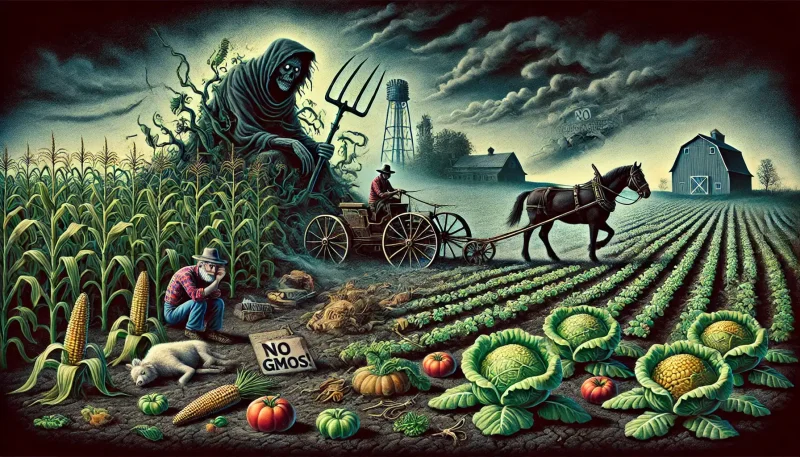
Kennedy claims to have the nation’s health in mind. But his core vision would increase the cost of all food, healthy and unhealthy, while dismantling an agricultural system that leads the world in efficiency. When he proposes to shift our food system toward “organic, regenerative agriculture,” what that means is abandoning synthetic fertilizers and virtually all other chemical inputs to American agriculture. When he proposes to shift toward grass-fed and pasture-raised meat, that means replacing our abundance of affordable meat with high-priced alternatives for which there is no significant evidence of improved human health outcomes. These practices also typically bring far worse environmental impacts.
Kennedy’s opposition to high-productivity agriculture mirrors the positions of far-left environmental groups and advocates, such as Vandana Shiva, who use anticapitalist rhetoric to advocate against modern food systems in favor of traditional production systems that cost more and produce less. Shiva was the architect of Sri Lanka’s agricultural crisis of 2021, which saw the country ban imports of synthetic fertilizer and pesticides and attempt to shift to organic and regenerative agriculture. The consequences of the ban were disastrous: Productivity dropped 50%, and food prices shot up, impoverishing the nation’s citizens.

…
The risks of abandoning science-driven agriculture are not hypothetical; they are well understood and have been borne out by real-world experience. Kennedy is a threat to America’s farmers and our food security.