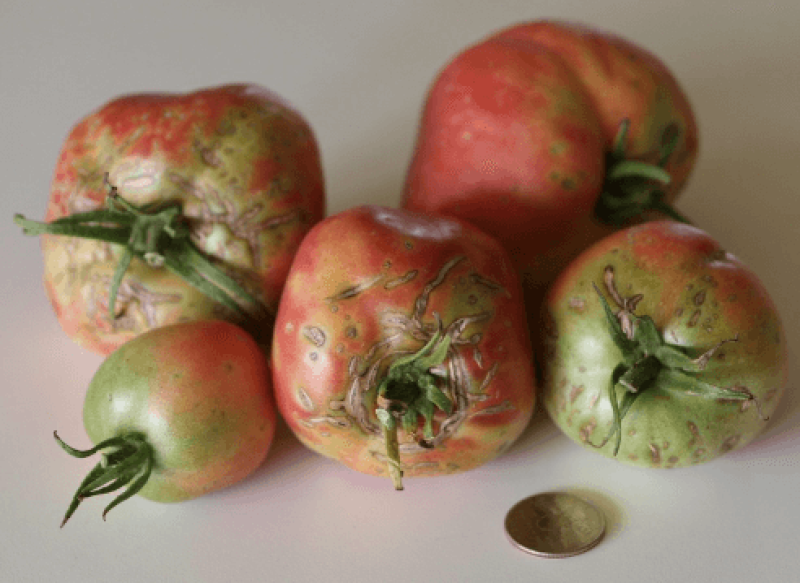
We’ve known about this problem for a long time, which has given rise to the “ugly” food movement. Once-rejected produce has been rebranded as “wonky” in the UK, “inglorious” in France, “naturally imperfect” in Canada or an “odd bunch” in Australia.

While the existence of these campaigns is commendable, there’s another major marketing challenge if we want to reduce food waste – acceptance of climate-affected produce.
Broadly speaking, this refers to produce affected by extreme or moderate weather events. Droughts are an example of such climate events, predicted to become more intense and frequent as a result of global climate change.
Climate-affected produce resembles “ugly” food as it is often smaller, misshapen or has surface imperfections.
But in contrast to “ugly” food, the taste and texture of climate-affected produce can be quite different.
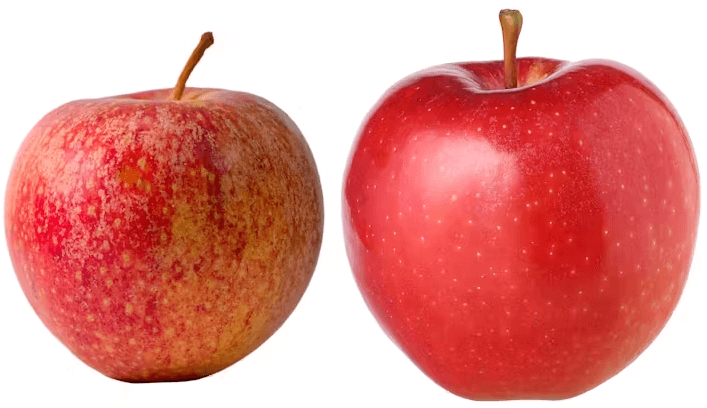
Under the effects of drought, apples may become sweeter and more granular, chillies hotter and onions more pungent. In the case of mild or moderate droughts, such produce is still edible.
Our recent research points to some uncomfortable truths. Many consumers prefer to avoid climate-affected produce altogether. And when price is a factor, they won’t choose it without a discount.
But our research also offers suggestions on how purchases of such produce could be encouraged – including marketing messages that highlight the “resilience” of climate-affected produce.
Our research
We carried out two discrete choice experiments with consumers who buy fresh fruit and vegetables. One sample was drawn from among Australian students, the other from members of the wider Australian population.
Participants were shown eight different apple options simulating a shopping environment, which were described with a range of different attributes including firmness, sweetness, appearance and size.
The apples were also labelled with a price tag and information on whether they were sold at a supermarket or farmers’ market. All climate-affected apples were presented with a “resilience” message: “resilient apple – survived the drought”.
We sought to examine how produce’s “organoleptic” properties – the way it impacts our different senses – as well as levels of empathy toward the farmers impact consumers’ willingness to choose climate-affected produce, and how much they’d pay for it.
A preference for perfect
We found when an apple’s firmness, size and aesthetics were important and empathy towards farmers was low, consumers tended to avoid climate-affected produce. They instead chose unaffected alternatives at higher prices (no such effect was observed for sweetness).

This finding might not be surprising, but it’s still cause for concern. If farmers cannot repurpose climate-affected produce into spreads, jams, smoothies or animal feed, it can’t enter supply chains and may end up as waste.
Previous campaigns for “ugly” fruit and vegetables may not offer much help with this problem, either. These campaigns emphasise the unaffected taste and texture of the produce. Marketing climate-affected produce needs a different approach.
Otherwise, we expect a discount
When price was important to consumers, they chose climate-affected produce, regardless of their levels of empathy toward farmers. But they were only willing to pay discounted prices for it.
That might seem like a more positive outcome. But consumer expectations that climate-affected produce will always be discounted may disadvantage farmers with lower profit margins and diminish its value as a still-usable resource.
The power of “resilience” messaging
Importantly, we found when the “resilience” message resonated with consumers, they were more inclined to consider climate-affected aples. This was true even when their empathy towards farmers was low.
This suggests that when empathy fails, leveraging marketing messages that highlight “resilience” could be another avenue worth exploring.
Our research team is now exploring what types of “resilience” messages can encourage purchases of climate-affected produce.
Australians have been conditioned for many years to expect only aesthetically pleasing fruit and vegetables.
Given extreme weather events are unlikely to become less frequent in the future, climate-affected produce is likely here to stay. If we want consumers to embrace it, we need to have uncomfortable conversations around its different taste and texture, and rethink what we’re willing to accept.
Senior Lecturer at The University of Western Australia. Check out Liudmila’s academic profile here
is a University Lecturer in Marketing and Consumer Behaviour at Edith Cowan University. Check out Kenneth’s academic profile here
is a Senior Lecturer in Marketing at University of Tasmania. Check out Rajesh’s academic profile here