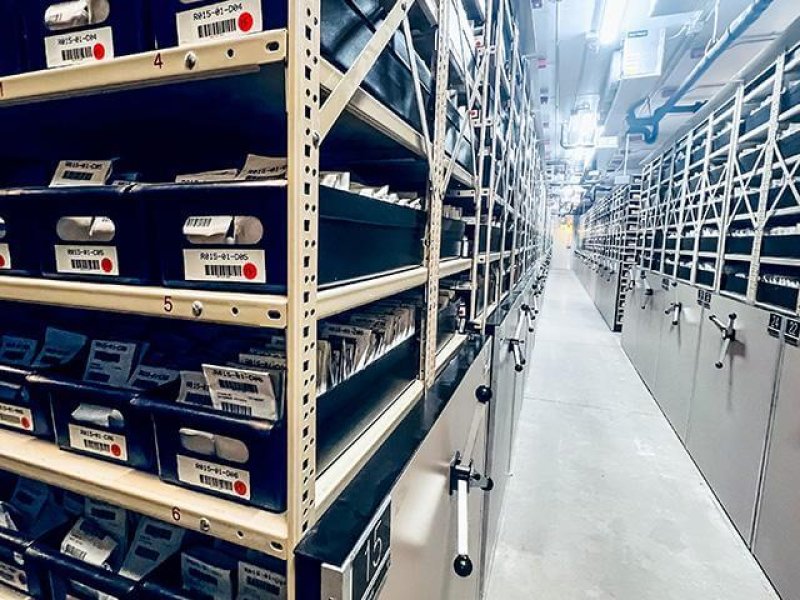

In 1958 the U.S. Department of Agriculture established the first federal seed bank in Fort Collins to preserve valuable seeds for our food supply. It was opened during the Cold War and is sometimes referred to as a “doomsday” vault.
However, researcher Daren Harmel says their work goes beyond addressing apocalyptic scenarios.
“We get asked the question a lot about being some sort of doomsday vault or to be in response of some cataclysmic problem around the world. But that is absolutely not what this facility is designed for,” Harmel said. “This facility was designed to support U.S. agriculture every day, as agriculture faces threats.”
The facility distributes plant and animal samples almost daily, or at least weekly, to support agricultural advancements.



“All of our seeds are different accessions and so they have different genes. And so, we here are preserving those by storing them in optimal conditions, testing them, and making sure that they’re alive so that then we, in turn, are preserving all of that genetic diversity that exists in all of these different seeds,” explained [Hannah] Tetreault.