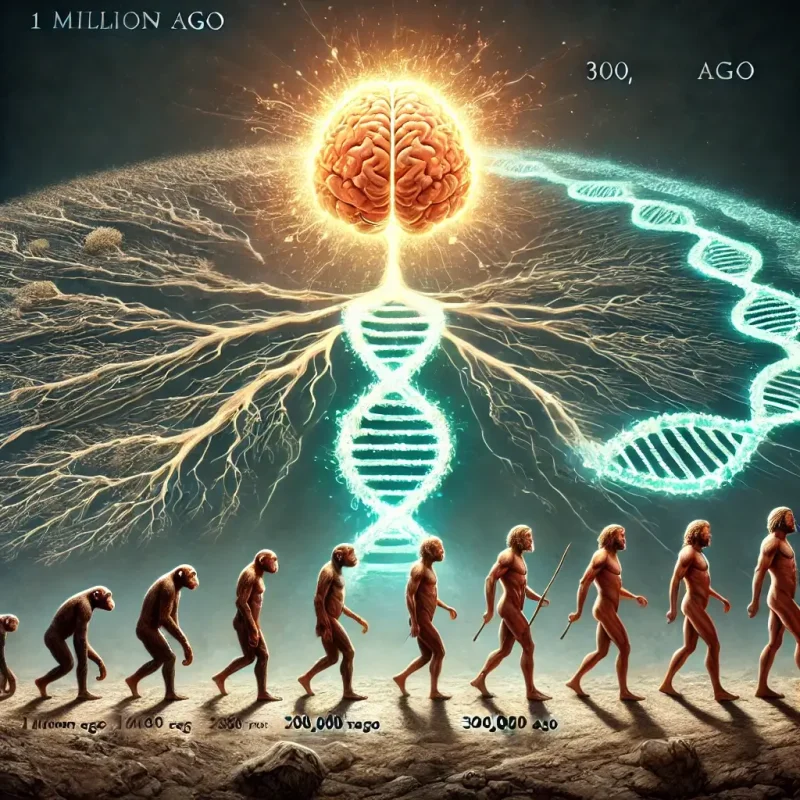
The ancestors of all modern humans split off from a mystery population 1.5 million years ago and then reconnected with them 300,000 years ago, a new genetic model suggests. The unknown population contributed 20% of our DNA and may have boosted humans’ brain function.
In a study published [March 18, 2025] in the journal Nature Genetics, researchers presented a new method of modeling genomic data … to trace the evolution of modern humans (Homo sapiens).
[T]he researchers discovered that there were two main ancestral groups that split around 1.5 million years ago, which they called Population A and Population B.…

Some of the genes from Population B, “particularly those related to brain function and neural processing, may have played a crucial role in human evolution,” study co-author Trevor Cousins [said.] … “Interbreeding and genetic exchange have likely played a major role in the emergence of new species repeatedly across the animal kingdom.”