Mostly nutrition-less rice could be gene edited to increase heart health for hundreds of million of nutrition-challenged children

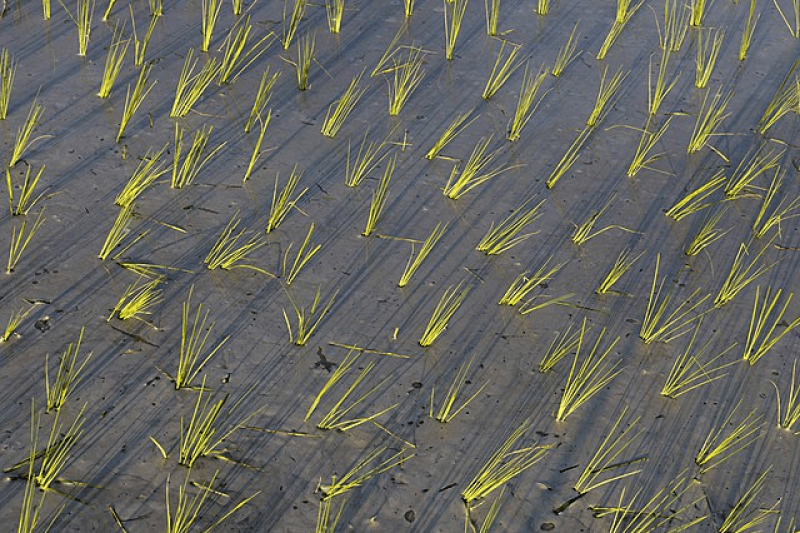
Credit: Basile Morin via CC-BY-SA-4.0

A team of Chinese scientists has successfully modified rice to produce coenzyme Q10, an essential compound known for its role in energy production and heart health. This development could make it easier for millions of people to get a crucial nutrient without relying on supplements.

Follow the latest news and policy debates on sustainable agriculture, biomedicine, and other ‘disruptive’ innovations. Subscribe to our newsletter.

The discovery is rooted in an extensive study of plant evolution. By analyzing over 1,000 plant species, researchers identified key genetic differences determining whether a plant produces CoQ9 (found in most cereals) or the more beneficial CoQ10 (found in some fruits and vegetables).

Armed with this knowledge, they used gene-editing technology to switch rice from producing CoQ9 to CoQ10.

The study, published in Cell, highlights how advanced genetic research, combined with big data and artificial intelligence, can revolutionize our approach to food and health. This innovation could have profound implications for global nutrition. Rice is a dietary staple for more than 3.5 billion people worldwide, meaning this breakthrough has the potential to make a real impact on public health.


This is an excerpt. Read the original post here

{{ reviewsTotal }}{{ options.labels.singularReviewCountLabel }}
{{ reviewsTotal }}{{ options.labels.pluralReviewCountLabel }}
{{ options.labels.newReviewButton }}
{{ userData.canReview.message }}

Related Articles

Infographic: Global regulatory and health research agencies on whether glyphosate causes cancer

Infographic: Global regulatory and health research agencies on whether glyphosate causes cancer

Does glyphosate—the world's most heavily-used herbicide—pose serious harm to humans? Is it carcinogenic? Those issues are of both legal and ...

Most Popular

ChatGPT-Image-May-7-2026-12_16_37-PM-2
Viewpoint: Are cancer rates ‘skyrocketing’ as RFK, Jr. and MAHA claims? The evidence says mostly the opposite
Screenshot-2026-04-23-at-11.00.36-AM
Regulators' dilemma: Thalidomide, Metformin, and the cost of getting drug approvals wrong
ChatGPT-Image-May-13-2026-11_56_08-AM
After slashing global health aid by $19 Billion, Trump moves to tap $2.1 billion more—to cover shutdown costs
Picture1-5
Science Disinformation Gap: The transatlantic battle over social media and censorship
Screenshot-2026-04-22-at-10.46.29-AM
Viewpoint: How to counter science disinformation? Science journalist offers 12 practical tips
ChatGPT-Image-May-12-2026-08_39_41-PM
GLP podcast: Big Pharma, Big Ag, Big Food—health harming industries or life-saving innovators?
png-pill-omega-Supp-fish-oil
Millions take omega-3 fish oil for brain health. New research suggests it may do the opposite.

Screenshot-2026-02-20-at-10.48.04-AM
Deepfakes raise profound ethical questions in science
Picture1-1
Cooling the planet with balloons: Could a geoengineering gamble slow global warming?
ChatGPT-Image-May-12-2026-01_41_42-PM
Viewpoint: ‘Measles is a canary in the healthcare coal mine’: Challenging RFK, Jr.’s scare campaign
donut-decorated-with-e-food-additives-tablets
RFK, Jr. is targeting chemical food additives. What does science tell us?
glp menu logo outlined

Get news on human & agricultural genetics and biotechnology delivered to your inbox.