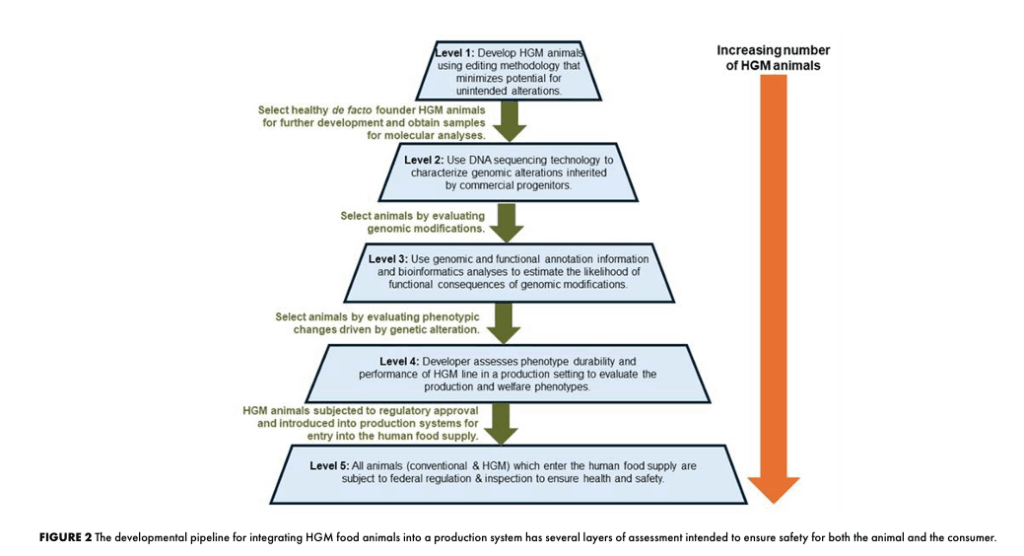
In the United States, animals developed with HGMs [heritable genetic modifications] must be approved by the Food and Drug Administration (FDA). This ensures both the health and welfare of animals carrying traits created with HGM and the safety of food animal products for consumers.
FDA approved three lines of HGM food animals, including Atlantic salmon that grows to market size faster, cattle whose coat provides improved heat tolerance, and pigs modified to not elicit a rare food allergy. None are currently available in the marketplace, however.
…