Podcast:
Podcast: Play in new window | Download
Subscribe: RSS
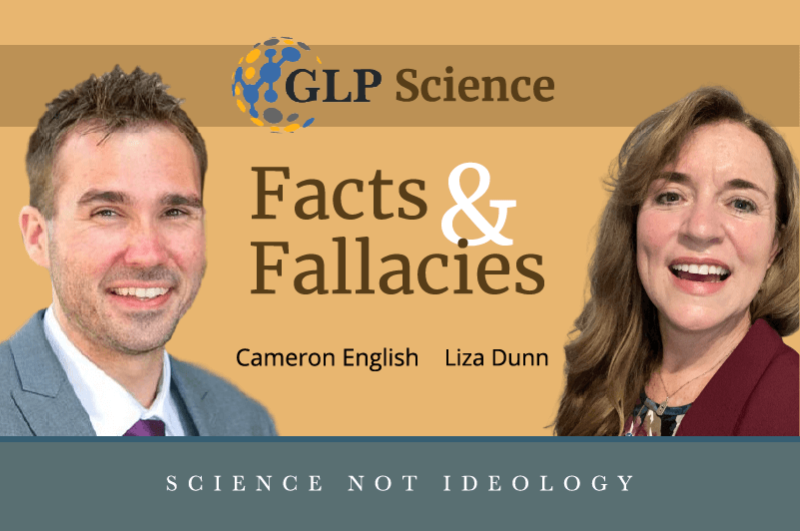
Join hosts Dr. Liza Dunn and GLP contributor Cameron English on episode 313 of Science Facts and Fallacies as they break down these latest news stories:
Activists routinely blame modern agriculture, plant breeding, and pesticide use for reduced nutrient density in fruits and vegetables, but this assertion is oversimplified and exaggerated, ignoring the complexities of food production and consumption. Often overlooked is that modern breeding focuses on sensory appeal and post-harvest durability to increase consumption of nutrient-rich produce and reduce food waste, despite slightly lower nutrient density in some produce.

A growing body of science is fueling debate about the downsides of pornography consumption. Although studying porn use is ethically fraught – we can’t put people in a room and watch them watch it – some research indicates that porn alters brain function, hijacking the reward system and impeding impulse control, potentially leading to compulsive behavior. Still, the evidence is inconclusive, with conflicting research and a lack of consensus on whether these changes are harmful or significant over the long term.
A recent study comparing fraternal and identical twins, over 9,000 individuals in total, found that genetic factors partially influence how much people enjoy music, accounting for distinct and overlapping variations in musical appreciation. The study suggests that while environment and upbringing play a role, inherited traits contribute to a person’s affinity for music. The results could encourage further investigation into the evolutionary roots of music appreciation.
Dr. Liza Dunn is a medical toxicologist and the medical affairs lead at Bayer Crop Science. Follow her on X @DrLizaMD
Cameron J. English is the director of bio-sciences at the American Council on Science and Health. Visit his website and follow him on X @camjenglish