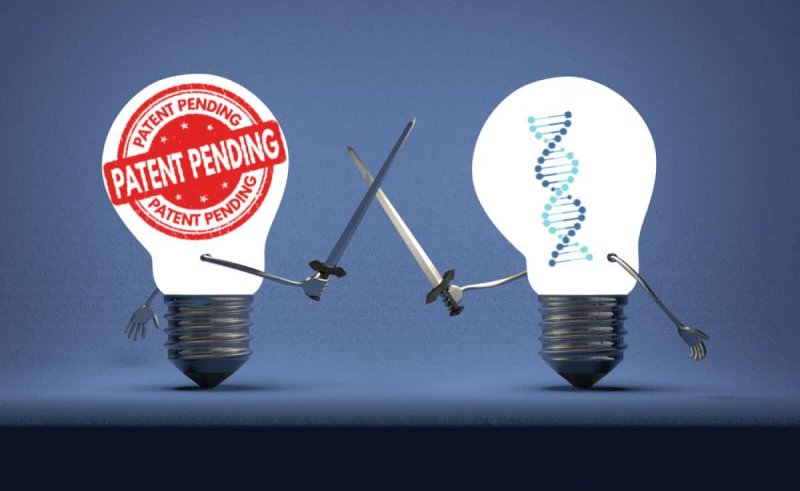
[T]he US Court of Appeals for the Federal Circuit said scientists Jennifer Doudna and Emmanuelle Charpentier will get another chance to show they ought to own the key patents on what many consider the defining biotechnology invention of the 21st century.
The pair shared a 2020 Nobel Prize for developing the versatile gene-editing system, which is already being used to treat various genetic disorders, including sickle cell disease.
But when key US patent rights were granted in 2014 to researcher Feng Zhang of the Broad Institute of MIT and Harvard, the decision set off a bitter dispute in which hundreds of millions of dollars—as well as scientific bragging rights—are at stake.

…
“This goes to who was the first to invent, who has priority, and who is entitled to the broadest patents,” says Jacob Sherkow, a law professor at the University of Illinois.