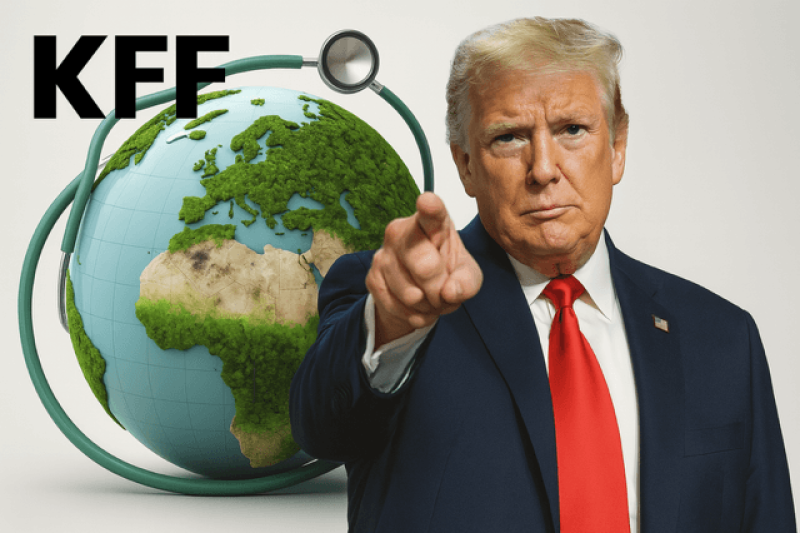
Following numerous executive actions since January that have fundamentally changed U.S. foreign assistance, KFF, a partner organization of the Genetic Literacy Project, has released a collection of fact sheets documenting the impact on U.S. global health programs. These actions include the initiation of a foreign aid review, the dissolution of U.S. Agency for International Development (USAID) (including the reduction of most staff members and contractors) and the cancellation of most global health assistance awards. KFF will expand the fact sheet collection and update existing fact sheets as new details emerge.
Background on U.S. Global Health Security Efforts
- The U.S. has supported global health security (GHS) and pandemic preparedness efforts for decades through funding and technical support provided to low- and middle-income countries (as well as support for multilateral efforts). This has included the development of formal GHS partnerships with other countries, starting with 17 in 2014 and rising to more than 50 in 2024, with programs focused in particular in countries at risk for emerging diseases.
- GHS efforts are designed to help countries and regions build capacities needed to prevent avoidable outbreaks, detect infectious disease threats early, and reduce the impacts of epidemics and pandemics through rapid and effective responses.
- Specific activities include: improving surveillance and laboratory systems, reducing the risks of animal to human disease exposures, training epidemiologists and other workers, and fostering better biosafety and biosecurity practices.
- Multiple U.S. agencies, coordinated by the National Security Council (NSC), are involved in these efforts including USAID, CDC, the Department of Defense (DoD), the State Department, HHS, and USDA. The first U.S. GHS Strategy, providing overall guidance across the government, was released by the first Trump administration. The Biden administration released an updated Strategy in 2024.
- The FY 2025 Continuing Resolution passed in March included level funding of $993 million for GHS programs at USAID and CDC. At times, Congress has also provided additional, time-limited emergency funding when outbreaks occur, such as for Ebola in 2014-2015, Zika in 2016, and most recently for the COVID-19 starting in 2020. The administration’s FY 2026 budget request includes $493.2 million for GHS, a decrease of $500 million (final appropriation levels are determined by Congress).
- U.S. investments in GHS have led to measurable increases in capacity, including improvement in 9 of 15 technical areas between 2018 and 2023 in countries with which it has formal GHS partnerships, and reductions in average outbreak response times.


Current Status of U.S. Global Health Security Programs
The following administration actions have had a significant impact on U.S. GHS programs:
- Funding freeze/stop-work order: The stop-work order initially froze all USAID-based GHS programming and services. As a result, many GHS implementing partners let staff go. Some USAID-supported GHS activities in progress were interrupted, such as funding for transport of samples and phone plans for contact tracers.
- Limited waiver: Some GHS activities were included in a limited waiver issued by the State Department on February 4 allowing “life-saving services” to continue, including: rapid emergency response to immediate infectious disease outbreaks, focused on pathogens with pandemic potential and those that pose a national security risk to U.S. citizens (e.g., mpox and H5N1), including detection, prevention, and containment efforts and supply of medical countermeasures. Even with the waiver, services remain disrupted and implementers have faced challenges in getting permission to resume programming and difficulties in getting paid.
- Dissolution of USAID: Earlier this year, USAID had about 50 staff supporting international outbreak response efforts alone, a number which dropped to six in recent weeks – and even those staff face uncertain futures given USAID has been dissolved. This means many GHS partners have lost points of contact and technical support, in addition to the loss of funding. Recent announcements of reductions at the CDC could further affect GHS capacity.
- DoD GHS programs are also targeted for cuts, with potentially up to 75% of staff to be let go along with reductions in funding.
- Reorganization of foreign assistance. The administration notified Congress on March 28, 2025 of its intent to permanently dissolve USAID and that any remaining USAID operations would be absorbed by the State Department with remaining global health activities (including its GHS work) to be integrated into its Bureau of Global Health Security and Diplomacy (GHSD). On May 29, 2025, the State Department further notified Congress of its proposed reorganization plan, including to relocate GHSD within the Department.
- GHS Strategy. The administration announced that it has withdrawn the GHS strategy, stating that it would replace it as soon as possible. However, no timeline has been provided, leaving questions about coordination across the government, particularly in the event of a major health threat and given the reorganization and reduction of global health programs already underway.
Impact on GHS Services and Outcomes
- The combination of Administration actions described above is likely to lead to more challenging and inefficient communication and coordination across U.S. agencies and with partners, contributing to slower responses to emerging health threats, greater impacts in communities in partner countries, and increased risk of importation of threatening diseases into the U.S.
- Experts estimate there is about a 50% chance we’ll see another pandemic at least as dangerous as COVID-19 in the next 25 years, with risk of disease emergence highest in the least prepared countries.
- The health impacts of poorly controlled outbreaks can be severe. An internal USAID memo reported that the risk of losing USAID GHS programs alone could result in more than 28,000 new cases of dangerous infectious diseases such as Ebola and Marburg every year.
- Emerging diseases can result in major economic and social costs, even small-scale outbreaks.
- The original (2003) SARS outbreak resulted in an estimated $30 billion in economic losses (over $3 million per case) from reduced commerce, travel and trade.
- The 2014-2015 West Africa Ebola epidemic resulted in an estimated $53 billion in economic losses. A single Ebola patient in New York in 2014 cost the city’s Health Department $4.3 million in response measures.
- Measles outbreaks in the U.S., initiated through importation from other countries, can lead to significant costs; a recent study from Washington state found that a 71-case measles outbreak led to societal costs of $3.4 million, or almost $50,000 per case.
- The original (2003) SARS outbreak resulted in an estimated $30 billion in economic losses (over $3 million per case) from reduced commerce, travel and trade.
- Epidemics that become pandemics have massive economic costs, as recently experienced with COVID-19 which cost the U.S. alone an estimated at $16 trillion– a number four times as large as the lost economic output from the financial crisis of 2008.
What to Watch
- Foreign aid review results: The administration could soon release results of its 90-day foreign aid review (which has already been extended by 30 days), including for GHS. It is unknown whether it will recommend any further changes to current efforts, including further reductions, and how or if Congress will respond to its recommendations.
- Reorganization. The proposed dissolution of USAID and integration of remaining USAID GHS activities into GHSD raises questions, including how these activities will be integrated with existing GHSD functions and whether new capacities will be needed. GHSD has historically focused on coordination and diplomatic roles in support of GHS rather than the in-country implementation roles that USAID and CDC have led on. A new GHS Strategy may address these issues.
- Funding/Budget Request: The administration’s FY 2026 budget request includes significant reductions in funding for global health, including a $500 million reduction for GHS. The administration also submitted its first rescission package to Congress, including proposed rescissions of more than $1 billion in prior year funds for global health (little information on specific funding lines to be eliminated has been provided). Final appropriation amounts and rescission decisions are determined by Congress.
A version of this article was originally posted at Kaiser Family Foundation and has been reposted here with permission. Any reposting should credit the original author and provide links to both the GLP and the original article. Find Kaiser Family Foundation on X @KFF