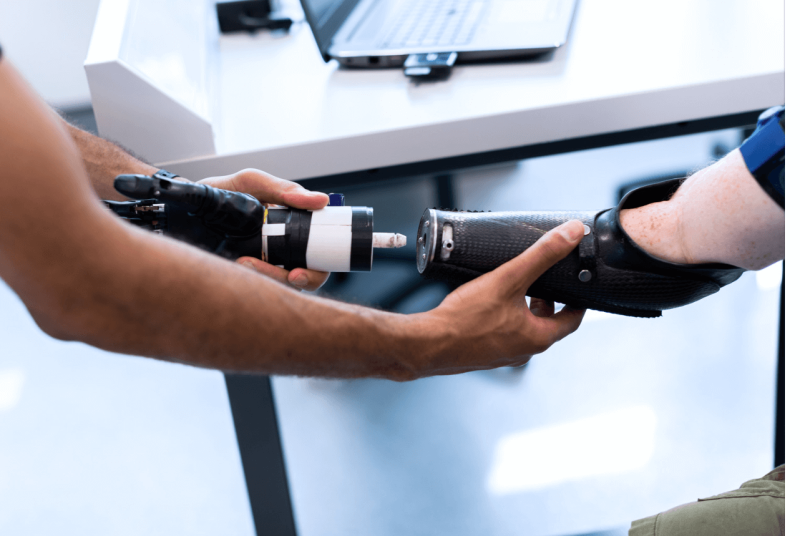
Like many people who’ve had an amputation, [Emily] Wheldon often feels pain in her phantom arm and hand.
“It’s like a throbbing pain that becomes quite unbearable at times,” she says. Sometimes it feels like her wrist is sore, other times it’s like her fingers are cramping.
Previous research suggested phantom limb pain was the result of changes in the brain’s body map. But the new study suggests it occurs because the map hasn’t changed, and the brain is still expecting signals from the missing body part.
“Imagine if you had a nerve that was receiving a highly detailed information for the body and suddenly now it’s receiving some strange, atypical input,” [said Hunter Schone, a postdoctoral associate at the University of Pittsburgh who started the project as a doctoral student at University College London]. “How would the brain deal with something like this?”
It might interpret the input as pain, he says.

If so, he says, the solution may lie in finding a new home for a nerve ending, rather than just leaving it exposed.