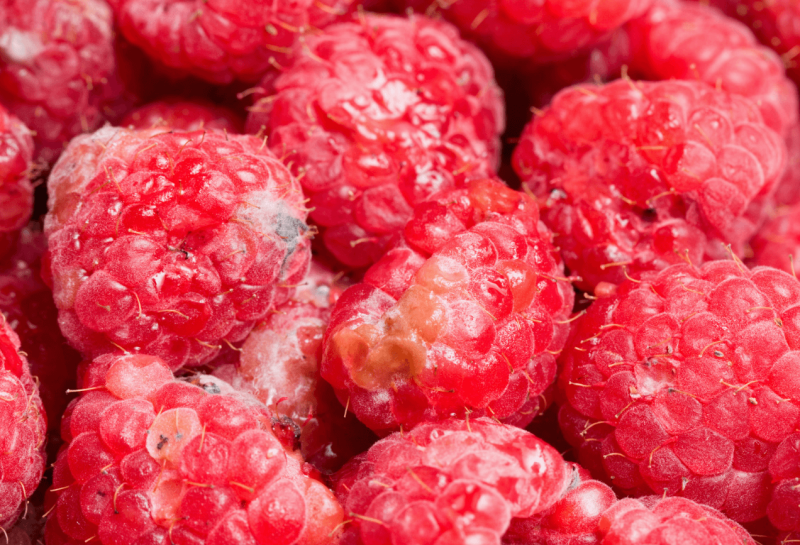

One of our most popular summer soft fruits could last longer in the fridge thanks to pioneering new research conducted at Cranfield University. Researchers have recently published a new method to edit the DNA of raspberries, with the goal of creating more sustainable raspberry production and less food waste.
A first for gene editing in raspberry
The new study details a novel method for the isolation of single cells (protoplasts) from the leaf tissue of raspberry microplants grown in sterile tissue culture.
The protoplasts were then gene edited with CRISPR-Cas9, a revolutionary biotechnology that can be programmed to target any region of the genome and introduce changes to the DNA. This study is the first time CRISPR gene editing has been validated in red raspberry (Rubus idaeus) in a peer-reviewed publication.
Now that DNA-free gene editing has been validated in raspberry, it could enable much faster, more efficient and precise breeding of new raspberry cultivars with enhanced traits – this could mean tastier and more sustainable raspberries on supermarket shelves in the future.
For example, one of the genes edited in this study, NPR1, when edited in tomato, resulted in increased resistance to grey mould. In future, it may be possible to use this to create raspberry varieties with a longer shelf-life, reducing food waste and improving sustainability. These techniques could also lead to raspberry fruits that are sweeter, larger, seedless, or enable higher crop yields and greater resilience to heatwaves arising from climate change.
Crucially, gene editing will speed up variety improvement: precisely-improved versions of elite raspberry cultivars could be produced in approximately 12 months, ready for propagation and on-farm trialling. In comparison, traditional plant breeding relies on cross-pollination and the luck of random gene shuffling followed by a decade or more of field selection before near-market evaluation starts.
The final step is to find ways to regenerate whole raspberry plants from the gene-edited single-celled protoplasts, which is possible in many crops, but can be tricky in others. The regenerated plants would then go on to produce gene edited raspberries with beneficial traits like greater resistance to mould.





New opportunities in a new regulatory environment
Importantly, DNA-free gene editing does not result in the production of a genetically modified (GM) organism. The changes to the DNA in this study are indistinguishable on a genetic level to those that result from natural mutation over time or from those produced through traditional plant breeding. This is because there is no introduction of non-native (i.e. non-raspberry) DNA into the raspberry genome.
Instead, CRISPR is introduced into the raspberry protoplasts as Cas9 protein and guide RNA, which cause editing to the DNA but do not become physically inserted into the raspberry genome. This is crucial for compliance with the new Genetic Technology (Precision Breeding) Act (2023) that only permits non-transgenic changes to DNA in crop species for production and consumption in England.
“Precision breeding techniques are essential for tackling food waste, improving food sustainability and nutrition, and lowering the cost of food,” said Ryan Creeth, the PhD student who developed the new method alongside co-authors Dr Zoltan Kevei and Prof Andrew Thompson.
“It’s really important that we fully utilise cutting-edge techniques like DNA-free gene editing in a wider variety of crop species to successfully transfer research from academia into the real world. More research is required, particularly with the regeneration of gene edited raspberry plants. But it is a promising start for one of the nation’s favourite soft fruits”.
A version of this article was originally posted at Cranfield University and is reposted here with permission. Any reposting should credit both the GLP and original article. Find Cranfield University on X @CranfieldUni