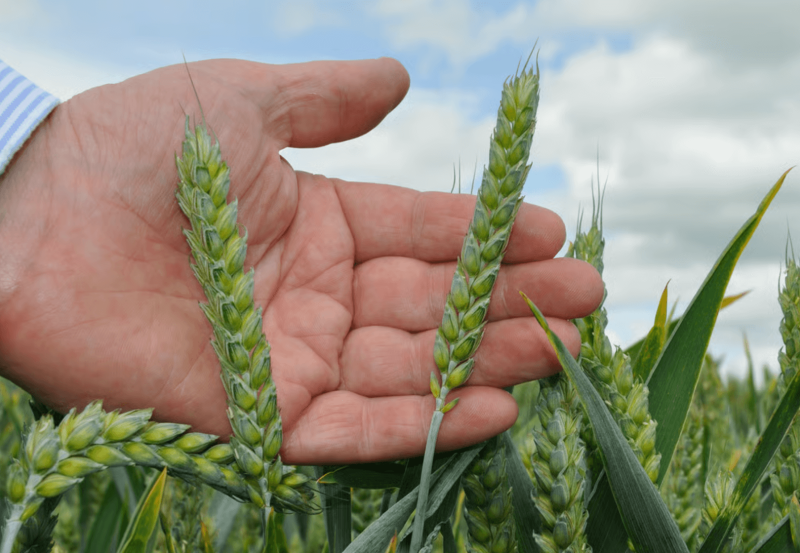

Disease control within crop production systems has been very much centred on the development of complex organic chemicals such as fungicides.
But all of this might be about to change, following the discovery of scientists at Rothamsted Research – in tandem with colleagues with Exeter and Warwick Universities – of a soil-borne fungus with very unique plant-disease control attributes.
So, could this be a ‘penicillin moment’ for arable farming?
The fungus in question produces natural, airborne chemicals that suppress devastating plant diseases.
The scientists have found that Trichoderma hamatum – a fungus already known to protect plants – releases volatile organic compounds (VOCs) that inhibit the growth of crop pathogens.
In laboratory tests, these natural vapours stalled the advance of Sclerotinia sclerotiorum, a mould responsible for rot in crops such as lettuce, beans, and oilseed rape.
The study showed that when the fungus was grown alongside S. sclerotiorum, the interaction triggered a surge in VOC production, with the highest levels occurring after 17 days.
Several of the identified chemicals, including 1-octen-3-one, proved able to halt not only S. sclerotiorum but also other destructive fungi such as Botrytis cinerea (grey mould), Pyrenopeziza brassicae (light leaf spot) and Gaeumannomyces tritici (Take-all disease in wheat).
Fungicide alternative



The findings suggest that such natural compounds could be developed into a more sustainable alternative to conventional fungicides, which are facing increasing regulatory restrictions in the UK and Europe.
Dr Jozsef Vuts, one of the co-authors of the study, said: “Further work is needed to understand how these fungal VOCs operate in real-world farming conditions, and whether they can be harnessed effectively at scale.
“But the discovery offers fresh hope for greener crop protection at a time when agriculture is under pressure to cut chemical inputs.”
Scaling up has always been the weak link in the development of new chemistries that are fit for propose when it comes to developing effective plant disease prevention at field level.
And there are direct comparisons that can be made when one considers the developments that have taken place in the field of antibiotic usage for both human and animal over the last century.
Alexander Fleming first discovered penicillin back in 1928. But it took the development of deep tank fermentation systems by the likes of the Pfizer company in the US to develop the drug through as a commercial reality.
A version of this article was originally posted at Agriland and is reposted here with permission. Any reposting should credit both the GLP and original article. Find Agriland on X @AgrilandIreland