Rewriting nature: The promise and peril of gene editing wildlife to save it

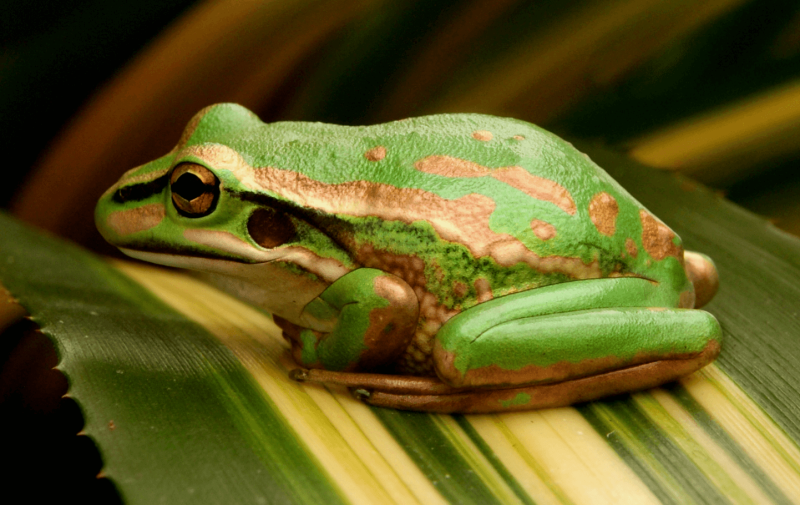
Endangered green and golden bell frog. Scientists believe gene-editing can be used to protect frogs from the deadly chytrid fungus. Credit: Creative Commons
[One] of the world’s largest conservation groups will weigh in on how … gene-editing tools should be used to aid the planet’s declining ecosystems and threatened species — and, critically, whether genetically modified plants and animals should be allowed into the wild.

At the heart of the debate is a proposed moratorium, sponsored by a coalition of environmental groups at a meeting of the International Union for the Conservation of Nature (IUCN), that would temporarily ban scientists from releasing genetically modified species into the wild. They’re preaching precaution.

Follow the latest news and policy debates on sustainable agriculture, biomedicine, and other ‘disruptive’ innovations. Subscribe to our newsletter.

On the other side are scientists and conservation groups who argue that everything should be on the table in the fight against worsening rates of extinction. That includes synthetic biology — the catch-all term used for a suite of genetic tools that scientists use to alter or engineer living cells.

Skeptics of synthetic biology argue the science is unproven. It’s not clear if genetically modified species will survive and thrive in the wild because it hasn’t been tested. It’s unknown if well-intentioned modifications could have negative impacts on the species and their broader ecosystems. 

This is an excerpt. Read the original post here

{{ reviewsTotal }}{{ options.labels.singularReviewCountLabel }}
{{ reviewsTotal }}{{ options.labels.pluralReviewCountLabel }}
{{ options.labels.newReviewButton }}
{{ userData.canReview.message }}

Related Articles

Infographic: Global regulatory and health research agencies on whether glyphosate causes cancer

Infographic: Global regulatory and health research agencies on whether glyphosate causes cancer

Does glyphosate—the world's most heavily-used herbicide—pose serious harm to humans? Is it carcinogenic? Those issues are of both legal and ...

Most Popular

Screenshot-2026-04-13-at-1.39.26-PM
Viewpoint: ‘Safer for children?’ Stonyfield yogurt under fire for deceptive organic marketing
Screenshot-2026-04-22-at-10.46.29-AM
Viewpoint: How to counter science disinformation? Science journalist offers 12 practical tips
ChatGPT-Image-May-7-2026-12_16_37-PM-2
Viewpoint: Are cancer rates ‘skyrocketing’ as RFK, Jr. and MAHA claim? The evidence says mostly the opposite
Picture1-14
When superbugs threaten vulnerable children: Can AI help solve antibiotic resistance?
Screenshot-2026-04-23-at-11.00.36-AM
Regulators' dilemma: Thalidomide, Metformin, and the cost of getting drug approvals wrong
ChatGPT-Image-May-12-2026-08_39_41-PM
GLP podcast: Big Pharma, Big Ag, Big Food—health harming industries or life-saving innovators?
Picture1-1
Cooling the planet with balloons: Could a geoengineering gamble slow global warming?
ChatGPT-Image-May-7-2026-12_32_36-PM
Viewpoint: The state of U.S. vaccine policy? Dismal nationally, but some states are stepping up.
png-pill-omega-Supp-fish-oil
Millions take omega-3 fish oil for brain health. New research suggests it may do the opposite.
glp menu logo outlined

Get news on human & agricultural genetics and biotechnology delivered to your inbox.