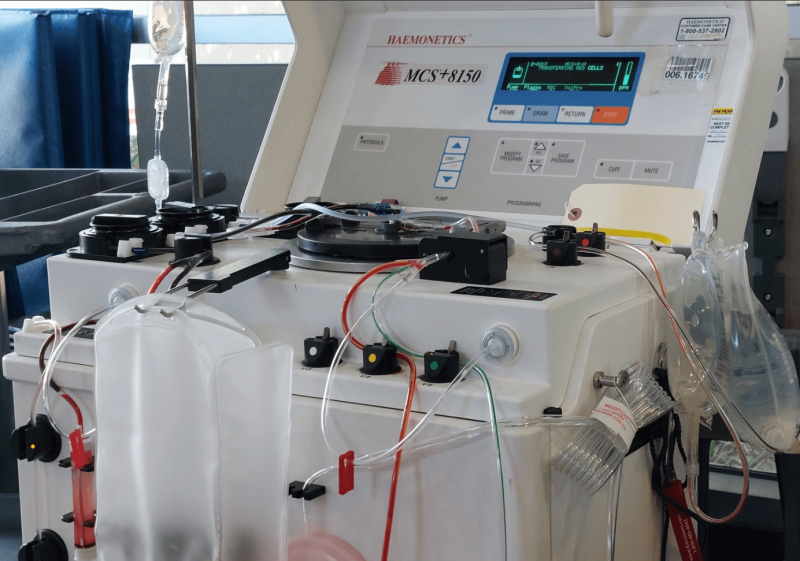
A new therapy has been developed that promoters claim can remove microplastics from the body. Is it safe? Does it work?

Credit: Public Domain

There is mounting evidence that microplastics and “forever chemicals” are infiltrating human bodies and endangering people’s health.

Interventions to remove those plastics run the gamut, including ones with little published evidence that they are effective in people. Colorado-based Winnow is selling a probiotic for $50 that the company says can “stick” to microplastics ….

Elora Therapeutics … is building an injectable drug containing enzymes that can break down plastic polymers and microplastics in the body.

Follow the latest news and policy debates on sustainable agriculture, biomedicine, and other ‘disruptive’ innovations. Subscribe to our newsletter.

Perhaps no approach has stirred more buzz than a costly treatment known as apheresis, which involves using machines to remove tiny particles and chemicals from plasma.

A machine draws blood from patients and spins it in a centrifuge to separate red blood cells from the plasma. The plasma is run through a column to filter out microplastics and absorb other toxins, then reinjected into the patient. The entire process takes about two to three hours and costs around $13,000 ….

Some scientists … are enthusiastic about apheresis for increasing longevity or treating chronic illnesses. But they question how effective the treatment is for microplastics.


This is an excerpt. Read the original post here

{{ reviewsTotal }}{{ options.labels.singularReviewCountLabel }}
{{ reviewsTotal }}{{ options.labels.pluralReviewCountLabel }}
{{ options.labels.newReviewButton }}
{{ userData.canReview.message }}

Related Articles

Infographic: Global regulatory and health research agencies on whether glyphosate causes cancer

Infographic: Global regulatory and health research agencies on whether glyphosate causes cancer

Does glyphosate—the world's most heavily-used herbicide—pose serious harm to humans? Is it carcinogenic? Those issues are of both legal and ...

Most Popular

ChatGPT-Image-May-7-2026-12_16_37-PM-2
Viewpoint: Are cancer rates ‘skyrocketing’ as RFK, Jr. and MAHA claims? The evidence says mostly the opposite
Screenshot-2026-04-13-at-1.39.26-PM
Viewpoint: ‘Safer for children?’ Stonyfield yogurt under fire for deceptive organic marketing
Screenshot-2026-04-22-at-10.46.29-AM
Viewpoint: How to counter science disinformation? Science journalist offers 12 practical tips
png-pill-omega-Supp-fish-oil
Millions take omega-3 fish oil for brain health. New research suggests it may do the opposite.
ChatGPT Image May 14, 2026, 09_51_35 PM
Facebook swamped by hundreds of thousands of scam ads for illegal or dangerous medical products
ChatGPT Image May 12, 2026, 01_21_30 PM
How big health brands are funding online medical misinformation 
Screenshot-2026-04-23-at-11.00.36-AM
Regulators' dilemma: Thalidomide, Metformin, and the cost of getting drug approvals wrong
ChatGPT-Image-May-13-2026-12_43_37-PM-2
Longevity: Is cellular rejuvenation even possible?
Picture1-1
Cooling the planet with balloons: Could a geoengineering gamble slow global warming?
Picture1-5
Science Disinformation Gap: The transatlantic battle over social media and censorship
glp menu logo outlined

Get news on human & agricultural genetics and biotechnology delivered to your inbox.