In the US, more than 10,000 infants are born each year within … precarious boundaries. Premature birth remains the nation’s second-leading cause of infant death, and even those who survive may face crippling complications, from chronic lung disease to lifelong neurological damage.
Artificial wombs promise to change that trajectory, saving more babies and sparing more parents from grief. But growing a child outside the body also cuts to the core of how people imagine pregnancy and parenthood.
…
In this way, artificial wombs tug at a taut tightrope of questions that scientists, bioethicists and legal experts are scrambling to cross before human trials begin: how will this technology affect the ways we intervene in preserving life, or how we define life itself?
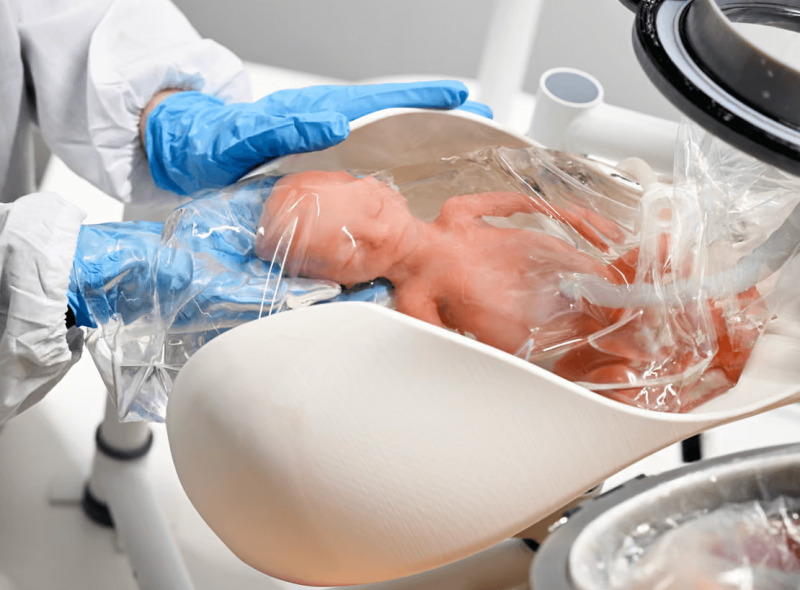
If perfected, an artificial womb could rewrite the limits of viability. Perhaps this is why the handful of labs working on these machines hesitate even to name them.
AquaWomb describes its prototype as a “womb-like life support system”. (They are wary of the political and science-fiction associations attached to the term “artificial womb”.)