The cerebral cortex is our brain’s universal machine of understanding. It builds a model of reality for us and then tries to align it with the outside world – or vice versa, to align the outside world with the model. …
There’s an apparent problem with this driving force toward maximum alignment, sometimes termed “the dark room problem“. If all that the cortex wants is internal coherence, you would think that the easiest way to achieve that would be to find a dark corner in a dark room: cut off all sensory input and nothing needs explanation or modification.
[T]here must be something that pushes the cortex out of the dark room of nonexperience and into the world of novelty, surprises, goals, and achievements. … Dopamine is what keeps us moving forward.
To understand what that means, it’s helpful to look at what happens when you have no dopamine. A mysterious disease called encephalitis lethargica, which swept across the world from 1915 to 1926, presents a terrifying case study. …
Some patients would occasionally utter a word or two; some would catch a ball if it was thrown at them; they would chew food if it was placed in their mouth – but never reached out for the food on their own.
The most basic way to understand dopamine is as a “pleasure chemical”. That explanation is helpful as a first pass, but it is wrong.
…
Wherever dopamine is released, memories are stored better, as if dopamine is telling the brain: “in the future, do more of what you just did”.
…
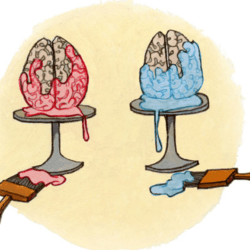



The “do more of that” logic extends to other brain areas that receive dopamine, including the cerebral cortex. Dopamine is released after something successful has been achieved; it strengthens the neurons and the connections between them that led to the success ….
…
It is also a brilliant system, as far as its evolutionary value is concerned. Imagine two animals, one of whom is perfectly content with what it has and the other who easily gets bored and constantly looks for more. Which animal is more likely to survive in the long run?