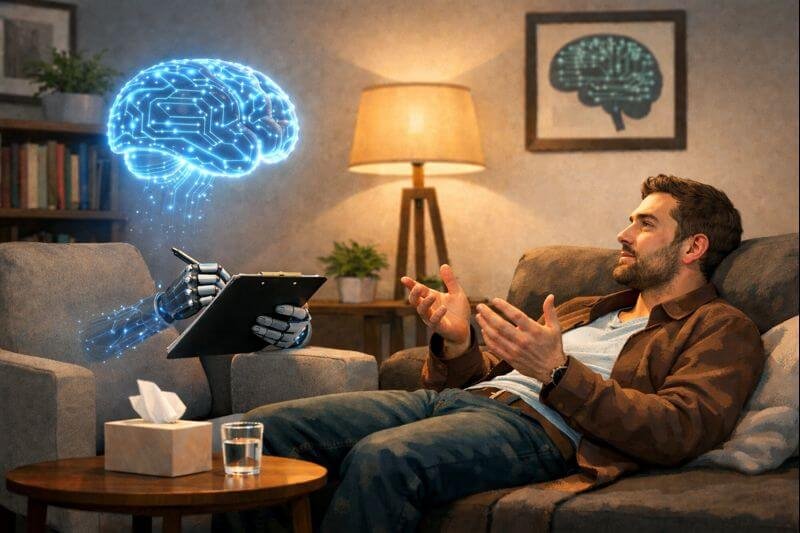
Given the clear demand for accessible and affordable mental-health services, it’s no wonder that people have looked to artificial intelligence for possible relief. …
Many people have found solace in chatbots based on large language models (LLMs), and some experts see promise in them as therapists, but other users have been sent into delusional spirals by AI’s hallucinatory whims and breathless sycophancy. Most tragically, multiple families have alleged that chatbots contributed to the suicides of their loved ones ….
[The] concept of digital phenotyping—in which a person’s digital behavior could be mined for clues about distress or illness—seems elegant in theory. But it may also become problematic if integrated into the field of psychiatric artificial intelligence (PAI), which extends well beyond chatbot therapy.
…

AI therapists could flatten humanity into patterns of prediction, and so sacrifice the intimate, individualized care that is expected of traditional human therapists. “The logic of PAI leads to a future where we may all find ourselves patients in an algorithmic asylum administered by digital wardens,” [Daniel Oberhaus writes in his book The Silicon Shrink: How Artificial Intelligence Made the World an Asylum.]