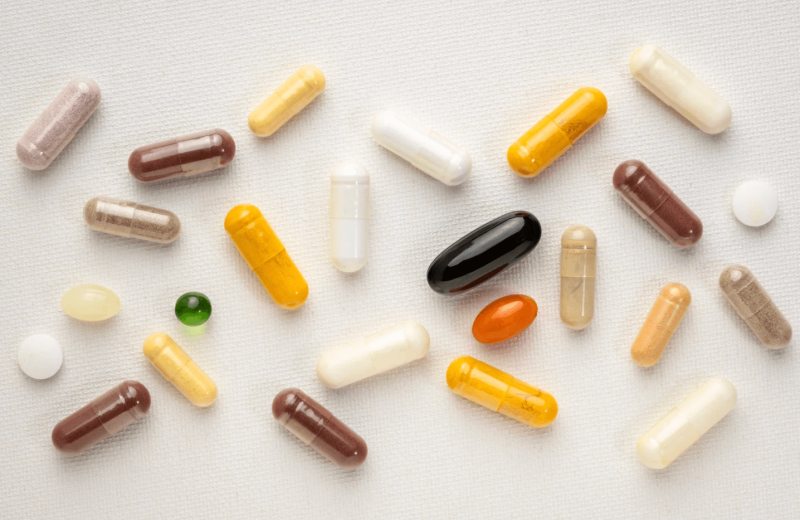
Why supplements are (almost always) a waste and often risky

Some people have vitamin or mineral deficiencies and rely on supplements to manage them, said Pieter Cohen, an internist at Cambridge Health Alliance who studies supplements. But beyond that, experts tend to be skeptical.

Supplements can come with risks, Dr. Cohen said. According to one paper, medical reactions to supplements send an estimated 23,000 people to emergency rooms each year in the United States.

“The supplement industry is essentially unregulated … ,” said Brian Hitt, assistant professor of neurology at the School of Medicine at the University of California, Irvine.

Even when they aren’t harmful, they might not do anything at all, Dr. Hitt said. “You’ll find across the board that science-based providers don’t recommend dietary supplements,” he added.
Follow the latest news and policy debates on sustainable agriculture, biomedicine, and other ‘disruptive’ innovations. Subscribe to our newsletter.

Supplement manufacturers are not permitted to make what’s called a disease claim, Dr. Cohen said. They can’t, for example, say, “‘This supplement will cure Alzheimer’s disease,’ … he explained.

But on social media, there’s little enforcement, Dr. Cohen added, “so if some influencer decides to start saying that their grandmother’s Alzheimer’s was cured using this botanical, there’s nothing to stop them.”


This is an excerpt. Read the original post here

{{ reviewsTotal }}{{ options.labels.singularReviewCountLabel }}
{{ reviewsTotal }}{{ options.labels.pluralReviewCountLabel }}
{{ options.labels.newReviewButton }}
{{ userData.canReview.message }}

Related Articles

Infographic: Global regulatory and health research agencies on whether glyphosate causes cancer

Infographic: Global regulatory and health research agencies on whether glyphosate causes cancer

Does glyphosate—the world's most heavily-used herbicide—pose serious harm to humans? Is it carcinogenic? Those issues are of both legal and ...

Most Popular

ChatGPT-Image-Mar-10-2026-01_39_01-PM
Viewpoint—“Miracle molecule” debunked: Why acemannan supplements don’t work
Screenshot 2025-07-30 at 10.48
Can gene editing eliminate Down syndrome? Scientists have done it in lab-grown cells
Screenshot 2026-05-26 at 10.15
Viewpoint: Double standard—Why does the wellness industry get a free pass while Big Healthcare is treated as morally suspect?
ChatGPT-Image-Jun-4-2026-01_27_58-PM
Viewpoint—N.A.D.+: Why Gwenyth Paltrow’s heralded anti-aging supplement doesn’t work
tick-DNA
GLP podcast: Spread meat allergy with gene-edited ticks? Bioethicists pose vile ‘thought experiment’
ChatGPT-Image-May-26-2026-07_51_21-AM-2
Viewpoint: There are more than 1,000 chemicals in a cup of coffee—including many substances that can cause cancer. Why isn’t it banned?
downsyndrome_compilation_MID_1
CRISPR breakthrough that can remove the chromosome responsible for Down syndrome raises ethical questions

Sorry. No data so far.

glp menu logo outlined

Get news on human & agricultural genetics and biotechnology delivered to your inbox.