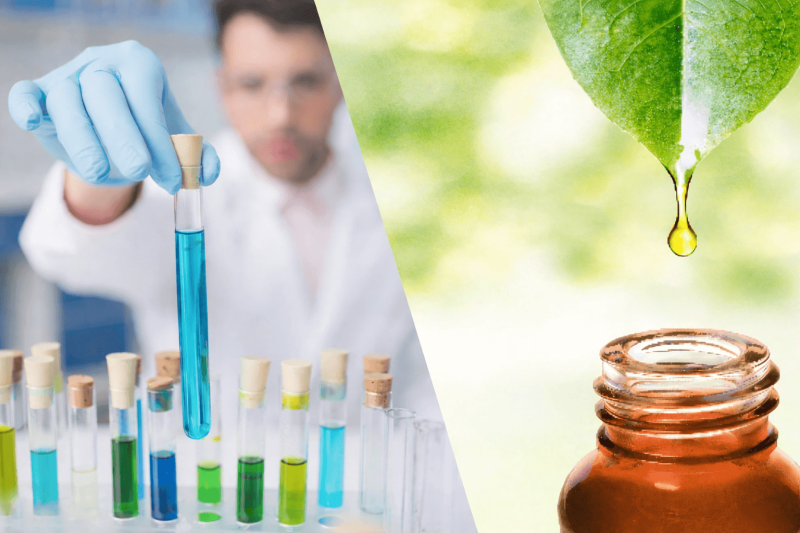
Almost nothing in your life is natural. And that’s a good thing.
Take a look around—your smartphone, your fridge, your car, the building you’re sitting in—none of these things exist in nature. Yet, we’re better off with them. Despite claims that “natural” is always better, the reality is we’ve built our modern world by improving on nature. And thank goodness for that.
The appeal to nature fallacy
The belief that “natural” is better than “unnatural” is common, but it’s simply not true. People tend to romanticise nature, thinking that because something is natural, it must be healthier, safer, or better. But this idea doesn’t hold up to reality.
We use synthetic medicines because they work better than what we’d find in the forest. We drive cars to cover distances that would take days on foot. We eat foods grown with fertilisers and protected by pesticides because these innovations help feed billions of people.
The truth? Almost nothing in your life is natural, and that’s a good thing.
Let’s talk about hypocrisy
People who argue that “natural is better” often don’t realise how hypocritical that statement is. Let’s break it down:
- You’re reading this on a device—a smartphone, a tablet, or a computer. None of these things are natural. They’re the product of human ingenuity.
- You’re probably wearing clothes made from materials that didn’t come straight from the forest.
- You live in a home, not a cave. It’s likely made from bricks, concrete, and steel—none of which are “natural.”
- You eat food that doesn’t grow wild. Almost everything you eat has been selectively bred and often processed in ways nature never intended.
So, when people make the argument that “nature knows best”, they’re ignoring the fact that modern life is full of unnatural, human-made improvements. And we rely on these advancements every day. Imagine trying to live a purely natural life. No internet. No cars. No running water. Sounds less appealing, doesn’t it?
Nature’s dark side
Here’s the thing: nature isn’t always kind. It doesn’t have our best interests in mind. Some of the deadliest things in the world are completely natural.
- Arsenic? Natural.
- Cyanide? Found in nature.
- Deadly diseases? 100% natural.
And let’s not forget: wild food can be dangerous, too. For thousands of years, we’ve been improving our crops—making them safer, tastier, and more nutritious. Bananas, corn, apples—they’ve all been modified to suit our needs because the wild versions were far from perfect.
- Bananas used to be full of seeds and almost inedible.
- Corn started as a small, tough grass called teosinte.
- Apples were small and bitter before selective breeding made them the sweet snack we love today.
So, why cling to the idea that “natural” is better? The reality is that we’ve spent centuries improving on nature because nature, on its own, often falls short.
Why we don’t leave it up to nature
If nature really knew best, we’d still be foraging for wild berries and living in caves. But we’ve always known better than to leave everything up to nature.
Our progress has been about taking control—making life easier, safer, and more comfortable.




- Plumbing gives us clean water and sanitation—natural water sources don’t.
- Electricity lights our homes—without it, nature offers us only fire or darkness.
- Vaccines protect us from diseases that nature has thrown our way.
Human innovation has made life longer, healthier, and better. That’s why almost nothing in your life is natural—because we’ve worked hard to improve on nature.
The fallacy in action
The idea that “natural” is always better has led to harmful trends in health, food, and lifestyle choices. One of the most glaring examples is the rise of “chemical-free” products. People assume that chemicals are inherently bad and that natural products must be safer.
But here’s a fact: everything is made of chemicals. The water you drink, the air you breathe, the cells in your body—it’s all chemistry.
And let’s not forget that natural doesn’t mean safe. Poison ivy? Natural. Snake venom? Also natural. On the other hand, many synthetic chemicals, like aspirin, have saved millions of lives.
The bottom line? Natural isn’t always better. In fact, many of the things we rely on today are safer and more effective because they’ve been improved by human hands.
Embracing innovation
Instead of clinging to the idea that nature knows best, it’s time to embrace the fact that human innovation has made life better. From food to medicine to technology, we’ve taken what nature gave us and made it work for us.
The next time you hear someone say “natural is better”, take a look around. Everything you see is proof that we’ve improved on nature—and that’s why our lives are better for it.
Simon Maechling is a science communicator with a PhD in Organic Chemistry and has over 20 years of experience in crop protection research and development. He has contributed to over 40 patent applications and 14 original research publications in peer-reviewed journals. Find Simon on X @simonmaechling
A version of this article was originally posted at Science for Sustainable Agriculture and has been reposted here with permission. Any reposting should credit the original author and provide links to both the GLP and the original article. Find Science for Sustainable Agriculture on X @SciSustAg