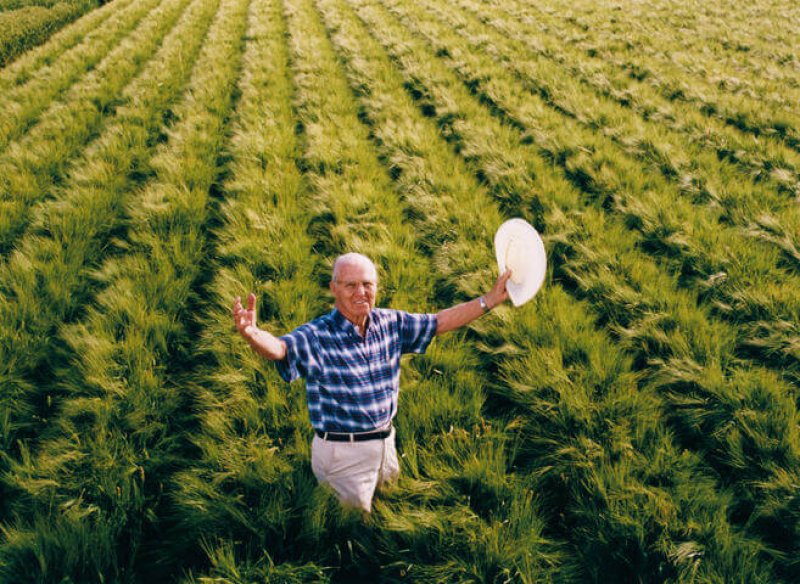
Spearheaded by the Nobel Prize-winning scientist Norman Borlaug, the Green Revolution dramatically boosted food production in the middle of the 20th century—saving the world $83 trillion and perhaps a billion people from starvation. Initiated post-World War II, the effort gained momentum in the 1960s; key components included high-yielding variety (HYV) seeds for crops like wheat and rice, expanded irrigation, mechanization and expanded use of synthetic fertilizers and pesticides. These innovations dramatically increased yields. Cereal production in developing nations, for example, more than doubled between 1961 and 1985, averting widespread famine.
Though still widely maligned today, pesticides played a pivotal role in this progression, enabling HYVs to thrive and contributing to yield surges of up to 44% from 1965 to 2010. The benefits were staggering in economic terms. A 2021 study in the Journal of Political Economy quantified that HYVs boosted incomes and curbed population growth via reduced fertility. Cumulatively, the Green Revolution saved the world trillions of dollars over 45 years—equivalent to one year of global GDP.
In risk-benefit terms, the Green Revolution’s gains—saving multitudes from starvation, reducing poverty and sparing 18-27 million hectares from conversion to cropland, primarily in developing countries—far outweighed drawbacks, especially given the annual welfare gains from related technologies by 2020. Yet, Borlaug’s work remains controversial today, with many environmental activists and some scholars alleging that his work was harmful on balance, despite the documented increases in food production.
Join Dr. Liza Lockwood and Cam English on this episode of Facts and Fallacies as they examine the Green Revolution and address criticisms of Borlaug’s work.
Podcast: Play in new window | Download


Subscribe: RSS
Dr. Liza Lockwood is a medical toxicologist and the medical affairs lead at Bayer Crop Science. Follow her on X @DrLizaMD
Cameron J. English is the director of bio-sciences at the American Council on Science and Health. Follow him on X @camjenglish