Plastic Detox documentary claims the microplastic in your brain can make a spoon. The latest science says that’s ridiculous

Credit: John DiJulio, University Communications

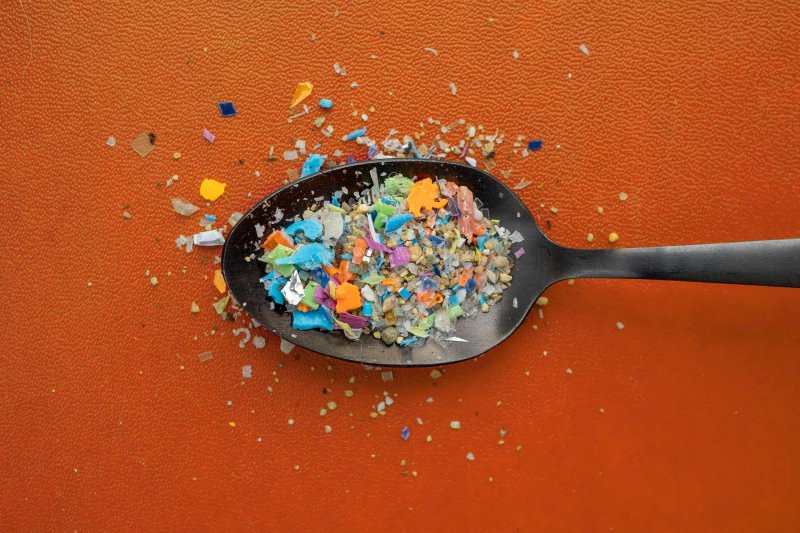
Last year, we wrote about how a decimal-point error and selective framing turned black plastic spatulas into a public-health scare. Now Netflix’s The Plastic Detox is amplifying another over-the-top claim: that the human brain may contain enough microplastic to make a plastic spoon. That line traces to a February 2025 Nature Medicine paper from researchers at the University of New Mexico. In postmortem frontal cortex samples collected in 2024, the authors reported a median microplastic concentration of 4,917 µg/g, or roughly 0.49% by weight. Scale that to an average brain and you get a visually irresistible metaphor.

…. A disposable plastic spoon weighs around 7 grams. That’s how the line was born.

Follow the latest news and policy debates on sustainable agriculture, biomedicine, and other ‘disruptive’ innovations. Subscribe to our newsletter.

By November of 2025, the findings had been formally challenged in a letter published in the same journal. The critics noted that the diagnostic markers needed to distinguish polyethylene from brain fat were absent from the data ….

Nature Medicine is not the only one to face scrutiny in this area. In January, The Guardian reported that seven major microplastics-in-humans studies have been formally challenged in their respective journals, with one environmental chemist calling the reported concentrations ‘completely unrealistic.’ 

This is an excerpt. Read the original post here

{{ reviewsTotal }}{{ options.labels.singularReviewCountLabel }}
{{ reviewsTotal }}{{ options.labels.pluralReviewCountLabel }}
{{ options.labels.newReviewButton }}
{{ userData.canReview.message }}

Related Articles

Infographic: Global regulatory and health research agencies on whether glyphosate causes cancer

Infographic: Global regulatory and health research agencies on whether glyphosate causes cancer

Does glyphosate—the world's most heavily-used herbicide—pose serious harm to humans? Is it carcinogenic? Those issues are of both legal and ...

Most Popular

Screenshot-PM-24
Viewpoint: The herbicide glyphosate isn’t perfect. Banning it would be far worse.
d-b
Blocked arteries, kidney stones, nausea, constipation, fatigue: Long list of health problems caused by too much vitamin D 
79d03212-2508-45d0-b427-8e9743ff6432
Viewpoint: The Casey Means hustle—Wellness woo opportunism dressed up as medical wisdom
ChatGPT-Image-Mar-10-2026-01_39_01-PM
Viewpoint—“Miracle molecule” debunked: Why acemannan supplements don’t work
ChatGPT-Image-Mar-27-2026-11_27_05-AM
The myths of “process”: What science says about the “dangers’ of synthetic products and ultra-processed foods
ChatGPT-Image-Apr-30-2026-12_21_05-PM-2
The tech billionaires behind the immortality movement
ChatGPT-Image-Apr-30-2026-05_00_48-PM
Wellness grifter physician turned wellness influencer out as surgeon general nominee

Sorry. No data so far.

glp menu logo outlined

Get news on human & agricultural genetics and biotechnology delivered to your inbox.