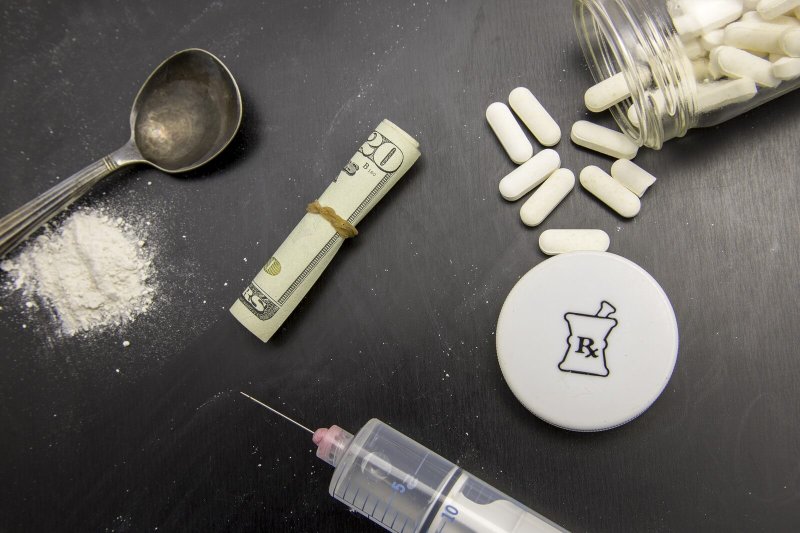
The harder the government cracks down on a drug, the more deadly its illicit replacement that emerges from the black market. It’s a trend public health experts have watched for decades as overdose deaths continue to climb, driven by the introduction of illegal fentanyl and even more potent opioids in recent years. According to some scientists, the evolution of the black-market drug supply mirrors the spread of antibiotic-resistant microbes.
The analogy works like this: law enforcement applies the same kind of selective pressure to the illicit drug market that antibiotics apply to bacteria. When we crack down on illegal drugs—seizing precursors, shutting down labs, tightening borders—the black market doesn’t surrender. Instead, it adapts. Clandestine chemists rapidly pivot to entirely new molecular scaffolds that are harder to detect and regulate. The latest example: an opioid called cychlorphine, first flagged in Europe in 2024 and now showing up in Toronto, southwest Ohio, eastern Tennessee, central Kentucky, and Chicago.
On this understanding, the underground market functions as “a vast chemical Petri dish,” says one expert, where an almost unlimited menu of new, powerful molecules is synthesized and distributed to drug users around the world. Moral of the story? Prohibition doesn’t end the arms race—it accelerates it.
Join Dr. Liza Lockwood and Cam English on this episode of Facts and Fallacies as they explain the science, trace the evolution of illicit opioid use and confront an uncomfortable policy question: is America’s prohibitionist approach to drug policy actually making the opioid crisis worse? If so, what do we do about it?
Podcast: Play in new window | Download




Subscribe: RSS
Dr. Liza Lockwood is a medical toxicologist and the medical affairs lead at Bayer Crop Science. Follow her on X @DrLizaMD
Cameron J. English is the director of bio-sciences at the American Council on Science and Health. Follow him on X @camjenglish