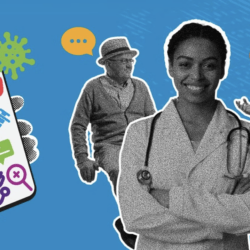
Artificial intelligence is transforming how millions of Americans get health advice, flooding platforms like YouTube and TikTok with slick, on-demand videos that appear to be expert medical guidance. Yet a rapidly growing share is entirely fabricated: a recent analysis of 100 YouTube videos on senior health found that 42% were AI-generated, more than half featuring nonexistent “experts” pushing unscientific claims.
Across social media platforms, a new generation of synthetic influencers, deepfake “doctors” and AI-generated wellness personalities is spreading fear about agriculture, food production, pest control tools, and modern farming and medical practices. These accounts often present themselves as medical experts, nutritionists, farmers or holistic health advocates. Many are entirely fictional personas created to build trust, drive clicks and sell products.
The danger is no longer theoretical. Fake AI health influencers are already promoting unproven supplements, detox products and miracle wellness cures while attacking the safety of fruits, vegetables, fertilizers and pest-management tools.
This emerging wave of misinformation poses a serious reputational risk to agriculture and could have dangerous public health consequences if left unchallenged.
Many of these AI-generated influencers follow a simple formula:
Create fear. Attack food production. Undermine trust in science. Then sell a “solution.”
Consumers scrolling through TikTok, Instagram, Facebook or YouTube are increasingly exposed to videos that claim:
- Fruits and vegetables are “full of toxins.”
- Farmers are “poisoning” communities.
- Modern agriculture is “unsafe.”
- Conventional produce “causes disease.”
- Try my “product” to protect you and your family.
The problem is that these messages are often delivered by highly realistic AI-generated personas. Some use cloned voices of real physicians and scientists without consent, while others create entirely fictional avatars designed to appear trustworthy and authentic.
The New York Times recently highlighted examples, including an AI-generated “Amish” influencer and an AI monk who promotes supplements online while spreading fear about store-bought foods.
This is not merely misleading advertising. It is a sophisticated digital manipulation campaign that exploits consumers’ fears about health, food, and the environment.
Research has consistently shown that when people fear conventional produce, they often reduce their consumption of fruits and vegetables altogether. This creates a dangerous public health problem, especially in underserved communities already struggling with food insecurity, obesity, diabetes and heart disease.
When misinformation convinces families that healthy produce is dangerous, the result is not better health. Instead, it often leads to poorer nutrition, heightened anxiety about food, and reliance on expensive wellness products with little scientific support.
The irony is striking. Many of the same influencers who attack modern agriculture depend on agriculture to manufacture the supplements and wellness products they sell.
Reputation Damage Can Spread Rapidly
AI-generated misinformation can spread faster than traditional fact-based communications can counter. A single viral video containing false claims about food safety can reach millions of consumers within hours.


Unlike traditional media, these platforms reward emotional reactions, controversy and sensationalism. Algorithms prioritize engagement over accuracy.
For dietitians, chefs, agricultural organizations, commodity groups, regulators and companies, this presents an urgent communications challenge.
How do you respond to misinformation that is:
- Emotionally driven,
- Algorithmically amplified,
- Visually convincing,
- And increasingly difficult to identify as fake?
The reputational damage can impact:
- Consumer confidence,
- Purchasing behavior,
- Regulatory pressure,
- Policymaker perceptions,
- And trust in science itself.
Even worse, misinformation campaigns can foster long-term skepticism of legitimate scientific institutions, universities and public health agencies.
AI video tools are improving rapidly, and today’s warning signs may disappear as the technology advances. If a video seems sensational, emotionally manipulative or too unbelievable to be true, take a moment to verify it through trusted news sources before sharing it.
The rise of AI-generated misinformation threatens to erode decades of scientific progress and public trust.
Consumers deserve transparency, honesty and facts — not digitally manufactured fear meant to drive product sales.
Artificial intelligence is transforming nearly every sector of society, from medicine and education to transportation and agriculture. Yet alongside these advances comes a dangerous new threat: AI-generated misinformation masquerading as trusted expertise.
A version of this article was originally posted at Agri-Pulse and has been reposted here with permission. Any reposting should credit the original author and provide links to both the GLP and the original article. Find Agri-Pulse on X @agripulse
Cameron English is the executive vice president of the American Council on Science and Health and the host of the Facts & Fallacies Podcast at Science Literacy Project. Follow him on X @camjenglish.