
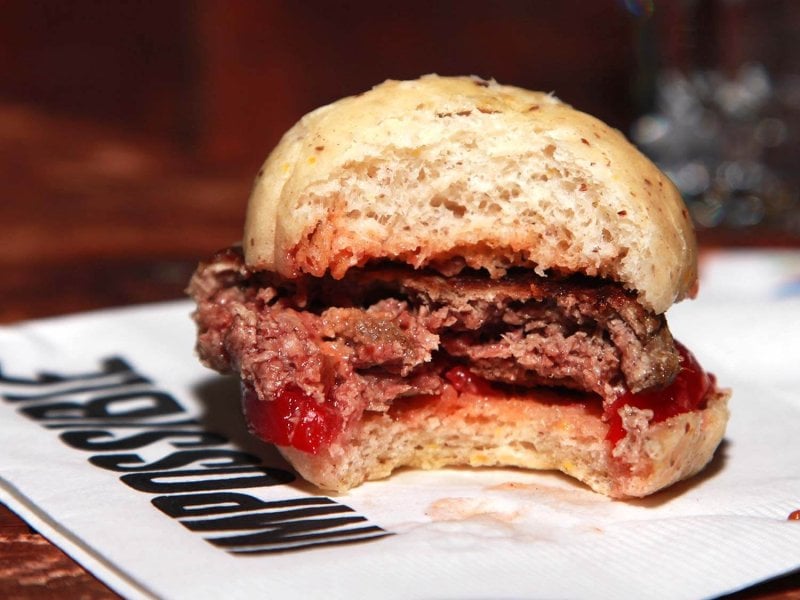
Viewpoint: Meatless meat could be next environment-saving breakthrough

beyond burger impossible burger

[Editor’s note: Dan Blaustein-Rejto is a food and agriculture analyst at the Breakthrough Institute. He holds a Master’s in public policy from the University of California Berkeley.]

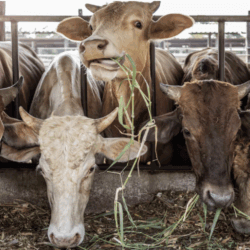
Pound for pound, [beef] has a higher carbon, land, and water footprint than other widely consumed foods. For instance, pasture for cattle grazing takes up over 400 million acres in the US and covers a quarter of the world’s land area. Additionally, over one-third of US corn produced is used for animal feed, with millions of acres of corn farmland devoted to growing feed for beef cattle. Some of this land has replaced or is infringing on prairie, grassland, and wetland ecosystems.

Plant-based burgers and other meatless alternatives, like in vitro meat, promise the taste and experience of a beef burger with a far smaller environmental impact.

…

How would this help the environment? Based on existing estimates, this replacement would reduce US agricultural greenhouse gas emissions by 24 to 58 million metric tons CO2 equivalent, or by 4.6 to 11.1 percent. Although not a huge percentage, it would be meaningful change—the equivalent of taking 5 to 12 million cars off the road. Just as importantly, it could reduce total land use by 22 million acres, freeing up land for people and animals to enjoy.
…

Are we willing to forgo these benefits because activists don’t approve of the genetic engineering technology used to make one ingredient?

The GLP aggregated and excerpted this article to reflect the diversity of news, opinion and analysis. Read full, original post: Where’s the Fake Beef?


Related Articles

Infographic: Global regulatory and health research agencies on whether glyphosate causes cancer

Infographic: Global regulatory and health research agencies on whether glyphosate causes cancer

Does glyphosate—the world's most heavily-used herbicide—pose serious harm to humans? Is it carcinogenic? Those issues are of both legal and ...

Most Popular

Nurturing Care Beneath the Crunchy Moms Logo
Crunchy Moms disinformation flood: Zuckerberg's Facebook has opened floodgates on measles and vaccines
Screenshot-2026-11-19-at-7.54.57-PM
European General Court sides with scientists, dismisses activist claims that glyphosate is toxically dangerous
Screenshot-2026-11-16-at-2.37.32-PM
30 years of GMO farming: Is the boom in glyphosate and glufosinate use harming the environment? Data show they’re the most sustainable choice
Stormlit Portrait Over Golden Mountains
Searching for life where no one thought to look: A renowned astrophysicist’s seemingly quixotic quest to explore Venus’s clouds
Soybean Harvest in Cupped Hands
30 years of GMO farming: Defying cynics, we’ve had larger harvests, lower costs, and $385 billion in added global farmer income
Screenshot-2026-11-19-at-7.23.23-PM
Viewpoint: After a yearlong hiatus, the U.S. Preventive Services Task Force is back in business—gutted by RFK Jr. and promoting junk science
Screenshot-2026-11-18-at-2.44.24-PM
Why should thousands of Americans die every year waiting for a kidney transplant? There’s an easy fix to this morbid reality
ChatGPT-Image-Mar-10-2026-01_39_01-PM
Viewpoint—“Miracle molecule” debunked: Why acemannan supplements don’t work
Screenshot-2026-11-17-at-12.18.09-PM
Challenging glyphosate fear-mongering: Statewide Nebraska study finds no link between weedkiller use and non-Hodgkin lymphoma
glp menu logo outlined

Get news on human & agricultural genetics and biotechnology delivered to your inbox.










