Genetically engineered three-eyed beetle could aid development of lab-grown organs

scarab beetle thirs eye full inset

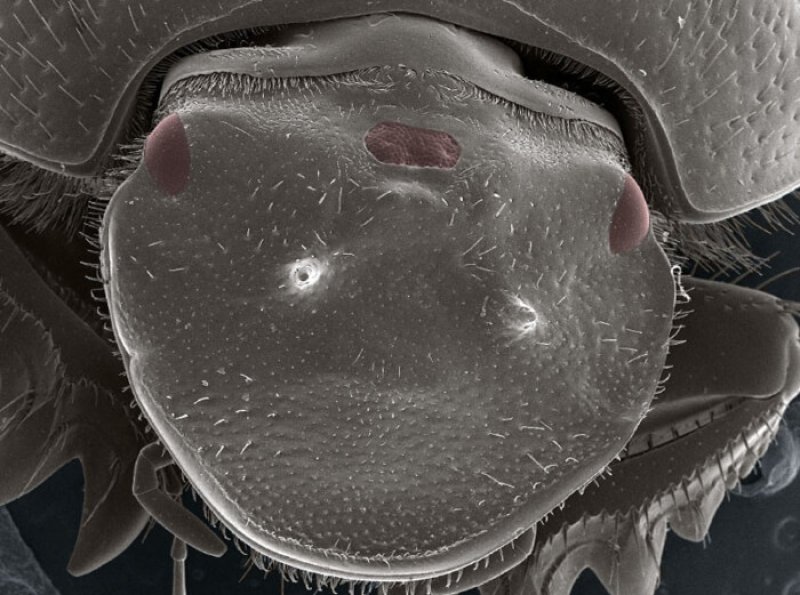
Researchers have intentionally genetically modified a common beetle to develop a third functional eye, right in the middle of its forehead. It builds on previous research in which they caused a beetle to grow a third eye accidentally. Both studies were led by Indiana University postdoctoral researcher Eduardo Zattara.

In the original research, the team switched off a gene that is involved in the development of the heads of dung beetles, which caused quite drastic changes to the structure of their heads. The beetles lost their horns – and developed a compound eye in the middle of their heads.

The work of Zattara’s team, by comparison, was much simpler. They set out to intentionally grow a third eye in two types of scarab beetle, Onthophagini and Oniticellini, by wiping out just a single gene, the same head development gene from their earlier research. The third eyes the beetles developed actually resulted from fused pairs of eyes.

The research could help understand how organs develop and become part of a body – which knowledge, in turn, could prove useful in the development of artificial lab-grown organs, for both research and medical purposes.

The team’s paper has been published in the journal PNAS.

scarab beetle third eye control comparison

The GLP aggregated and excerpted this blog/article to reflect the diversity of news, opinion, and analysis. Read full, original post: Scientist Have Engineered Beetles With a Fully Functional Third Eye

{{ reviewsTotal }}{{ options.labels.singularReviewCountLabel }}
{{ reviewsTotal }}{{ options.labels.pluralReviewCountLabel }}
{{ options.labels.newReviewButton }}
{{ userData.canReview.message }}

Related Articles

Infographic: Global regulatory and health research agencies on whether glyphosate causes cancer

Infographic: Global regulatory and health research agencies on whether glyphosate causes cancer

Does glyphosate—the world's most heavily-used herbicide—pose serious harm to humans? Is it carcinogenic? Those issues are of both legal and ...

Most Popular

ChatGPT-Image-Jun-21-2026-02_33_08-PM
Texas Air Force base flu outbreak soars to over 220 cases, and one soldier has died after Secretary Hegseth scrapped mandatory military flu shots 
ChatGPT-Image-Jun-15-2026-11_51_00-AM-4
Viewpoint: As the International Association for Research on Cancer loses influence, activists and trial lawyers scramble to protect a lucrative playbook
screenshot pm
Which is better for building healthy farm soil? Organic offers no special edge.
ChatGPT-Image-Jun-19-2026-04_11_20-PM
Daubert for Dummies—Scientific Reliability in U.S. Courts: Daubert, Rule 702, and Made-for-Litigation Evidence
wuhan institute of virology main entrance
​​COVID lab leak? Making a case that the Wuhan market origins theory is wrong
ChatGPT-Image-Jun-13-2026-11_51_39-AM
Viewpoint: COVID lab leak? Misguided backers of the lab leak theory refuse to give up
ChatGPT-Image-Jun-9-2026-01_11_37-PM
Turmeric supplements: More risks than benefits
ChatGPT-Image-Jun-19-2026-05_21_35-PM
The American Medical Association doctors declare war on RFK, Jr.’s attack on safe vaccines
Screenshot-2026-06-18-at-11.41.51-AM
Viewpoint—Protecting baloney science: Far right senators move to protect the phony homeopathy industry
Screenshot-2026-06-19-at-4.53.19-PM
Viewpoint: How the Trump administration is thwarting the will of Congress and starving American science
ChatGPT-Image-Mar-10-2026-01_39_01-PM
Viewpoint—“Miracle molecule” debunked: Why acemannan supplements don’t work
Screenshot-2026-06-05-at-2.12.30-PM
Some plants can poison you. So how did humans figure out what is safe to eat?
Screenshot-2026-06-17-at-9.44.03-AM
Viewpoint: Embryos are becoming the newest battleground of love, loss, and legal uncertainty
glp menu logo outlined

Get news on human & agricultural genetics and biotechnology delivered to your inbox.