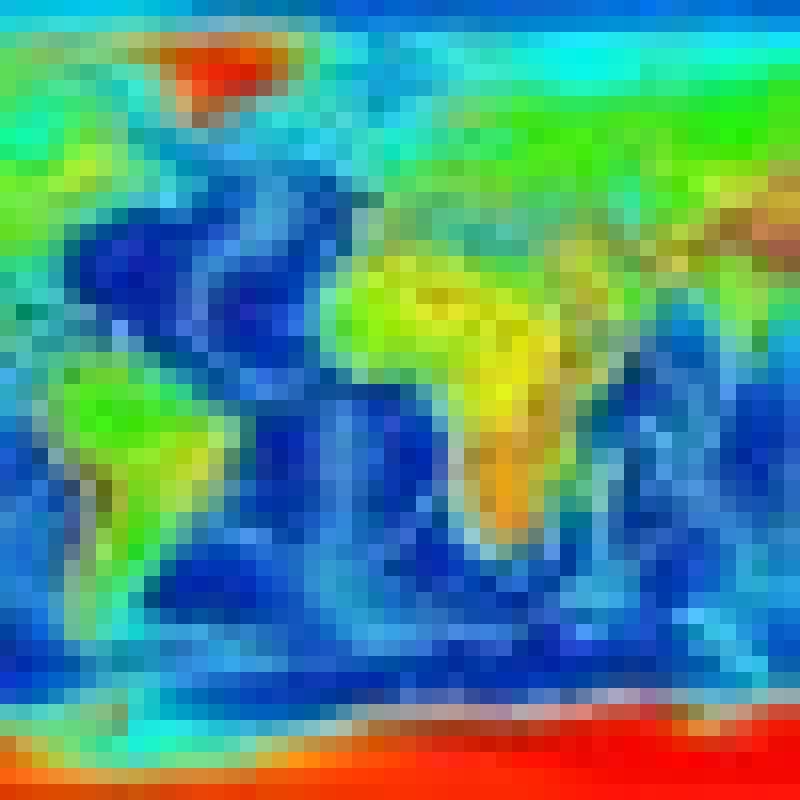
We don’t know why Ethiopians breathe easy

cf px Elevation x

Most people are aware that altitude imposes constraints on individual performance and function. Much of this is flexible; athletes who train at high altitudes may gain a performance edge. But over the long term there are costs, just as there are with computers which are ‘overclocked.’ This is the point where you make the transition from physiology to evolution. Residence at high altitude entails strong selective pressures on populations. Over the past few years there has been a great deal of exploration of the genetics of long resident high altitude groups, the Tibetans,Peruvians, and Ethiopians.

Why is high altitude adaptation of interest? First, it’s clear and distinct. Coding the two phenotypes is not that difficult. Second, the adaptive value is clear. Though people can survive at high altitudes, most do not flourish. And third, you have several distinct populations which are phylogenetically diverse. In other words, you can test evolution across multiple lineages, and see if the phenotypic and genetic features resemble each other, or differ. To some extent we know the answer: though there are overlaps, altitude adaptations differ both in their physiological presentation, and in their genetic architecture. Because it is such a powerful force, the shape of adaptation to high altitudes gives us a better sense of the arc of evolution across diverse populations and times.

View the original article here: We don’t know why Ethiopians breathe easy


{{ reviewsTotal }}{{ options.labels.singularReviewCountLabel }}
{{ reviewsTotal }}{{ options.labels.pluralReviewCountLabel }}
{{ options.labels.newReviewButton }}
{{ userData.canReview.message }}

Related Articles

Infographic: Global regulatory and health research agencies on whether glyphosate causes cancer

Infographic: Global regulatory and health research agencies on whether glyphosate causes cancer

Does glyphosate—the world's most heavily-used herbicide—pose serious harm to humans? Is it carcinogenic? Those issues are of both legal and ...

Most Popular

ChatGPT Image Jun 3, 2026, 03_14_43 PM
Viewpoint: How Earthjustice became the poster child for the abuse of special interest activist funding
ChatGPT-Image-Jun-11-2026-01_15_03-PM
Selective Pressure, Selective Silence
Screenshot-2026-06-05-at-2.12.30-PM
Some plants can poison you. So how did humans figure out what is safe to eat?
ChatGPT Image Jun 3, 2026, 03_54_37 PM
Viewpoint: “Turn on, tune in, drop out”—Kennedy embraces the Timothy Leary psychedelic revolution
Screenshot 2026-05-26 at 10.15
Viewpoint: Double standard—Why does the wellness industry get a free pass while Big Healthcare is treated as morally suspect?
ChatGPT-Image-Mar-10-2026-01_39_01-PM
Viewpoint—“Miracle molecule” debunked: Why acemannan supplements don’t work
ChatGPT Image May 28, 2026, 08_16_38 PM
Viewpoint: Why the EPA mismeasures cancer risk of chemicals and what should be done to fix it
ChatGPT-Image-May-26-2026-07_51_21-AM-2
Viewpoint: There are more than 1,000 chemicals in a cup of coffee—including many substances that can cause cancer. Why isn’t it banned?
Screenshot-2026-06-03-at-1.24.46-PM
Challenging anti-GMO disinformation: Why genetically-tweaked crops offer bushels of benefits
ChatGPT Image Jun 1, 2026, 11_39_17 AM
Viewpoint: When food myths go viral, farmers pay the price

Sorry. No data so far.

glp menu logo outlined

Get news on human & agricultural genetics and biotechnology delivered to your inbox.