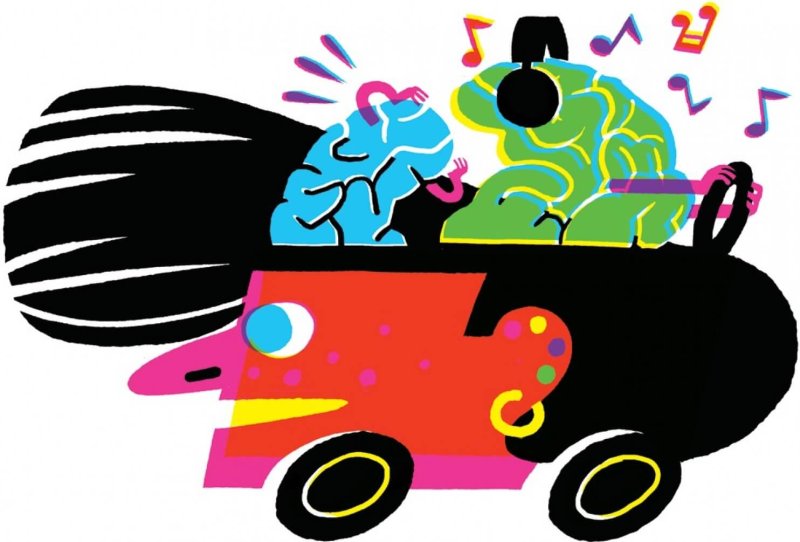
Risky business: Your brain may be wired to take chances

Davis WaPo Teen Brains

Using brain scans, a new study has observed a link between connections in the brain and the ability of the person to tolerate economic risk. The paper titled “Amygdala Functional and Structural Connectivity Predicts Individual Risk Tolerance” was published in the journal Neuron on April 5.

108 participants were recruited for the study. First, they were asked to answer questionnaires involving 120 different scenarios. The answers were used to classify where the individuals stood on a spectrum ranging from extremely risk-averse to extremely risk-seeking.

By analyzing the brain structures and the questionnaire data, it was found that participants with a higher tolerance for risk had more gray matter (a larger amygdala) and displayed more functional amygdala-mPFC connectivity than those with a lower tolerance for risk.

“Just by looking at these features of your brain, we could have a reasonable idea if you are someone who will take lots of risk or not,” [says researcher Joseph Kable.]

But given the early stages of the research, it is too soon to understand whether a system could be designed and implemented with regards to business investments or gambling disorders. “Risk taking is a complex phenomenon that is likely influenced by many factors. It seems like a big leap to go from a lab study to using this technology to inform financial decisions,” added Professor Timothy Caulfield.

Read full, original post: Do You Take Unnecessary Risks? Your Brain Structure Could Be To Blame

{{ reviewsTotal }}{{ options.labels.singularReviewCountLabel }}
{{ reviewsTotal }}{{ options.labels.pluralReviewCountLabel }}
{{ options.labels.newReviewButton }}
{{ userData.canReview.message }}

Related Articles

Infographic: Global regulatory and health research agencies on whether glyphosate causes cancer

Infographic: Global regulatory and health research agencies on whether glyphosate causes cancer

Does glyphosate—the world's most heavily-used herbicide—pose serious harm to humans? Is it carcinogenic? Those issues are of both legal and ...

Most Popular

Screenshot-PM-24
Viewpoint: The herbicide glyphosate isn’t perfect. Banning it would be far worse.
d-b
Blocked arteries, kidney stones, nausea, constipation, fatigue: Long list of health problems caused by too much vitamin D 
79d03212-2508-45d0-b427-8e9743ff6432
Viewpoint: The Casey Means hustle—Wellness woo opportunism dressed up as medical wisdom
ChatGPT-Image-Mar-10-2026-01_39_01-PM
Viewpoint—“Miracle molecule” debunked: Why acemannan supplements don’t work
ChatGPT-Image-Apr-30-2026-12_21_05-PM-2
The tech billionaires behind the immortality movement
ChatGPT-Image-Mar-27-2026-11_27_05-AM
The myths of “process”: What science says about the “dangers’ of synthetic products and ultra-processed foods
ChatGPT-Image-Apr-30-2026-05_00_48-PM
Wellness grifter physician turned wellness influencer out as surgeon general nominee

Sorry. No data so far.

glp menu logo outlined

Get news on human & agricultural genetics and biotechnology delivered to your inbox.