Plant ‘vaccines’, CRISPR gene editing could increase crop yields and reduce pesticide use

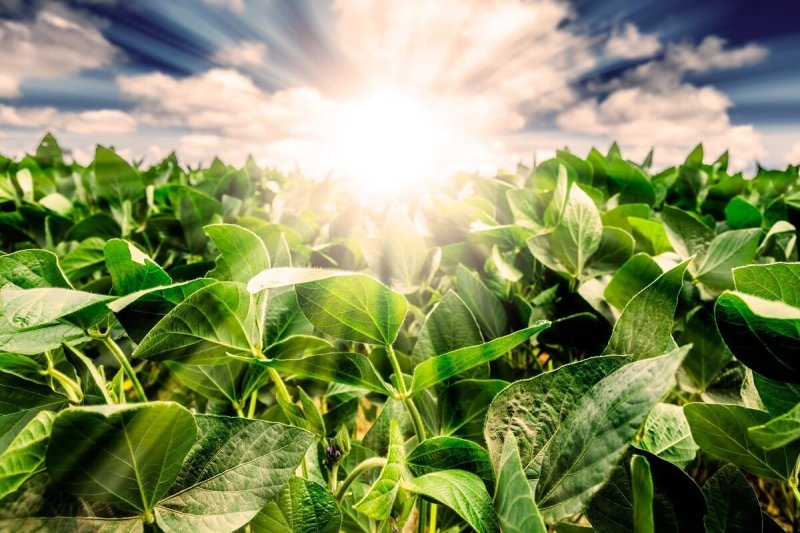
Sunrise over a soybean field x
Credit: Legendary Whitetails

When European researchers recently announced a new technique that could potentially replace chemical pesticides with a natural “vaccine” for crops, it sounded too good to be true.

And yet emerging technologies — including plant vaccines, gene editing (as distinct from genetic engineering), and manipulation of plant-microbe partnerships — hold out the tantalizing promise that it may yet be possible to farm more sustainably and boost yields at the same time.

CRISPR gene editing technology, Science magazine’s 2015 Breakthrough of the Year, has already begun to put altered crops in the field, and the pace of introductions is likely to accelerate. It’s a more palatable alternative to genetic engineering, which has faced regulatory limits and a “frankenfood” reputation because it introduces genes of one species into another. Gene editing, by contrast, isn’t transgenic. Instead, using a technology called CRISPR/Cas9, scientists precisely and inexpensively snip minute genetic sequences from the genome of an organism, or add in sequences from another individual of the same species. Such organisms contain nothing that could not in theory have resulted from natural breeding, and they have so far entered the market without regulatory delays.

Read full, original post: Can ‘Vaccines’ for Crops Help Cut Pesticide Use and Boost Yields?

{{ reviewsTotal }}{{ options.labels.singularReviewCountLabel }}
{{ reviewsTotal }}{{ options.labels.pluralReviewCountLabel }}
{{ options.labels.newReviewButton }}
{{ userData.canReview.message }}

Related Articles

Infographic: Global regulatory and health research agencies on whether glyphosate causes cancer

Infographic: Global regulatory and health research agencies on whether glyphosate causes cancer

Does glyphosate—the world's most heavily-used herbicide—pose serious harm to humans? Is it carcinogenic? Those issues are of both legal and ...

Most Popular

ChatGPT-Image-Jun-11-2026-01_15_03-PM
Selective Pressure, Selective Silence
ChatGPT Image Jun 3, 2026, 03_54_37 PM
Viewpoint: “Turn on, tune in, drop out”—Kennedy embraces the Timothy Leary psychedelic revolution
Screenshot-2026-06-11-at-3.40.06-PM
'Toxin' detox: A gastroenterologist weighs in on $71 billion health trend
Screenshot-2026-06-05-at-2.12.30-PM
Some plants can poison you. So how did humans figure out what is safe to eat?
Screenshot-2026-06-05-at-1.44.09-PM
Viewpoint: Scientists have scrapped the worst-case climate scenario. Is that proof that climate change is a hoax, as Trump claims?
Screenshot-2026-06-11-at-4.00.17-PM
Gen Z burned by sunscreen misinformation and tanning myths
ChatGPT-Image-Jun-11-2026-10_34_44-AM-2
Will hi-tech genetic fortune-telling really help parents make healthier children?
Screenshot 2026-05-26 at 10.15
Viewpoint: Double standard—Why does the wellness industry get a free pass while Big Healthcare is treated as morally suspect?
Screenshot-2026-06-03-at-1.24.46-PM
Challenging anti-GMO disinformation: Why genetically-tweaked crops offer bushels of benefits
Screenshot-2026-06-03-at-3.33.44-PM
Viewpoint: Vaccine deniers are attacking a life-saving Vitamin K shot for newborns that isn’t even a vaccine

Sorry. No data so far.

glp menu logo outlined

Get news on human & agricultural genetics and biotechnology delivered to your inbox.