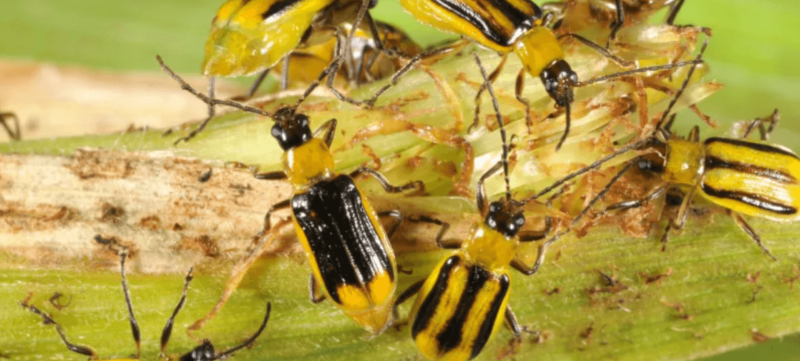
New tools needed to protect pesticides’ effectiveness from evolution of weed and insect resistance

Screen Shot at PM
Image: Gizmodo

To slow the evolutionary progression of weeds and insect pests gaining resistance to herbicides and pesticides, policymakers should provide resources for large-scale, landscape-level studies of a number of promising but untested approaches for slowing pest evolution. Such landscape studies are now more feasible because of new genomic and technological innovations that could be used to compare the efficacy of strategies for preventing weed and insect resistance.

That’s the takeaway recommendation from a North Carolina State University review paper addressing pesticide resistance published today in the journal Science.

Pesticide resistance exacts a tremendous toll on the U.S. agricultural sector, costing some $10 billion yearly. Costs could also increasingly accrue on human lives. If insecticide-coated bed nets and complementary insecticide spraying failed to slow the transmission of malaria by pesticide-resistant mosquitoes, for example, the human health costs in places like Africa could be catastrophic.

“We’re working down the list of available tools to fight weeds and insect pests,” said Zachary Brown, assistant professor of agricultural and resource economics at NC State and a co-author of the paper. “It hasn’t been economically feasible to develop new herbicides to replace glyphosate, for example, so what’s old is becoming new again. But the current incentives don’t seem to be right for getting us off this treadmill.”

Editor’s note: Read the full study (behind paywall)

Read full, original post: What Happens If We Run Out? Pesticide Resistance Needs Attention, Large-Scale Study

{{ reviewsTotal }}{{ options.labels.singularReviewCountLabel }}
{{ reviewsTotal }}{{ options.labels.pluralReviewCountLabel }}
{{ options.labels.newReviewButton }}
{{ userData.canReview.message }}

Related Articles

Infographic: Global regulatory and health research agencies on whether glyphosate causes cancer

Infographic: Global regulatory and health research agencies on whether glyphosate causes cancer

Does glyphosate—the world's most heavily-used herbicide—pose serious harm to humans? Is it carcinogenic? Those issues are of both legal and ...

Most Popular

Credit: ACSH
Viewpoint: Who and what’s to blame for the surge in vaccine-preventable diseases?
ChatGPT-Image-May-28-2026-12_56_54-PM
Viewpoint: Vaccines' non-specific effects? The ‘shoddy’ Danish couple whose 'research’ inspires RFK, Jr.’s health delusion
Organic-Produce
Viewpoint: Why you should ignore organic food advocates’ advice to avoid ‘pesticide soaked’ conventional fruits and vegetables
Screenshot-2026-06-05-at-2.12.30-PM
Some plants can poison you. So how did humans figure out what is safe to eat?
ChatGPT Image Jun 3, 2026, 03_14_43 PM
Viewpoint: How Earthjustice became the poster child for the abuse of special interest activist funding
Screenshot-2026-06-08-at-11.05.51-AM
Can vaping lead to cancer? New ‘association study’ raises questions of “links"
Screenshot-2026-06-05-at-3.30.20-PM
Republican lawmakers spread misinformation claiming solar farms permanently destroy potato farms
ChatGPT-Image-Jun-5-2026-01_17_48-PM
GLP-1 weight-loss drugs may reshape our desires and emotions
edb7f6d7-2370-418f-9578-74e29678e35c
Facts & Fallacies Podcast: Nicotine vaping—public health miracle, or risk to children? Professor Cliff Douglas
Screenshot-2026-06-08-at-10.19.30-AM
‘Natural’ wellness supplements linked to liver injury
ChatGPT-Image-Mar-10-2026-01_39_01-PM
Viewpoint—“Miracle molecule” debunked: Why acemannan supplements don’t work
Screenshot 2025-07-30 at 10.48
Can gene editing eliminate Down syndrome? Scientists have done it in lab-grown cells
glp menu logo outlined

Get news on human & agricultural genetics and biotechnology delivered to your inbox.