Home biohacker: Creating deadly human pathogens ‘is not that easy’

crispr kitresize ed
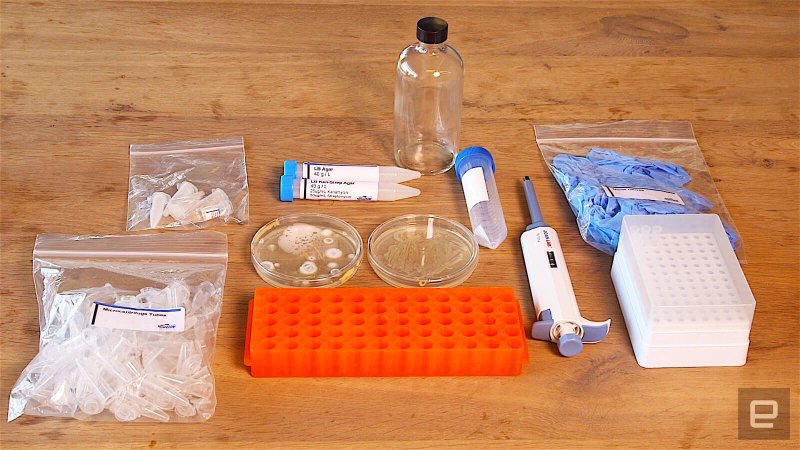
Image credit: Andrew Tarantola

Using the handy tools sent in [the ODIN’s Genetk Design Kit], I was set to re-engineer some nonpathogenic E. coli in my kitchen. That might sound terrifying; surely journalists shouldn’t be trusted to build superbugs. Relax. The lab-created strain provided in the kit was developed to be easy to engineer and does not live in the wild.

I made two batches of genetically engineered bacteria. The genomes of E. coli consist of about 4 million DNA base pairs; the goal of this experiment was to change just one of those, which should be enough to allow the bacteria to resist the streptomycin.

More than 60 hours later, by squinting hard, I detected a few tiny scattered colonies on one of the antibiotic-infused plates doused with bacteria from the first transformation batch. As recommended by The ODIN—even though the E. coli I was working with is non-pathogenic—I then sterilized all the plates by dousing them with a bleach solution. While my experiment posed no danger to public health, some worry DIY CRISPRing could create deadly pandemics. But sextillions of daily natural experiments suggest that creating human pathogens is not that easy. Plus, vastly more researchers will be developing beneficial uses of CRISPR, including early warning diagnostics and treatments enabling us to counter any future pandemics.

Read full, original post: Adventures in Home Biohacking with CRISPR

Related Articles

Infographic: Global regulatory and health research agencies on whether glyphosate causes cancer

Infographic: Global regulatory and health research agencies on whether glyphosate causes cancer

Does glyphosate—the world's most heavily-used herbicide—pose serious harm to humans? Is it carcinogenic? Those issues are of both legal and ...

Most Popular

ChatGPT-Image-Sep-17-2026-12_28_43-PM
Vitamin D, omega-3 fish oil and glucosamine supplements could cause brain damage 
ChatGPT-Image-Mar-10-2026-01_39_01-PM
Viewpoint—“Miracle molecule” debunked: Why acemannan supplements don’t work
ChatGPT-Image-Sep-17-2026-10_17_15-AM
Viewpoint: Why are the less intelligent more likely to be conservative—and smarter people more socially liberal?
Screenshot-2026-08-12-at-11.31.46-AM
AI is helping develop new vaccines
Screenshot-2026-09-10-at-12.20.19-PM
'Jet fuel didn't melt the steel': 9/11 conspiracy theories debunked
Screenshot-2026-09-17-at-10.24.54-AM
Viewpoint: Dubious environmental fears: Why the AI buildout is critical to America’s ecological future
Screenshot-2026-09-16-at-12.07.47-PM
The heated debate over trans athletes in the WNBA
ChatGPT-Image-Sep-9-2026-02_48_24-PM
Viewpoint: Trump-RFK Jr. report on “Gender Ideology & Left-wing Ideology’ targets LGBTQ community—and science
Screenshot 2026-09-11 at 12.39
Child-monitoring apps: When the cure is worse than the harm—and how the technology could be tweaked
Screenshot-2026-09-10-at-11.50.46-AM
Did COVID vaccines kill 2,500 service members? RFK Jr. hires an investigator who compares vaccine promoters to Nazi doctors
glp menu logo outlined

Get news on human & agricultural genetics and biotechnology delivered to your inbox.