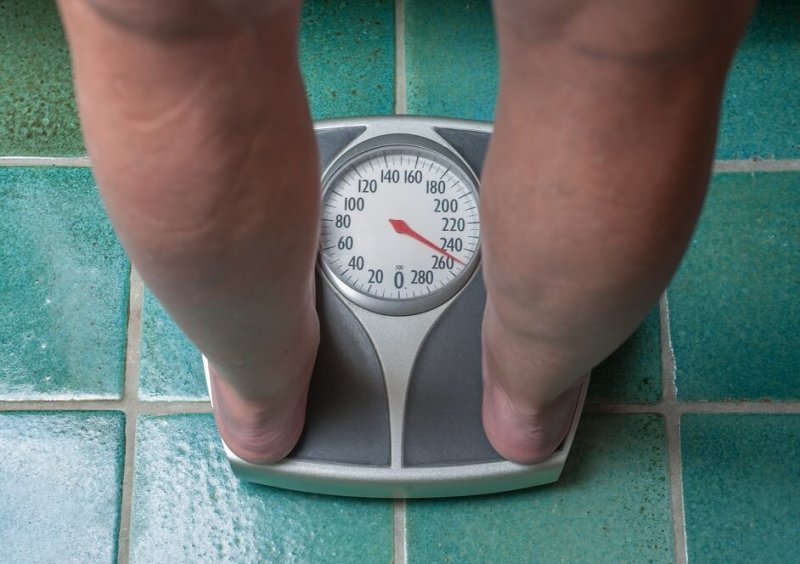
Here’s one of the reasons obese people have trouble losing weight

article
Image credit: Graphic Maps

Obesity rates in the U.S. and abroad have soared: The world now has more overweight people than those who weigh too little. One reason relates to the way the body reacts to its own fat stores by setting in motion a set of molecular events that impede the metabolic process that normally puts a damper on hunger. A new study published August 22 in Science Translational Medicine provides details of how this process occurs.

Produced by fat cells, [the hormone leptin] communicates with a brain region called the hypothalamus, which reins in hunger cravings when our energy stores are full. Yet as we gain weight our bodies become less sensitive to leptin, and it becomes harder and harder to slim down.

In an experiment using mice that became obese on a high-fat diet, an international team found obesity increases the activity of an enzyme called matrix metalloproteinase-2, or MMP-2.

MMP-2 cleaves off a portion of the leptin receptor in the hypothalamus, impairing the hormone’s signaling and its ability to suppress appetite.

The study also revealed that disabling MMP-2 with a gene-silencing technique—one in which a stretch of RNA was injected directly into the hypothalamus—had the effect of reducing weight gain in obese mice and preventing leptin receptor cleavage.

[Researchers hope to identify a drug] that can reach the hypothalamus and specifically block MMP-2 activity.

Read full, original post: A Molecular Reason Why Obese People Have Trouble Losing Weight

Related Articles

Infographic: Global regulatory and health research agencies on whether glyphosate causes cancer

Infographic: Global regulatory and health research agencies on whether glyphosate causes cancer

Does glyphosate—the world's most heavily-used herbicide—pose serious harm to humans? Is it carcinogenic? Those issues are of both legal and ...

Most Popular

ChatGPT-Image-Aug-4-2026-10_15_14-AM
Viewpoint—A hard look at the Fauci diaries: Do they change what we know about COVID’s origins?
ChatGPT-Image-Mar-10-2026-01_39_01-PM
Viewpoint—“Miracle molecule” debunked: Why acemannan supplements don’t work
png-food-sweetener-nutri
Junk science alert: Does a recent ballyhooed study really prove that artificial sweeteners are worse for your brain than sugar? 
Screenshot-2026-08-05-at-7.37.27-PM-1
Facts & Fallacies podcast: 'Zombie apocalypse'? Cities move toward drug legalization, flirt with disaster
Screenshot-2026-08-05-at-8.51.10-AM
Viewpoint: ‘ICUs were empty in NYC and across the US’: RFK, Jr. accuses pro-vaccine liberals of exaggerating the number of COVID deaths
ChatGPT-Image-Aug-4-2026-11_19_30-AM
41-state Cyclospora outbreak exposes widespread state-to-state communication failures
ChatGPT-Image-Aug-4-2026-12_42_58-PM
Viewpoint: Fact-checking CNN interview with RFK, Jr. underscores the depth of his disinformation delusions
ChatGPT-Image-Aug-4-2026-07_52_00-PM
No liability for scientific due diligence: California Supreme Court rejects bizarre lawsuit faulting Gilead for fully evaluating HIV drug before release
ChatGPT-Image-Aug-5-2026-09_54_10-AM
Viewpoint: Data center rejections hit 275 in 2026. Opponents are not the Luddites portrayed by the media
ChatGPT-Image-Aug-4-2026-10_56_29-AM
Viewpoint: Viral social media misinformation drives cancer patients toward ‘wellness grifters’ and dangerous, unregulated supplements
Picture1
Hiroshima at 81: America’s new nuclear bomb, a buried Iranian target, and a question no one wants to ask
ChatGPT-Image-Jul-17-2026-09_50_27-AM
Viewpoint: How disease tracking and prevention has cratered under the Kennedy-Trump administration
ChatGPT Image Jul 29, 2026, 06_26_01 PM 2
Facts & Fallacies podcast: Organic food myths make a comeback on Instagram, with Dr. Kevin Folta
glp menu logo outlined

Get news on human & agricultural genetics and biotechnology delivered to your inbox.