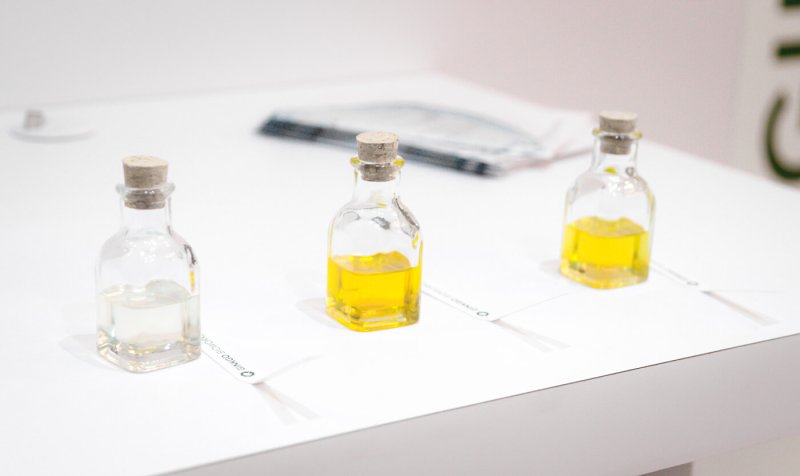
Move aside, Chanel No. 5. Scientists have now created a scent that’s even older than the iconic perfume, even if it has only just wafted into human nostrils for the first time in more than 100 years.
That’s because the piney, earthy perfume derives its fragrance compounds from a Hawaiian hibiscus flower that vanished from the dry-land forests of Maui in the early 1910s.
Researchers at Ginkgo Bioworks, one of the largest synthetic-biology companies in world, succeeded in resurrecting the smell by expressing the genes needed for making the defunct flower’s pungent aroma molecules in microbes.
…
They took small snippets of tissue from around a dozen plants, including the Falls-of-the-Ohio scurfpea (last seen in 1881), the Wynberg conebush (last seen in 1806), and the Hawaiian mountain hibiscus (presumed extinct around 1912). They then worked with Beth Shapiro, a paleogenomicist at the University of California, Santa Cruz, to isolate and decode the ancient DNA, before taking a Jurassic Park–like approach to genetic reconstitution.
…

According to [Ginkgo’s creative director Christina] Agapakis, the de-extincted hibiscus perfume will be available for purchase as part of an art installation going on tour around the world next year, starting in February [2019] at the Georges Pompidou Center in Paris.
…
The goal, says Agapakis, is to show, through art, the immense potential of synthetic biology and genome engineering.
Read full, original post: Jurassic Park for Perfume: Ginkgo Bioworks Reconstructs Scents From Extinct Plants