Neanderthals and humans lived equally ‘risky, stressful lives’

neanderthal
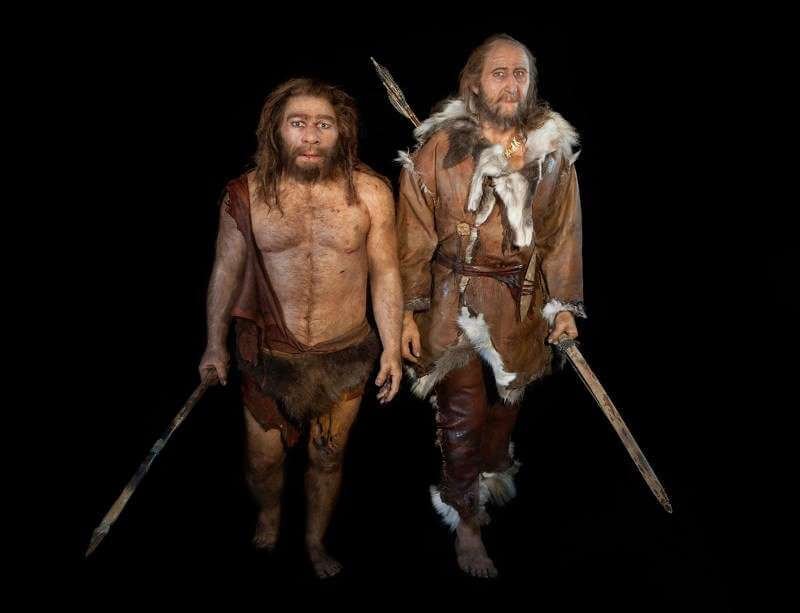
Image credit: S. Plailly/E. Daynes/Science Photo Library

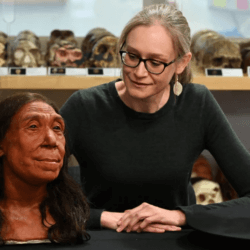
Life as a Neanderthal was no picnic, but a new analysis says it was no more dangerous than what our own species faced in ancient times.

That challenges what the authors call the prevailing view of our evolutionary cousins, that they lived risky, stressful lives. Some studies have suggested they had high injury rates, which have been blamed on things like social violence, attacks by carnivores, a hunting style that required getting close to large prey, and the hazards of extensive travel in environments full of snow and ice.

While it’s true that their lives were probably riskier than those of people in today’s industrial societies, the vastly different living conditions of those two groups mean comparing them isn’t really appropriate, said Katerina Harvati of the University of Tuebingen in Germany.

A better question is whether Neanderthals faced more danger than our species did when we shared similar environments and comparable lifestyles of mobile hunter-gatherers, she and study co-authors say in a paper released [November 14] by the journal Nature.
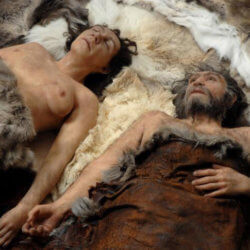
To study that, they focused on skull injuries. They reviewed prior studies of fossils from western Eurasia that ranged from about 80,000 to 20,000 years old. In all they assessed data on 295 skull samples from 114 individual Neanderthals, and 541 skull samples from 90 individuals of our own species, Homo sapiens.

Injury rates turned out to be about the same in both species.

Read full, original post: Skulls reveal Neanderthals, humans had similarly harsh lives

Related Articles

Infographic: Global regulatory and health research agencies on whether glyphosate causes cancer

Infographic: Global regulatory and health research agencies on whether glyphosate causes cancer

Does glyphosate—the world's most heavily-used herbicide—pose serious harm to humans? Is it carcinogenic? Those issues are of both legal and ...

Most Popular

Personalized-Cancer-mRNA-Vaccine-Vial
Personalized mRNA vaccines are poised to revolutionize cancer treatments. Here are the barriers.
ChatGPT-Image-Mar-10-2026-01_39_01-PM
Viewpoint—“Miracle molecule” debunked: Why acemannan supplements don’t work
Screenshot-2026-09-22-at-12.26.15-PM
‘Forever chemical’ concerns: Separating hysteria from reasonable concern in the debate over PFAS danger
Screenshot-2026-10-11-at-10.24.21-AM
Viewpoint: RFK Jr.’s new CDC head Erica Schwartz greenlights hepatitis B vaccine study critics call “unethical and designed to cast doubts on its safety”
Screenshot-2026-10-05-at-11.57.44-AM
Scaremongering or legitimate safety concerns? The political dogfight over America’s food safety system
Deepfake Democracy Media Mosaic
31 states have passed a patchwork of laws to limit election deepfake commercials. They’re not working very well.
Screenshot 2026-10-12 at 12.25
Tearful onions? CRISPR has a solution for that
Screenshot-2026-10-08-at-1.23.28-PM
Countries around the world are rushing to pass teenage social media bans. Could they backfire?
AI-Force-Uniform-Insignia-Close-Up
Trump wants an AI Force like Space Force, but that could make AI’s risks harder to manage
AI Doctor with a Digital Neural Head
Utah becomes first state to empower AI to bypass doctors and prescribe certain drugs
Radioactive-Americana-Collage-2
The kooky logic behind the raft of spurious cancer claims from Harvard’s T.H. Chan School of Public Health
generated-1790707585414
Facts & Fallacies podcast: America's health care system is broken. A doctor explains how to fix it
Screenshot-2026-09-22-at-10.54.12-AM
‘They misunderstand science’: Research attempting to tie autism to changes in the gut microbiome comes under fire
Concerned-Farmer-at-Golden-Hour
GAHA: The corporate-created “healthier America” movement challenging what it claims is MAHA misinformation about modern farming, chemicals, and food
glp menu logo outlined

Get news on human & agricultural genetics and biotechnology delivered to your inbox.