Why are strawberries so big? The genetics behind ‘up-sizing’ fruits and vegetables

NC Strawberry Grower

Once upon a time, there was a land where food was not guaranteed everyday. Children were searching woods to pick up berries. When they were lucky they would find strawberries. The fruits were small but really tasty. Around the fire at night, they would hear legends about magical beans and giant plants.

Centuries later, for most, the reality is quite different …. [G]iant veggies and fruits are real and abundant. And you probably don’t even realize it because it is so normal.

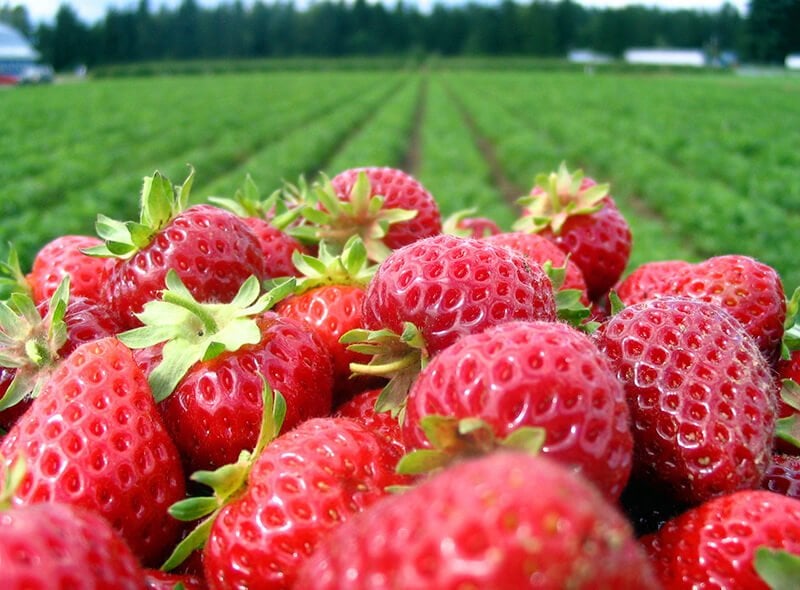
Think about strawberries. Did you ever wonder why they are so giant? Is it just good genes and nutrition, mostly healthy plants that produce larger fruit?

Happy plants definitely helps, but the answer lies elsewhere: ploidy.

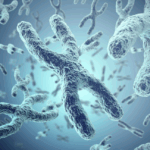
The ploidy is the number of sets of chromosomes in a cell …. [A] quarter of the plants on this planet are polyploid (>2 sets of chromosomes) including 30% of crops …. For example, polyploidy makes strawberry giant, banana seedless, cotton fibers more abundant and lily flowers larger and brighter.

Dana Robinson and colleagues from Cornell University studied the plant model Arabidopsis thaliana to quantify many cell components in chromosome-heavy plants. Their findings were published in The Plant Cell.

The researchers found that the cell area increases, but does not exactly double (~1.7x increase) when ploidy doubles. More importantly, the plant compensates for the increase in size by decreasing the number of cells.

Read full, original article: Up-Sizing: The Tale of The Polyploid Giants

{{ reviewsTotal }}{{ options.labels.singularReviewCountLabel }}
{{ reviewsTotal }}{{ options.labels.pluralReviewCountLabel }}
{{ options.labels.newReviewButton }}
{{ userData.canReview.message }}

Related Articles

Infographic: Global regulatory and health research agencies on whether glyphosate causes cancer

Infographic: Global regulatory and health research agencies on whether glyphosate causes cancer

Does glyphosate—the world's most heavily-used herbicide—pose serious harm to humans? Is it carcinogenic? Those issues are of both legal and ...

Most Popular

Screenshot 2026-05-26 at 10.15
Viewpoint: Double standard—Why does the wellness industry get a free pass while Big Healthcare is treated as morally suspect?
ChatGPT-Image-Mar-10-2026-01_39_01-PM
Viewpoint—“Miracle molecule” debunked: Why acemannan supplements don’t work
Screenshot 2025-07-30 at 10.48
Can gene editing eliminate Down syndrome? Scientists have done it in lab-grown cells
tick-DNA
GLP podcast: Spread meat allergy with gene-edited ticks? Bioethicists pose vile ‘thought experiment’
ChatGPT-Image-Jun-4-2026-01_27_58-PM
Viewpoint—N.A.D.+: Why Gwenyth Paltrow’s heralded anti-aging supplement doesn’t work
downsyndrome_compilation_MID_1
CRISPR breakthrough that can remove the chromosome responsible for Down syndrome raises ethical questions
Screenshot-2026-06-03-at-1.24.46-PM
Challenging anti-GMO disinformation: Why genetically-tweaked crops offer bushels of benefits
ChatGPT-Image-Jun-4-2026-11_49_36-AM-2
‘You don’t understand Tolkien’: Skeptic Pope trolls tech giants about the exaggerated, risk-less benefits of AI
ChatGPT-Image-May-26-2026-07_51_21-AM-2
Viewpoint: There are more than 1,000 chemicals in a cup of coffee—including many substances that can cause cancer. Why isn’t it banned?
Screenshot-2026-06-04-at-12.05.08-PM
Cases of brain inflammation surge as U.S. measles pandemic approaches 2000

Sorry. No data so far.

glp menu logo outlined

Get news on human & agricultural genetics and biotechnology delivered to your inbox.