“We are as gods and might as well get good at it.”
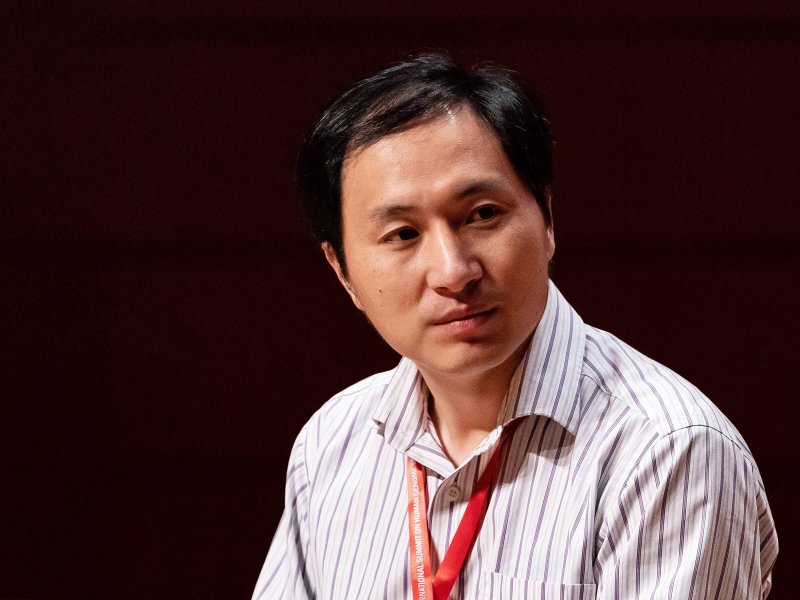
That was the opening line from Stewart Brand’s 1968 Whole Earth Catalog, but it has rarely seemed more applicable than on November 25, 2018. On that day, the news broke that Chinese scientist He Jiankui had used gene editing to tweak the genomes of embryos recently born as (apparently) healthy baby girls, Lulu and Nana.Let there be no ambiguity: The series of deliberate steps taken by Dr. He to deliver these results were unjustified, deliberate, wrong, technically inept, and unforgiveable. But they did not take place in a vacuum, and any efforts to slow the pace of gene editing innovation in reaction to He’s misdeeds would be a mistake.
To understand the significance of He’s actions we have to look both at what happened, and what came before. While many medical interventions—from vaccines, anesthesia, antibiotics, and even eyeglasses—have initially seemed like playing god, interventions to manipulate directly the heritable genetic endowment fundamental not only to what makes us human, but to what makes each of us unique, had never been seen before.
It’s not like we didn’t see this coming. From Mary Wollstonecraft to Aldous Huxley, such developments have long been anticipated, and as powerful technological innovations like gene editing have been developed, the inevitability of their application to humans has been the focus of a considerable amount of thought. As one observer put it, “…human germline editing is something we all knew was inevitable ever since the first reports of CRISPR-mediated gene editing in late 2012.” But still, the media reaction was explosive, much of it inflamed, and the condemnation harsh, including from globally noteworthy figures like the NIH Director and the co-discoverer of CRISPR. As the criticisms went, this was an epic scientific misadventure that flout[ed] international ethical norms. It was crazy, reckless and needless, unethical and dangerous. “I was really horrified and stunned when he described the process he used,” says Jennifer Doudna (University of California, Berkeley) “It was so inappropriate on so many levels.” Alta Charo, a bioethicist at the University of Wisconsin–Madison and a member of the organizing committee for the meeting at which He spoke, was also pointed: “Having listened to Dr. He, I can only conclude that this was misguided, premature, unnecessary and largely useless.”
Chinese researchers have been prominent among the critics, though some of their concerns appear rooted more in nationalism than ethics or safety. Not all voices condemned the report, however. George Church, one of the titans of modern biology, weighed in to say “I feel an obligation to be balanced” and “The most serious thing I’ve heard is that he didn’t do the paperwork right. He wouldn’t be the first person who got the paperwork wrong. It’s just that the stakes are higher… As long as these are normal, healthy kids it’s going to be fine for the field and the family.” Church invoked the history of medicine which is filled with innovations by pioneers who “didn’t do the paperwork right.” Some of them experimented on themselves, or far worse, on others, with nothing like the full and informed consent we would demand today. How should we judge?
It would be a lot easier to evaluate what He Jiankui did if he hadn’t violated one of the bedrock principles of modern science: that research should be published in the peer-reviewed scientific literature, not announced via press release and YouTube videos. One main reason for this standard is that, without a scientific paper, it’s very difficult to understand exactly what He did at the molecular level—and without understanding that, it’s difficult to evaluate his claims with any real confidence. But industrious researchers who were at the meeting where He spoke have dug into his presentation, and what they’ve come up with is disquieting and goes far beyond paperwork.
The gene He targeted is known as CCR5. It plays a key role in enabling the virus that causes HIV to infect cells and cause AIDS. He reasoned that if he could “knock out” this gene by using CRISPR-Cas9 to delete a specific 32 base pair nucleotide sequence, mimicking naturally occurring deletion mutations, that this would be a good thing and bring praise. But the deletions He introduced in the embryos that are now Lulu and Nana did not track naturally occurring deletions—not necessarily a safety issue itself, but certainly a technical failure and a complicating factor. The resulting deletions appear, in one case, to have disabled the gene but not in the other, meaning at least one of the girls gained no benefit from the procedure. And there are other effective methods for protecting embryos/fetuses/newborns from HIV infection transmitted from the parents, meaning the procedure filled no unmet medical need for either girl. And even worse, much worse, it appears that while shutting down the CCR5 gene may block one avenue for HIV infection, apparently there are others unaffected by this procedure, and turning this gene off may increase susceptibility to West Nile virus and influenza. In perhaps the single best summary of all the defects in He’s experiment, Ed Yong captured it succinctly: “If you wanted to create the worst possible scenario for introducing the first gene-edited babies into the world, it is difficult to imagine how you could improve on this 15-part farce.”
So from what we know now, we can say with confidence:

- What He proposed to do met no urgent medical need that couldn’t be resolved with easier, proven measures.
- He’s editing of the twins genomes was technically incompetent, failing to do precisely what he proposed, which itself is a big enough technical failure that the embryos should never have been implanted, much less taken to term.
- Even if He had done exactly and precisely what he aimed to do, the result would have exposed the girls unnecessarily to new health risks.
- He misled the hospital where he worked about what he was doing, which lacked the appropriate review and approvals (some of the forms offered up in defense were either postdated or, apparently, forged).
In other words, He’s work suffered from fatal technical flaws and unforgiveable ethical lapses. This should be a career ender.
As harsh as the nearly universal condemnation has been, some of it does seem to hit wide of the mark. FDA commissioner Scott Gottlieb said: “The response from the scientific community has been far too slow and far too tepid, and the credibility of the community to self-police has already been damaged.” However, the scientific community’s response was instantaneous, massive, and could hardly have been harsher if it had been applied with a blowtorch. Gottlieb said further that “Governments will now have to react, and that reaction may have to take consideration of the fact that the scientific community failed to convincingly assert, in this case, that certain conduct must simply be judged as over the line.” Further, FDA already has a strong policy in place that would prohibit anything like what He did in the United States, and anything stricter would likely embody exactly the kind of ill-considered over reaction that would do no good and risk much harm. As one observer put it:
I fail to see how the “scientific community,” as some large brooding omnipresence, could have done more to deter what looks like a rogue actor, working off the grid and out of the mainstream, shrouded in secrecy… it is incredibly difficult to say this is a failure of the “scientific community,” or a widespread indictment of its “self-policing,” when it seems to me that the community is acting exactly as it should when one of its members breaks the covenant.
At the end of the day, it seems that while He’s transgressions were monumental, they were also likely career ending. This seems just. That He has now disappeared, it is rumored into the clutches of unhappy Chinese authorities, He may yet face worse still to come.
So where do we go from here? There have always been rogues willing to carve their own paths no matter what the cost to others. Society has developed ways for dealing with them, sometimes not pretty, and they are not perfect. But technologies with the power that gene editing is putting at our disposal are rare and Promethean. Yes, they can be misused, but the same is true of fire and steel. So it would be a major mistake to have the societal reaction to He’s transgressions slow progress in gene editing.
The good news… is that we do in fact have the ethical frameworks needed to guide human-gene editing regulations. These are contained in the impressive report on Human Gene Editing by the National Academies of Science, Engineering and Medicine (NASEM) in the US, and the ethical review by the Nuffield Council on Bioethics in the UK. These documents take a nuanced, in-depth view of the technology and its potential applications. They contain sensible recommendations that answer nearly every question that I’ve seen journalists and scientists agonize over… Further, they align well with public opinion on human gene editing, in China and the US and elsewhere.
Meanwhile, there are 24,781 Mendelian traits causing genetic disease in humans, most of which cannot be treated or cured at this moment, but all of which are, in principle, amenable to gene editing. That’s an awful lot of need to turn our backs on. Instead, it would be far better for humanity to increase our energies in stewardship of these new tools with all the wisdom we can muster.
Val Giddings is a senior fellow at the Information Technology and Innovation Foundation. Follow him on twitter @prometheusgreen
A version of this article was originally published on Information Technology & Innovation Foundation’s website as “CRISPR Babies and the Future of Gene Editing” and has been republished here with permission.