Confused about the USDA’s bioengineered food labels? Here’s everything you need to know

shopper
Image: The Penny Hoarder

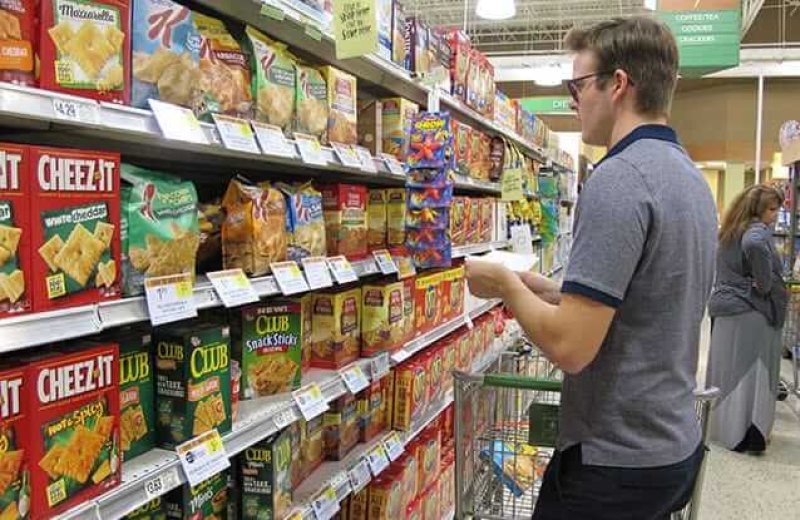
In December 2018, the United States Department of Agriculture (USDA) finalized the standards for mandatory “GMO” labeling by releasing the “National Bioengineered Food Disclosure Standard” (or NBFDS). The NBFDS establishes the rules of the road for disclosing which foods in the U.S. have been or may have been bioengineered (BE)….

….First, the labeling standard acknowledges that many people want to know if the foods they are consuming were derived from “GMO” (bioengineered) crops. Just as importantly, the standard provides this information without frightening imagery that could lead consumers to believe GMO/BE food is labeled because it is something to be concerned about or avoided entirely.

Bioengineered….is honestly a much better term for the 10 “GMO” crops commercially available today in the U.S….The term “GMO” creates confusion because virtually everything we eat has had its genes modified in some way, whether through very traditional plant breeding processes or through more modern means of seed breeding.

This means that “GMO” or “genetically modified” is simply too vague of a phrase to talk about one type of breeding technique, potentially referring to any or all of them. Bioengineered” or “BE” gets much closer to the foods consumers are actually trying to learn about….

Read full, original article: Here’s everything you need to know about USDA’s National Bioengineered (BE) Food Disclosure Standard


{{ reviewsTotal }}{{ options.labels.singularReviewCountLabel }}
{{ reviewsTotal }}{{ options.labels.pluralReviewCountLabel }}
{{ options.labels.newReviewButton }}
{{ userData.canReview.message }}

Related Articles

Infographic: Global regulatory and health research agencies on whether glyphosate causes cancer

Infographic: Global regulatory and health research agencies on whether glyphosate causes cancer

Does glyphosate—the world's most heavily-used herbicide—pose serious harm to humans? Is it carcinogenic? Those issues are of both legal and ...

Most Popular

Screenshot-2026-04-20-at-2.26.27-PM
Viewpoint — Food-fear world: The latest activist scientists campaign: Cancer-causing additives
Screenshot-2026-05-01-at-11.56.24-AM
‘Science moves forward when people are willing to think differently’: Memories of DNA maverick Craig Venter
Screenshot-2026-03-13-at-12.14.04-PM
The FDA wants to make many popular prescription drugs OTC—a great idea. Here’s why it’s unlikely to happen
Screenshot-2026-04-03-at-11.15.51-AM
Paraben panic: How a flawed study, media hype, and chemophobia convinced the public of the danger of one of the safest classes of preservatives
ChatGPT-Image-May-1-2026-02_20_13-PM
How RFK, Jr.’s false vaccine claims are holding up $600 million to fight diseases in poor countries
viva-la-vida-watermelons
Misinformation and climate change are endangering summer watermelons
Screenshot-2026-04-30-at-2.19.37-PM
5 myths about summer dehydration that could damage your health — or even kill you
ChatGPT-Image-Mar-27-2026-11_27_05-AM
The myths of “process”: What science says about the “dangers’ of synthetic products and ultra-processed foods
Drinking lots of water can help reduce the effects of aging
Nanoplastics in drinking water: MAHA activists forge science-based bipartisan coalition 
79d03212-2508-45d0-b427-8e9743ff6432
Viewpoint: The Casey Means hustle—Wellness woo opportunism dressed up as medical wisdom
ChatGPT-Image-Mar-10-2026-01_39_01-PM
Viewpoint—“Miracle molecule” debunked: Why acemannan supplements don’t work
Screenshot-2026-05-04-at-12.54.32-PM
How Utah became the country’s supplement capital  — and a haven for unregulated, ineffective and fake products
circular-bioeconomy-should-focus-on-sustainable-wellbeing
GLP podcast: What's wrong with 'doomsday' environmentalism? It's false.
glp menu logo outlined

Get news on human & agricultural genetics and biotechnology delivered to your inbox.