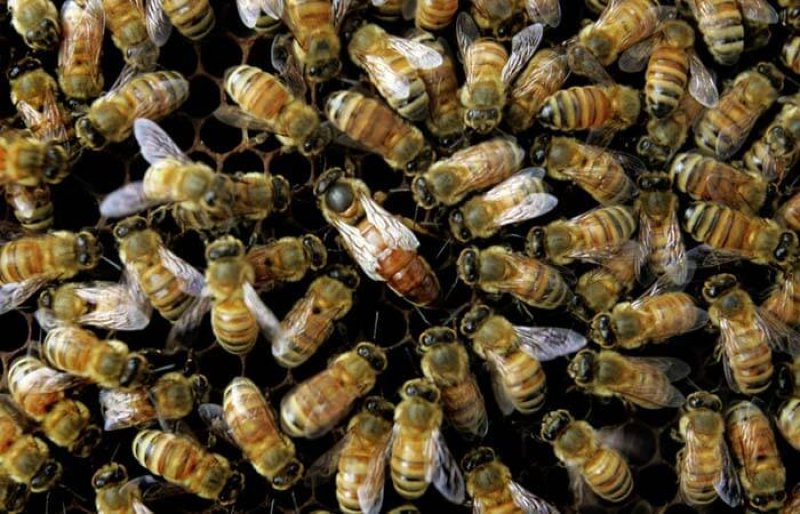
‘Blame nature not pesticides’: Bee health detectives unravel mystery of 2013 Oregon bumblebee mass deaths

bees

In June 2013, in a Target parking lot in Wilsonville, Ore., an estimated 50,000 bumblebees dropped dead. Shoppers reported bees falling from branches and crawling on the ground. Piles of carcasses scattered beneath dozens of linden trees marked the largest mass bee kill ever recorded.

The Oregon Department of Agriculture later determined that a pesticide [neonicotinoids] used against aphids had poisoned the bees. They banned its use on lindens. But still more reports surfaced of mass bumblebee deaths around Oregon. Explaining them wasn’t as simple.

“It’s not your classic story of, oh, the pesticides kill the bees,” said Sujaya Rao, an entomologist who studied the bee deaths while at Oregon State University.

“Not every dead bee could be because of a pesticide,” she added. “There are strange phenomena in nature that lead to things like this.”

For centuries, people have noticed similar mysterious incidents around the United States, Europe and Britain. In a study published last month in PLOS ONE, Dr. Rao and other researchers proposed an explanation: If it’s too cold, and the bees are too weak, and the trees are enticing but don’t produce enough nectar — all that may tip bumblebees over the edge.

“Not all bee death is related to humans,” said Claire Lande, a co-author of the study who also runs an apiary in Minnesota. “Sometimes it just happens.”

Read full, original article: Seeking a Culprit When Bumblebee Carcasses Pile Up

{{ reviewsTotal }}{{ options.labels.singularReviewCountLabel }}
{{ reviewsTotal }}{{ options.labels.pluralReviewCountLabel }}
{{ options.labels.newReviewButton }}
{{ userData.canReview.message }}

Related Articles

Infographic: Global regulatory and health research agencies on whether glyphosate causes cancer

Infographic: Global regulatory and health research agencies on whether glyphosate causes cancer

Does glyphosate—the world's most heavily-used herbicide—pose serious harm to humans? Is it carcinogenic? Those issues are of both legal and ...

Most Popular

wuhan institute of virology main entrance
​​COVID lab leak? Making a case that the Wuhan market origins theory is wrong
ChatGPT-Image-Mar-10-2026-01_39_01-PM
Viewpoint—“Miracle molecule” debunked: Why acemannan supplements don’t work
Screenshot-2026-06-17-at-9.44.03-AM
Viewpoint: Embryos are becoming the newest battleground of love, loss, and legal uncertainty
Screenshot-2026-06-18-at-11.41.51-AM
Viewpoint—Protecting baloney science: Far right senators move to protect the phony homeopathy industry
ChatGPT-Image-Jun-9-2026-01_11_37-PM
Turmeric supplements: More risks than benefits
Screenshot-2026-06-05-at-2.12.30-PM
Some plants can poison you. So how did humans figure out what is safe to eat?
artificial intelligence brain think illustration md
Viewpoint — Digital gods and human extinction: Will we be the first species ever to design our own descendants?

Sorry. No data so far.

glp menu logo outlined

Get news on human & agricultural genetics and biotechnology delivered to your inbox.