New Zealand mulls loosening strict biotech crop rules as GMO ryegrass shows promise in field trial

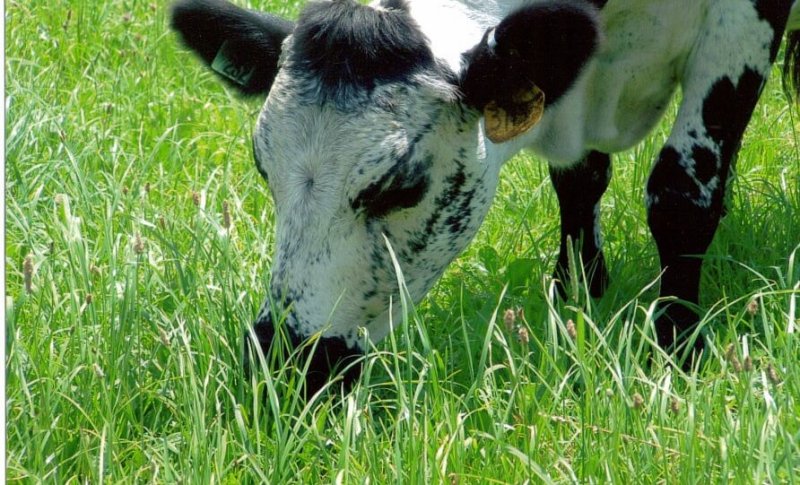
GrazingDairyCow rh de
High-yield, environmentally-friendly GMO ryegrass

While New Zealand has not yet approved the release of genetically modified crops, its agricultural research agency’s principle scientist has said it is important that the science keeps options open so policy makers have strong evidence to draw on.

Over the last two years AgResearch has been working on the development of a genetically modified high metabolisable energy (HME) ryegrass that has been shown in its laboratories to grow up to 50% faster than the conventional crop.

Principal scientist Greg Bryan has also found it can store more energy for better animal growth, be more resistant to drought and produce up to 23% less methane from the dairy livestock it feeds.

Because of New Zealand’s ban on GMO testing outside the lab, the field testing has taken place over the last 18 months in the United States. Bryan recently returned, reporting: “The HME ryegrass has performed well in controlled growing conditions.

“We’re breeding the best novel traits into ryegrass cultivars that will best suit New Zealand growing conditions and we’re also introducing genes into the plants that have simpler genetic patterns that will make future breeding
programs easier.”

Read full, original article: NZ ‘making progress’ in GMO feed research as FSANZ plots food code changes


{{ reviewsTotal }}{{ options.labels.singularReviewCountLabel }}
{{ reviewsTotal }}{{ options.labels.pluralReviewCountLabel }}
{{ options.labels.newReviewButton }}
{{ userData.canReview.message }}

Related Articles

Infographic: Global regulatory and health research agencies on whether glyphosate causes cancer

Infographic: Global regulatory and health research agencies on whether glyphosate causes cancer

Does glyphosate—the world's most heavily-used herbicide—pose serious harm to humans? Is it carcinogenic? Those issues are of both legal and ...

Most Popular

ChatGPT-Image-Mar-27-2026-11_47_30-AM-2
FDA’s expedited drug reviews are hailed in some quarters but other approval practices are problematic
Farmers can talk to plants
Farmers are a major source of misinformation—about farming
Screenshot-2026-05-01-at-1.29.41-PM
Viewpoint: What happens when whole grains meet modern food manufacturing? Labels don’t tell the whole story.
ChatGPT-Image-Apr-13-2026-02_20_22-PM
Viewpoint: Misinformation infodemic? Why assessing evidence is so challenging 
S
As vaccine rejectionism spreads, measles may be taking a more dangerous turn
Screenshot 2026-05-06 at 2.19
Vaccine shootout at the CDC 
What explains Homo sapiens’ huge brains? Ancient climate change played a role
Viewpoint: Internal White House documents detail administration’s strategy to undermine climate science
Screenshot-2026-04-20-at-2.26.27-PM
Viewpoint — Food-fear world: The latest activist scientists campaign: Cancer-causing additives
ChatGPT-Image-May-7-2026-11_28_04-AM-2
‘Conflict entrepreneurs’ are driving disinformation and shaping public opinion
ChatGPT-Image-May-6-2026-03_41_05-PM
‘Protecting the integrity of science’: Kennedy’s FDA blocks release of taxpayer-funded studies finding COVID and shingles vaccines safe
Screenshot-2026-05-06-at-2.07.43-PM
Manufacturing a conspiracy: The timeline of how  the White House embraced the fringe claim that scientists are being mysteriously murdered
bigstock opioids on chalkboard with rol
GLP podcast: 'Safe injection sites': enabling drug addiction or saving lives?
circular-bioeconomy-should-focus-on-sustainable-wellbeing
GLP podcast: What's wrong with 'doomsday' environmentalism? It's false.
Screenshot 2026-05-06 at 12.49
Immortal dragons: The quest to ‘make death optional’
glp menu logo outlined

Get news on human & agricultural genetics and biotechnology delivered to your inbox.