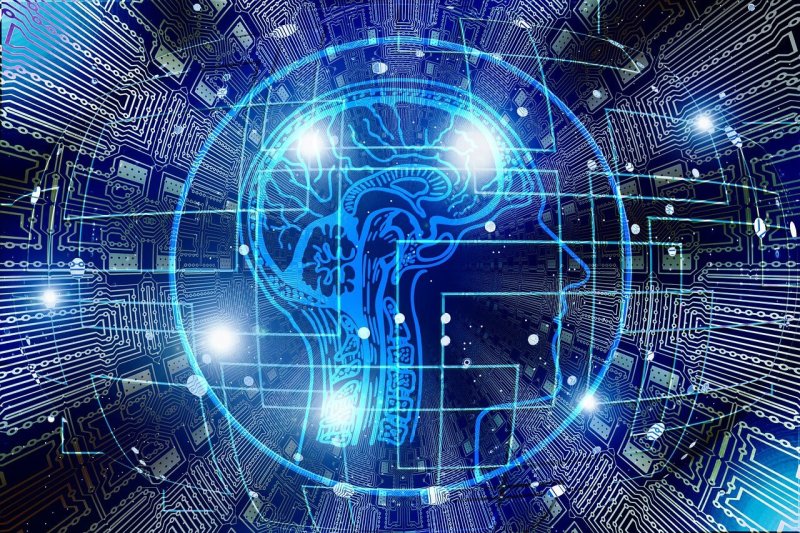
‘Mini-computers’ found in our neurons could be key to developing more powerful AI networks

wuu vmunxdlmhq v y few

With just their input cables, human neurons can perform difficult logic calculations previously only seen in entire neural networks. To restate: human neurons are far more powerful devices than originally thought. And if deep learning algorithms—the AI method loosely based on the brain that’s taken our world by storm—take note, they can be too.

Those are unconventional, fighting words.

For 70 years, neurons were considered the basic computational unit of the brain. Yet according to a new study published [January 3] in Science, the neurons in our cortex, the outermost “crust” of our brain, seem to have uniquely evolved to sustain incredibly complex computations in their input cables. It’s as if someone finally obtained proof that your computer’s electrical wiring is actually made up of mini-processors, each performing calculations before sending results to a CPU.

[T]he new results, recorded from surgically-removed brain chunks from patients with brain tumors and epilepsy, suggest that current deep learning methods are only scratching the surface of replicating our brain’s computations. If AI systems can incorporate these newly discovered algorithms, they could potentially become far more powerful.

Read full, original post: Scientists Discovered ‘Mini-Computers’ in Human Neurons—and That’s Great News for AI


{{ reviewsTotal }}{{ options.labels.singularReviewCountLabel }}
{{ reviewsTotal }}{{ options.labels.pluralReviewCountLabel }}
{{ options.labels.newReviewButton }}
{{ userData.canReview.message }}

Related Articles

Infographic: Global regulatory and health research agencies on whether glyphosate causes cancer

Infographic: Global regulatory and health research agencies on whether glyphosate causes cancer

Does glyphosate—the world's most heavily-used herbicide—pose serious harm to humans? Is it carcinogenic? Those issues are of both legal and ...

Most Popular

Screenshot 2025-08-25 203032
Mazzenga’s 20-year old muscles: How a still-going-strong 92-year old sprinter wins every race she enters
Screenshot-2026-06-08-at-10.19.30-AM
‘Natural’ wellness supplements linked to liver injury
ChatGPT-Image-May-28-2026-12_56_54-PM
Viewpoint: Vaccines' non-specific effects? The ‘shoddy’ Danish couple whose 'research’ inspires RFK, Jr.’s health delusion
Screenshot-2026-06-05-at-2.12.30-PM
Some plants can poison you. So how did humans figure out what is safe to eat?
Credit: ACSH
Viewpoint: Who and what’s to blame for the surge in vaccine-preventable diseases?
Screen Shot at AM
Facts & Fallacies Podcast: Right-wing politics bad for your health? Separating speculation from science
ChatGPT-Image-Jun-9-2026-03_24_05-PM
Misinformed parents overdosing children with Vitamin A to fight measles
Screenshot 2025-07-30 at 10.48
Can gene editing eliminate Down syndrome? Scientists have done it in lab-grown cells
Screenshot-2026-06-05-at-1.44.09-PM
Viewpoint: Scientists have scrapped the worst-case climate scenario. Is that proof that climate change is a hoax, as Trump claims?
ChatGPT-Image-Mar-10-2026-01_39_01-PM
Viewpoint—“Miracle molecule” debunked: Why acemannan supplements don’t work
ChatGPT-Image-Jun-9-2026-11_54_59-AM
Why weight-loss drugs might be reducing cancer rates and making treatment more effective
Screenshot-2026-06-08-at-11.05.51-AM
Can vaping lead to cancer? New ‘association study’ raises questions of “links"
glp menu logo outlined

Get news on human & agricultural genetics and biotechnology delivered to your inbox.