Rethinking COVID-19 school restrictions: Few cases, almost no fatalities and no documented incidents of child-to-adult transmission

coronavirus schools e
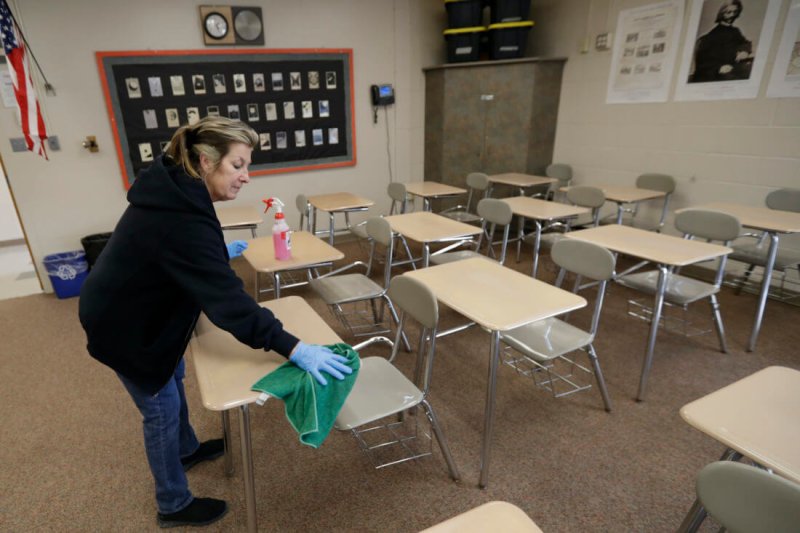
Credit: Associated Press/Tony Dejak

As lockdown restrictions ease, a critical question looms: When do we reopen schools? Parents and others weighing covid-19′s risk to children and the adults they may infect, directly or indirectly, should consider emerging evidence that suggests children are not significant transmitters of covid-19. These data, coupled with the enormous adverse impacts of continuing closures, argue for reopening schools by fall.

Of about 360,000 covid-19 deaths worldwide, only about two dozen children are known to have died. For all the recent reports of serious complications among young people, these are statistically rare and, if detected early, most afflicted youths recover within weeks.

While most countries have shuttered schools, others such as Taiwan have achieved effective responses without closures. In Denmark and Norway, where schools began reopening in mid-April, covid-19 cases and deaths have decreased. Normally, gregarious youngsters are efficient spreaders of respiratory pathogens. But this appears not to be the case with covid-19.

Emerging evidence suggests that, much like with the Severe Acute Respiratory Syndrome (SARS) epidemic in 2003, children are less likely to become infected with this coronavirus. Emerging evidence suggests that, much like with the Severe Acute Respiratory Syndrome (SARS) epidemic in 2003, children are less likely to become infected with this coronavirus. From Feb. 12 to April 2, just 1.7 percent of U.S. cases for which age is known occurred among people younger than 18.

Additionally, a study published in JAMA found that youths are less prone to infection because they produce smaller quantities of a protein, ACE2, which both SARS and the novel coronavirus use to enter cells.


Read the original post

{{ reviewsTotal }}{{ options.labels.singularReviewCountLabel }}
{{ reviewsTotal }}{{ options.labels.pluralReviewCountLabel }}
{{ options.labels.newReviewButton }}
{{ userData.canReview.message }}

Related Articles

Infographic: Global regulatory and health research agencies on whether glyphosate causes cancer

Infographic: Global regulatory and health research agencies on whether glyphosate causes cancer

Does glyphosate—the world's most heavily-used herbicide—pose serious harm to humans? Is it carcinogenic? Those issues are of both legal and ...

Most Popular

ChatGPT Image Jun 3, 2026, 03_54_37 PM
Viewpoint: “Turn on, tune in, drop out”—Kennedy embraces the Timothy Leary psychedelic revolution
ChatGPT-Image-Jun-11-2026-01_15_03-PM
Selective Pressure, Selective Silence
Screenshot-2026-06-05-at-2.12.30-PM
Some plants can poison you. So how did humans figure out what is safe to eat?
Screenshot-2026-06-11-at-3.40.06-PM
'Toxin' detox: A gastroenterologist weighs in on $71 billion health trend
Screenshot-2026-06-05-at-1.44.09-PM
Viewpoint: Scientists have scrapped the worst-case climate scenario. Is that proof that climate change is a hoax, as Trump claims?
Screenshot-2026-06-11-at-4.00.17-PM
Gen Z burned by sunscreen misinformation and tanning myths
ChatGPT-Image-Jun-11-2026-10_34_44-AM-2
Will hi-tech genetic fortune-telling really help parents make healthier children?
Screenshot-2026-06-03-at-3.33.44-PM
Viewpoint: Vaccine deniers are attacking a life-saving Vitamin K shot for newborns that isn’t even a vaccine
Screenshot-2026-06-08-at-1.35.30-PM
Viewpoint: Social media and fake natural health propaganda fuel surge in use of mostly useless supplements
Screenshot 2026-05-26 at 10.15
Viewpoint: Double standard—Why does the wellness industry get a free pass while Big Healthcare is treated as morally suspect?

Sorry. No data so far.

glp menu logo outlined

Get news on human & agricultural genetics and biotechnology delivered to your inbox.