Social and health complications in children linked to aging parents. Should age restrictions on fertility treatments be raised?

image

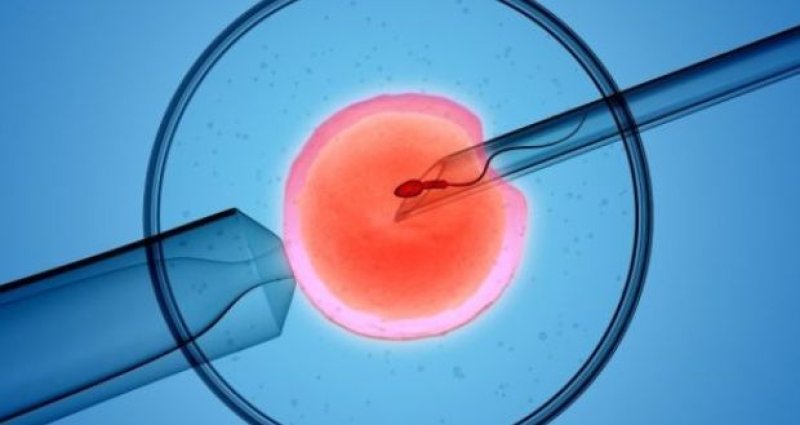
For nearly 40 years, fertility treatment has grown ever more advanced and so entrenched that it’s not uncommon for couples to begin their families in their late 30s, 40s or even 50s.

But even as questions about the technology to extend fertility have been answered — yes, children born through in vitro fertilization are healthy; yes, freezing embryos appears to be safe; yes, mothers can generally deliver babies safely well beyond the classic childbearing years — another important question is emerging: How old is too old for their offspring?

In December, two prominent psychologists and two reproductive endocrinologists published an opinion paper in the Journal of Assisted Reproduction and Genetics questioning whether it was time to establish age restrictions in the field. They wrote that research has shown that children often experience social awkwardness if their parents are a half-century older than them and face greater risk of autism and psychopathologies. These children are also more likely to serve in a caregiving role and experience bereavement as adolescents or teens compared with their peers whose parents gave birth in their 20s and 30s, they wrote.

In the United States, the number of live births to mothers ages 45 to 49 increased from 3,045 in 1996 to 8,257 in 2016, and the number to mothers ages 50 to 54 increased from 144 births to 786 births over the same time period, according to the National Center for Health Statistics.


Read the original post

{{ reviewsTotal }}{{ options.labels.singularReviewCountLabel }}
{{ reviewsTotal }}{{ options.labels.pluralReviewCountLabel }}
{{ options.labels.newReviewButton }}
{{ userData.canReview.message }}

Related Articles

Infographic: Global regulatory and health research agencies on whether glyphosate causes cancer

Infographic: Global regulatory and health research agencies on whether glyphosate causes cancer

Does glyphosate—the world's most heavily-used herbicide—pose serious harm to humans? Is it carcinogenic? Those issues are of both legal and ...

Most Popular

ChatGPT-Image-Jun-11-2026-01_15_03-PM
Selective Pressure, Selective Silence
ChatGPT Image Jun 3, 2026, 03_54_37 PM
Viewpoint: “Turn on, tune in, drop out”—Kennedy embraces the Timothy Leary psychedelic revolution
Screenshot-2026-06-11-at-3.40.06-PM
'Toxin' detox: A gastroenterologist weighs in on $71 billion health trend
Screenshot-2026-06-05-at-2.12.30-PM
Some plants can poison you. So how did humans figure out what is safe to eat?
Screenshot-2026-06-05-at-1.44.09-PM
Viewpoint: Scientists have scrapped the worst-case climate scenario. Is that proof that climate change is a hoax, as Trump claims?
Screenshot-2026-06-11-at-4.00.17-PM
Gen Z burned by sunscreen misinformation and tanning myths
Screenshot-2026-06-03-at-3.33.44-PM
Viewpoint: Vaccine deniers are attacking a life-saving Vitamin K shot for newborns that isn’t even a vaccine
ChatGPT-Image-Jun-11-2026-10_34_44-AM-2
Will hi-tech genetic fortune-telling really help parents make healthier children?
Screenshot 2026-05-26 at 10.15
Viewpoint: Double standard—Why does the wellness industry get a free pass while Big Healthcare is treated as morally suspect?
Screenshot-2026-06-08-at-1.35.30-PM
Viewpoint: Social media and fake natural health propaganda fuel surge in use of mostly useless supplements

Sorry. No data so far.

glp menu logo outlined

Get news on human & agricultural genetics and biotechnology delivered to your inbox.